

 Apple Podcasts
 Spotify
 The Octopus and the Mountain
This episode pulls back the curtain on how creativity gets stifled—both in our early lives and inside our organizations—and explores practical ways to reclaim it. We start with the extraordinary journey of Ruth Asawa, whose education as an artist began in the unlikely setting of an internment camp, not a prestigious institution. Her story dismantles the widespread myth that creativity is a resource problem and reframes creativity as a function of permission and ownership.
We then talk with Andrew Dietz about the lasting impact of early messages about creativity—how black-and-white thinking and the expectation of practicality can drive us away from our essential talents, and how to rethink risk, reward, and the definitions of success in creative careers.
The conversation then shifts with Phil Le-Brun and Jana Werner, co-authors of The Octopus Organization, exploring why most organizations are structurally designed to kill innovation. Drawing inspiration from the octopus—an organism built around distributed intelligence—they offer a framework for building organizations that favor ownership, clarity, and relentless curiosity over permission and bureaucracy.
Whether you’re a leader seeking to unleash creative potential or an individual battling ingrained resistance, this episode offers sharp, practical insights for creating environments where innovation actually stands a chance.
Five Key Learnings
- Creativity Thrives on Ownership, Not Resources: It’s not budgets or prestige that foster creative breakthroughs, but rather spaces that privilege ownership and self-permission over institutional legitimacy.
- Black-and-White Thinking Blocks Progress: Both individuals and organizations default to binary thinking for comfort, but true creativity—and competitive advantage—lives in the complex grey area.
- Most Organizations are Wired to Squelch Innovation: Governance, permission layers, and centralized decision-making are relics of another era that actively impede adaptability and speed.
- Metrics Should Teach, Not Just Track: Effective teams use measures to learn and adjust, not just to hit vanity goals or reward process over impact.
- Safe Curiosity is the Soil for Innovation: Organizations that foster psychological safety and model vulnerability—from leadership down—consistently outperform those that only reward certainty and compliance.
Get full interviews and bonus content for free! Just join the list at DailyCreativePlus.com.
Mentioned in this episode:
The Brave Habit is available now
My new book will help you make bravery a habit in your life, your leadership, and your work. Discover how to develop the two qualities that lead to brave action: Optimistic Vision and Agency. Buy The Brave Habit wherever books are sold, or learn more at TheBraveHabit.com.
To listen to the full interviews from today's episode, as well as receive bonus content and deep dive insights from the episode, visit DailyCreativePlus.com and join Daily Creative+.
Todd Henry [00:00:00]:
In the spring of 1942, a 16-year-old girl named Ruth Asawa was living with her mother and 5 of her siblings in 2 horse stalls on the Santa Anita Racetrack, just outside Los Angeles. Her father had been arrested by the FBI a few months earlier. They were rounded up as part of the internment camps that the U.S. government ran during World War II for Japanese American citizens. Her father was a farmer. He had been in this country for 40 years. She would not see him again for 6. She said later that the smell of horse manure never left the place the entire time they were there.
Todd Henry [00:00:38]:
And that is where her education as an artist began, because among the people imprisoned at Santa Anita were 3 animators from Walt Disney Studios: Chris Ishii, Tom Okamoto, Ben Tanaka. They set up art classes in the grandstands of the racetrack and taught anybody who wanted to learn. Ruth had spent her whole childhood working long hours on her family's farm, and now, for the first time in her life, she had nothing but time. So she drew every single day. No budget, no curriculum, no accreditation, no permission slip from anyone. Then the war ended and she won a scholarship to Milwaukee State Teachers College, where she spent 3 years studying to become an art teacher. And in her final year, the college would not place her in the student teaching assignment she needed in order to graduate. The reason, again, was anti-Japanese sentiment.
Todd Henry [00:01:32]:
The school could not guarantee that anyone would take her, so she left. No degree, no certificate, 3 years invested. Now I want you to think about these 2 pictures next to each other. A fully accredited, fully funded American college with a faculty and board and a catalog and every ounce of institutional legitimacy you could ask for could not find a way to say yes to one student, and a racetrack full of unfairly imprisoned people could. A friend told Asawa about a strange little school in the mountains of North Carolina. It was unaccredited. It barely gave grades. It was run jointly by the students and the faculty.
Todd Henry [00:02:12]:
So she showed up in the summer of 1946, and she stayed 3 years. Somewhere in there, she found the looped wire technique that made her one of the most significant American sculptors of the 20th century. Now, Assala said something later in her life about that period, and I want to handle this carefully because it's her sentence and not mine. She said that sometimes good comes through adversity, that she would not be who she was without the internment, as terrible as it was, and that she liked who she was. That is hers to say. That's, that's not mine to say. And I'm certainly not advocating for anything that happened, but it does show how good things can come from terrible circumstances. She spent the back half of her life building the institution that she had needed.
Todd Henry [00:03:00]:
In 1968, with a $50 grant, some milk cartons, some scrap yarn from somewhere, and some baker's clay, she and another mother started an arts workshop at their kids' elementary school in San Francisco. At its peak, it was running in 50 schools. She lobbied for years for a public arts high school in that city, and it finally opened in 1982. And in 2010, They put her name on it. She didn't just walk through the door. She went back and she built the school that she needed. Now, the reason that I think this story is relevant is that it dismantles the thing that many of us quietly believe about creativity, which is that it's a resource problem. That people would be more creative if they had better tools, if they had more budget, more time, a nicer room, a bigger title.
Todd Henry [00:03:50]:
Ruth Asawa did her first serious work in a horse stall and got stopped cold by a college. The variable wasn't resources. The variable was whether the place she was standing in ran on permission or on ownership. And that's really what I want us to talk about today. Almost everyone listening to this got a version of the message at some point. Maybe it was gentle. Maybe it was loving. Hey, that's a nice hobby.
Todd Henry [00:04:17]:
You should have something to fall back on. I know creating, designing, writing, whatever it is, that's fine that you're good at that, but let's be practical. And the strange thing about that message is that it doesn't stay, just stay in childhood, right? It gets promoted. It puts on a suit and it turns into a governance process, a business case, a stage gate, a committee that meets on Thursdays. Today, I want to trace that message from the beginning to the end of its career. My first guest is Andrew Dietz. Andrew has run a marketing firm called Creative Growth for the last 22 years, helping professional service firms build complex B2B companies that tell their story. He grew up outside of New York City and his father was a trained artist.
Todd Henry [00:04:59]:
He's written 4 books and the newest one is a work of fiction. It's called Ever You. The subtitle is The Boy Who Drew Too Much. And I'm gonna talk to Andrew about those early themes of creative impulse in childhood and what they evolve into over time. Then I'm joined by Phil LeBrun and Jana Werner. Phil is an enterprise strategist at AWS and the former international CIO at McDonald's, and Jana is also an enterprise strategist at AWS with a background in leading digital transformations. Their new book is called The Octopus Organization: One Conversation Where the No Gets Installed, One Conversation About How to Take It Back. This is Daily Creative.
Todd Henry [00:05:42]:
Since 2005, we served up weekly tips to help you be brave, focused, and brilliant every My name is Todd Henry. Welcome to the show.
Andrew Dietz [00:05:54]:
When the pendulum swings in one direction, we know it's going to swing back the other.
Todd Henry [00:05:58]:
That's Andrew Dietz, author of Ever You: The Boy Who Drew Too Much.
Andrew Dietz [00:06:03]:
And there has been, in my view, over the past 10-plus years or more, a swing towards more transactional behavior, less empathy, less intuition, more hard skills, analytics, etc. And AI now has increased the fear of many that their creativity, that, that may be irrelevant when in fact it's probably the opposite. Or at least maybe that's wishful thinking, Todd, I don't know. But I believe it's true that AI is gonna make creative capability more important, not less. I'm reminded of, because we're humans, that's what we do in a way that nothing else can. Nick Cave, the musician, he said something like, ChatGPT has no inner being, no, has not committed any sins or has no regrets. It has no fears. It has no hopes.
Andrew Dietz [00:06:57]:
It's not an emotional being. It has no story to tell, no life to live. So that's the stuff that it makes up the vitality of creative work that brings it to life. And moves people to think differently, change their behavior. And that's more important now than ever.
Todd Henry [00:07:16]:
Yeah, I completely agree with that. And I think humans have a highly attuned intuition for anything that feels artificial, fake. So I, it'll be interesting to see what happens, but I really, I want to dive into your new book. As you mentioned, this is your first work of fiction that you've written. It's called Ever You. the letter U, which stands for university. Yep, there we go. And the subtitle is The Boy Who Drew Too Much.
Todd Henry [00:07:43]:
Okay, so I'll, first of all, I want to dive into that subtitle before we talk about any of the nuance of the book, but that sort of suggests that someone's keeping score, that someone deemed that the boy was drawing too much. I just am curious, what does that mean? What is the, what's the, what are you implying by that subtitle?
Andrew Dietz [00:08:00]:
Yeah, Ever U2 has a little double entendre. It's maybe triple. It takes place at a school called Ever Mountain College. Which is a fictionalized absurdist version of Black Mountain College, the legendary art school. The Boy Who Drew Too Much, yes, it does refer to those who complain about or encourage him, maybe more than encourage, they forbid him really from becoming an artist or pursuing the arts. Because that's not what you do. You gotta go out and make money and be a titan. of industry or something like that.
Andrew Dietz [00:08:36]:
Again, the book goes to some extremes and it does have an absurdist tone to it. And in fact, his parents are very against, for a number of reasons that are discovered later in the book, but are very against him having anything to do with the arts. And as a result, he is unsure of himself, even though objectively by others, comments anyway, who do give him some encouragement. His art, he's very talented, but he's unsure of whether to lean into that or not. So in fact, he wonders himself whether he's spending too much time doing that rather than something useful and productive.
Todd Henry [00:09:15]:
Yeah, I think that is very common, right? I think a lot of young people who have talent hear these conflicting messages or who have conviction in some way hear these conflicting messages. Most of us are told at some point to dial back that creative intensity for the sake of practicality.
Andrew Dietz [00:09:32]:
You could do it as a hobby, Todd. You don't need to do it full-time. You know, that's the—
Todd Henry [00:09:36]:
And frankly, sometimes that is actually reasonable advice.
Andrew Dietz [00:09:40]:
It is.
Todd Henry [00:09:40]:
But I, the, but the problem is I think that so often we so misalign our desired outcomes with the incentives associated with those desired outcomes. We think You'll never become a multimillionaire by painting. Maybe that's not the desired outcome.
Andrew Dietz [00:09:59]:
Right.
Todd Henry [00:09:59]:
Maybe your incentives are not my incentives. Maybe I just want to do work and support myself, and maybe I will do something else to support myself while I pursue this, trying to do this professionally. Why do you think that those messages continue to resonate even though we see this is probably the best time in history to be able to support yourself as a creator, right? Why do you think those messages continue to resound?
Andrew Dietz [00:10:24]:
The human brain gets stuck in black and white because it makes life simpler for our, our brain to handle back in the, from the cave days when we didn't have time to dwell in the gray area between black and white. Let me see, is that lion gonna eat me or not? Yes or no? We don't have time to dwell on the in-between, right? So I don't know, that's stuck in us and That black and white thinking, as we know, is poison for creativity. And it's just very easy to get stuck in that from hearing the voices of our parents and their fear. It comes from fear, really. The fear of not being certain we can handle that world in between, the complexity that comes in the gray area. When in fact, those who have, are natural creative talents or those creative talents and/or those creative talents are then fostered actually are better equipped to handle that gray area. And that's where the best next things come.
Todd Henry [00:11:26]:
I, I think that's something that I'm seeing. I'm sure you're seeing as well that it's the artists who may be most equipped to be able to handle this next stage of human development. But you mentioned Black Mountain College and I want to Come back to that again. Could you just explain Black Mountain College and talk about why it was so extraordinary?
Andrew Dietz [00:11:44]:
Yeah, Black Mountain College. So if you, the middle of the last century, from 1933 to 1957, this place Black Mountain College existed. And even though it hasn't been around for a long time, its shadow, or maybe spotlight, the light it cast, let's put it that way, not the shadow, but the light it's cast on The creative world continues to shine. It's the only defunct college that has a museum still functioning in its name. This place, which was really a bastion, a centerpiece of avant-garde creativity in America, maybe in the world in the mid-20th century, existed not in New York, not in LA, in Black Mountain, North Carolina, 20 minutes east of southeast of Asheville, was formerly and still is largely a Christian retreat center. Billy Graham lived there, right? So this, what the heck was this doing there? Anyway, a couple of renegade professors who left Rollins College in the '30s went and wanted to start an alternative educational program where arts were really at the core. In 1933, they decided to open this school and One of the guys happened to be from the South and they found this property there in western North Carolina. And at that same time, it happened to be the time that the Bauhaus, very famous arts and design school in Germany, which had been around for a while, was forcibly closed by the Nazi regime.
Andrew Dietz [00:13:16]:
The guy who, you know, the guy who ran the arts program there, Josef Albers, and his wife Annie came to run the arts program at Black Mountain. And as a result, it flourished, you know, behind that philosophy of education where the arts were central and the kind of people they brought in to run it, it became a magnet for artists of all kinds, not only visual artists. Robert Rauschenberg was a student there. Franz Kline was a teacher, for those who know visual art. Ruth Asawa. There are many great artists came out of, visual artists came out of, but writers came out of it. Filmmakers came out of it, engineers and architects. Buckminster Fuller, who was a mad genius of the 20th century, created the geodesic dome, geodesic, however you pronounce it, raised the first one on the Black Mountain College campus.
Andrew Dietz [00:14:10]:
Albert Einstein was on the board of visitors, and it was a place run by the students and the faculty. It was just creative in all kinds of ways, culturally creative. In the early '30s, late '30s, it was integrated to a small degree, but still there were people of all kinds of gender, religious backgrounds, whatever. It was there. You can only imagine how the local townsfolk felt about this place. But anyway, at that time. But so they did. John Cage, who was an experimental musician, created 2 minutes and 33 seconds.
Andrew Dietz [00:14:49]:
The famous piece where he brought an orchestra on stage, he sat in front of a piano and nobody played a thing, forcing the audience to appreciate sound, noise, natural noise, ambient noise as music. Things like that. Mind-blowing stuff for that, especially that time. So I wanted that because it's really nothing quite like that these days. And it's a place where Again, for an absurdist kind of book with a lot of humor, I could really play off on it. I came to that because one of the most creative people I know is a guy named Jonathan Keats. He's a conceptual artist and a writer, and he had written the most recent book about Buckminster Fuller, the most recent biography. And he's a friend of mine.
Andrew Dietz [00:15:33]:
We've done a bunch of projects together. And he was doing a fellowship for Black Mountain, with Black Mountain and University of North Carolina. Because he had written that Fuller biography. And I went to visit him. Asheville's only 3 hours from Atlanta where I live. While we were there, I really learned a lot about Black Mountain for the first time. And it was also that time that Jonathan told me about a project he was working on where he was going to create a clock that ran not based on the breakdown of the cesium atom the way traditional time is told but by the flow of a river or multiple rivers, and maybe even how that river meanders over thousands of years. So could we create a clock based on a natural— the growth of something natural or the movement? And that led to the book I wrote before this called Follow the Meander: An Indirect Route to a More Creative Life, which was largely about Jonathan and had a lot to do with Black Mountain College.
Todd Henry [00:16:33]:
There is something about being a little bit off the grid, a little bit isolated. We have a similar college not far from here where I live called Antioch College, and it has a similar reputation, right? It's a sort of a place for misfits and explorers and just all kinds of—
Andrew Dietz [00:16:55]:
Idiosyncratic.
Todd Henry [00:16:56]:
Exactly.
Andrew Dietz [00:16:57]:
And it's produced—
Jana Werner [00:16:58]:
yeah.
Todd Henry [00:16:58]:
And it's produced similarly. It's produced a lot of iconoclasts, right? Like people who come out and challenge convention and whatnot, actors and thinkers and writers and others. But I wanna get back to the book, and obviously we're not going to go through the book. We're not gonna go through the plotline of the book, but I really would love to hear from you why this story, why was this important to you, and what would you hope that readers would get from reading this story specifically? What would you hope they would resonate with readers in reading this, and why would somebody Maybe somebody who's a creative professional who is a little further advanced in their career, but maybe they're, they're sympathizing with what we're hearing, these themes of, oh, conformity and curtailing my creative drive. What would be valuable to us in checking out this work?
Andrew Dietz [00:17:49]:
For the younger set, I really hope that it will give them encouragement to at least accept that they have creative capabilities that even if they don't decide to make a career out of the arts, they, those creative capabilities are their superpower that can really make a difference for their own careers, lives, and the world. And they really need to embrace those even if they decide to become what, a lawyer or whatever, a doctor, whatever. Their parents said was safer. How can they bring that mindset, that ability to solve problems and see the non-obvious ideas and answers? And so there's a message for them about leaning into it, understanding that risk, they need to reevaluate and reframe what risk means for them and what the reward is, what success means for them. It may not be money. And You'll, you may well regret it, putting those skills aside, really shelving them. I, I did find that personally. So of course there's a personal element to this story.
Andrew Dietz [00:19:00]:
I grew up with a dad who was an artist, as I said, and I grew up drawing and, but also writing and doing theater and everything else. And I definitely caught the message. That's not what you do. That's fine. Now put it aside. And it wasn't until 20 years out of college where I leaned back into it and embraced it again and began to feel whole, like I really was myself. So I do hope that there's a message there. But let's say we did pursue a career in creative work.
Andrew Dietz [00:19:32]:
Steven Pressfield and, and you and others talk about resistance. And I believe that fear of risk, failure, of embarrassment, of shame, of The identity pressure, the fear of evaluation, the self-doubt, all of that gets wired early. So we need to be careful about that. But also, if we can recognize how and when it was wired in us, we may be able to soften its impact on our work. And there are interventions that we can do when we find those challenges.
Todd Henry [00:20:06]:
In some ways, don't you find that we rely on those messages that we received early, almost sometimes as an excuse or as an escape hatch to not have to do the uncomfortable work of seeing how good we could be. Right?
Andrew Dietz [00:20:22]:
Absolutely.
Todd Henry [00:20:23]:
So, I think, I think sometimes people say it's not practical, or I was told it wasn't practical. It's not fair. I can't pursue this line of work, but I'm gonna go do something practical and maybe I'll explore on the sideline. But in some ways, maybe that's a bit of an escape hatch for them to not have to test how good they actually could be.
Andrew Dietz [00:20:42]:
Maybe paradoxically, it's an escape hatch, but it leads them to a maze with no exit. It leads them to a path where they still have to perform, except they're trying to perform at something that isn't their natural skill and ability, or not as natural a skill and ability. And we perform best, or we deliver the most value in the world when our best skills and abilities overlap with our passions, our interests. Anyway, so yeah, I think helping younger folks normalize imperfection and what risk feels like. Risk, there's a risk of failure, right? There's a risk that I'll starve. Helping people, helping them lean into what's in between. Okay, you said earlier, maybe the right answer sometimes isn't to go full, I'm going to commit to, I'm going to become first cellist. That's if I'm not first cellist in a a major orchestra in the US, then I failed.
Andrew Dietz [00:21:42]:
What else is there? What's in between either being first cellist in the New York Philharmonic or whatever, or being an accountant? What's in between that for you? Could you create a portfolio of activities for your career? And I think, again, we're in an age where, especially with Gen Z, they're having to create or create a more of a mosaic career.
Todd Henry [00:22:09]:
Ever You by Andrew Dietz is available now wherever books are sold. So the question about how our creative drive gets squeezed out of us, I think, is an important one because it doesn't just happen to us individually. It happens within organizations. In fact, in many ways, organizations are set up to do the opposite of what we want them to do. They're set up to do the opposite of innovate, to do the opposite of communicate and imagine and dream and create value. In fact, organizations organize. They're set up to squeeze the most efficiency out of a process possible, but the creative process doesn't always feel efficient. So what do we do next? Because most of us have to do our work in the context of organizations.
Todd Henry [00:22:55]:
That question carries us into the next conversation, and it's the practical one. If the place that would let us do our creative work does not exist, how do we build it? What are the actual mechanisms? Our next conversation is going to explore what it means to build an organization that decentralizes some of these decisions and allows us to be more fluid in how we approach creative work. We'll be right back with our conversation about the octopus organization. In just a minute, stick around.
Phil Le-Brun [00:23:37]:
So if you remember Wizard of Oz, the Tin Man was this creaking, heartless construct. You could just swap bits off him, mechanical by nature.
Todd Henry [00:23:46]:
That's Phil LeBrun, co-author along with Jana Werner of The Octopus Organization.
Phil Le-Brun [00:23:52]:
And we're in this privileged position. We talk to about 1,500 customers a year at an executive level as a team. We interviewed a lot of CEOs and other business leaders as we wrote the book. We've got our own practitioner backgrounds, and we work in Amazon, so we learn a lot from the company we work in. And we got a little frustrated because many of the organizations we work with talk about wanting to innovate fast and be agile and being resilient. But the reality is they work on a culture of permission. Everything goes up the chain, everything goes through governance meetings, every decision becomes slow. They're designed for a different era.
Phil Le-Brun [00:24:29]:
They're designed to de-risk everything, to ensure there's efficient, predictable outcomes. And this is all happening in a world which is anything but predictable. So what we found was these organizations were often holding themselves back, not because of what was happening outside, but because of of their very mental models of how they constructed their organization.
Todd Henry [00:24:50]:
And that led to a realization, something related to distributed intelligence. Jana, could you share with us the central framework of your new work, of the new book?
Jana Werner [00:24:59]:
Yeah, absolutely. We find that there are brilliant people in the organizations. We worked with lots and lots of brilliant people when we led large-scale change in parts of organizations, but they were always shackled by what Phil described. And we thought about This doesn't work anymore. Today's success is based on building genuine trust with customers, with employees, with stakeholders. Work is so much less transactional, it's cross-disciplined, and moreover, we are at a rapid speed of never-seen tech change and evolution. The cost of delivery is converging towards zero, whereas our Tin Man organizations are built on the idea that delivery is expensive in terms of resources and funding and time. And so they're set up to manage things that simply aren't the case anymore.
Jana Werner [00:25:45]:
And we loved taking inspiration from an incredible animal that is really adaptive, so adaptive it can change its chemical, its own chemical makeup and its RNA. And it has distributed intelligence. That's the octopus. It has 2/3 of its neurons in its arms. It can, they can sense and react and they don't have to go up to the central brain, but they can, they can also work in unison. So we, So, less Tin Man, more octopus.
Todd Henry [00:26:10]:
It's such a great metaphor. And one of the things that you call out in the book, which I had not really considered, but trillions of dollars are spent on digital transformation every year. Organizations continue to reorganize and reorganize, and yet they fail to produce results. Why do you believe that we spend so much money trying to transform our organizations to meet the challenges of today's marketplace, and yet we fail to produce results?
Phil Le-Brun [00:26:33]:
Well, the way we approach transformations, ironically, is based on the same methodologies which mirror the structures they're trying to change. So we apply old ways of change to old structures and expect something brand new to come out. And interestingly, building on Jana's description of the octopus, hasn't changed its structure for 250 million years. It's what it does is inherent within its own structure. So we often reach in organizations, number one, for projects. Let's go through a transformation project. So at the end of 18 months, we're going to be agile, platform-based, data-enabled, And of course, none of us work like that. Secondly, as soon as you finish the project, you start going backwards because you stop transforming.
Phil Le-Brun [00:27:16]:
And we just felt there had to be a better way of taking an organization on the journey because we tend to do change to people, not with them. We inflict best practices on them. And you know what happens when you install a best practice in an organization? You don't want to change because they can't possibly be something better than a best practice? And we even measure the wrong things, spans of control, depth of organization. You spend 5% on training, I can spend 4%. Everyone else does it this way, so it feels comfortable following that pattern, even though 70 to 90% of transformations don't see the outcomes that they were intended to generate in the first place. It's soul-destroying.
Todd Henry [00:27:54]:
You brought up measurement, and I think this is— so the people listening to this show are typically leaders of creative organizations, maybe creative directors, maybe marketing directors, chief marketing officers. So they're leading creative teams, creative organizations. One of the difficult things for any leader in that space is understanding what to measure. How do we measure, especially when it comes to our objectives or even how we organize our teams? What are some ways that you found effective organizations establish the right metrics, establish the right things to measure so that we're getting the outcomes that we want, that we're able to adapt and meet the moment? versus being stuck in Tin Man mode, right? Where we're clumsy and incapable of adapting.
Jana Werner [00:28:37]:
Measures is a really interesting topic and one we get asked a lot about. And then people are really disappointed when we tell them there isn't a magic measure. It really depends on your context. You can measure standard things like speed to value. You have to be careful that you don't measure vanity metrics, like how many features have you delivered. Doesn't matter if nobody uses the features. Could actually make the product worse and harder to navigate. But what the one thing I learned that I wish I had known and done sooner is what I learned at Amazon is that they use, and we use metrics to learn.
Jana Werner [00:29:09]:
So, when we start something new or when we have a team, we decide with the team, what are we gonna measure? And then we're gonna see how these metrics evolve, not for the sake of hitting the measure, but to say, what is this telling us? If something doesn't need to move the needle, it doesn't mean it's a bad metric. It tells us something about, are we measuring the wrong thing? Is there a reason why this team can't? So the idea is, as a leader that are listening to you, Todd, is to say, think about agreeing measures that help you learn what's working and what isn't in your organization. Measures where you want to think about, does this make the team more creative? Does this make the team faster? Does this allow more creative abrasion? Does it create more interesting outcomes and innovation, or whatever word you use as a bucket word for your customers? And that's the way we think about metrics. We've seen too many vanity metrics. We've all heard the story, the cobra story in India, where they measured the number of cobras that were being caught. They were paid then to breed cobras. And so, in the end, they had more cobras because they measured and asked for the wrong problem. So, this idea of use metrics to learn as a leader.
Jana Werner [00:30:15]:
So, it's all about think about which measures and depreciate measures because we end up accumulating them and measure them more and more, and we end up with dashboards nobody reads. There's a famous dashboard we had. I heard about the guy put in, if you read to the end of this dashboard, I will give you $50 if you contact me. And do you know that nobody contacted him in 3 years? Nobody ever read to the end of the dashboard.
Todd Henry [00:30:41]:
Unbelievable. It's so tempting. It is so tempting to do that. And one organization that I worked with, a very large organization, they rewarded and promoted managers based upon new initiatives, new projects. The average new initiative took about 3 to 4 years, but the average time in that role was about 2 years.
Phil Le-Brun [00:31:01]:
Wow.
Todd Henry [00:31:01]:
So what they discovered was basically everybody was starting a new initiative, getting the promotion, leaving the role. Somebody else came in and they didn't have any interest in that initiative because it wasn't their initiative. They weren't gonna be promoted unless they started a new initiative. And so you ended up with this plethora of new initiatives and nobody felt ownership of any of them. Which leads me to my question, because you talk about 3 pillars, right? 3 important pillars: clarity, ownership, and curiosity. Could you give us a sense of how those 3 pillars play into building an octopus organization?
Phil Le-Brun [00:31:31]:
Well, when Jana and I started to think about the book, we sat down over a glass of wine or 4 and wrote down all of the dysfunctions that prevent organizations from actually transforming. Those 300 dysfunctions We created 36 anti-patterns around. Anti-patterns are habitual conditioned responses, like new CEO comes into a multinational company and starts centralizing things, 'cause centralization is efficient, and efficient is productive, and productive is good, even though they just create this massive bottleneck. And then what we discovered, ironically, as we're both technologists, was much of this wasn't about technology. It was firstly about clarity. So creating context for distributed actions. I can let go. I can give, allow people the agency they want at the edges of organizations to move fast if they all understand the problems to solve, what the purpose of the organization is, what the priorities are.
Phil Le-Brun [00:32:25]:
We all believe that we want ownership. We don't want to go into work and do just a job description. We want to feel like we're doing something meaningful, which we have the ability to evolve, which connects to a bigger purpose. And that's where ownership came from. It was the responsibility plus authorship. So, it wasn't just me saying, hey, Todd, you're responsible for this thing. It's actually giving you the ownership for your work where you actually feel responsible for an outcome, not just a task. And that's where we find the magic happens.
Phil Le-Brun [00:32:57]:
And the third thing is that innately human characteristic of curiosity, which is so important. Jana talked about AI. We don't have many of the answers about what this is going to do to organizations, how they should evolve, how they should be set up, what skills are needed. But it's that relentless, humble posture that I have stuff to learn. I don't have all of the answers. I shouldn't be here as a leader trying to say, yes, I'm confidently gonna give you the answers. But what we find really interesting is if you have preschool-aged kids, they'll ask up to 107 questions an hour. By the time they enter the workplace, they'll ask 2 to 3.
Phil Le-Brun [00:33:35]:
We actively train people to have answers, not questions, in a world where it's not possible to have all of the answers. So good curiosity creates this positive discontentment with the status quo too. It drives people to think maybe there's a better way. No, in fact, I know there's a better way. I just don't know what it is yet.
Todd Henry [00:33:53]:
That raises such an interesting dilemma for many leaders because I think It, you know, that asking questions, curiosity creates tension because the moment you ask a question, it creates a situation where we feel compelled to either answer the question or ignore the question. And either one of those is gonna create tension within the organization because we're gonna have to explore how do we cultivate, how do we cultivate that environment where people are willing to be curious, where people are willing to ask questions? What can we do as leaders to facilitate that?
Jana Werner [00:34:24]:
We had the pleasure of speaking to Amy Edmondson. She's the kind of mother of psychological safety. And we all heard the word, like everyone has heard it, and people get almost tired of hearing it. But there's so much misunderstanding. It's not something you can say as a leader, it's a decree now, we're all safe. It's something you feel in the moment. So, this idea of opening up, of giving space for half-formed and baked ideas, asking questions as a leader from a genuine place of curiosity, open questions rather than the type of questions where, you know, as an employee, if you answer It'll just be used against you. Then this idea of actually living a failure culture.
Jana Werner [00:35:00]:
We see a lot of companies that would like to do it, but then the first time someone makes what's considered a terrible decision, it becomes a— what I learned in the English language as a career-limiting move. So you have to be too careful and can't be curious. We spoke to Benedetto Vigna, CEO of Ferrari, and he said, when I came in new, I talked everything about failure culture, but nobody wanted to fail. So, I had to go on the public live earnings call on TV and spend 10 minutes talking about a big failure at Ferrari so people knew I meant it. So, as leaders, you have to actually live that and also show in actions what it means to create a safe culture. For example, who's the next or the last person that got promoted? Is that someone that gets to speak openly, or is it someone that just toes the line and never speaks up or says anything? It's psychological safety, it's role modeling, it's the shadow of the leader in the room. People will take their cue of acting how the leader acts and what's valuable to the leader. And we love this whole idea of what we learned from Lencioni, people who are hungry, humble, and smart, and modeling these behaviors, people smart, that is, and modeling these behaviors.
Jana Werner [00:36:10]:
When we walk into companies, we can see very quickly, is this a place where people can talk openly? Or is it a place where people nod and rather be quiet? It's setting all this context. And I think you can do this every single day, modeling the vulnerability to say, I don't know. And we find that very successful leaders now, for example, in Amazon that drive the uptake of AI, they very humbly create the conditions for the team, but they're not the ones who have the tech knowledge. So, they will make sure that they, for example, speak last. And that they only speak when they have the knowledge, but that they let the team make the decisions and create the atmosphere where people can creatively have conversations what should be done and what shouldn't be done.
Todd Henry [00:36:52]:
I love that. Related question, because I think a lot of organizational leaders believe that innovation is a top-down thing. It's a top-down strategic bet. It's something that has to be mandated from the highest levels. But you argue, and you even share the example of Amazon Prime as An example of one frustrated engineer coming up with an idea that became, now it's obviously a huge profit center for Amazon. Could you share that story and talk about how we as leaders can create an environment where people feel safe surfacing ideas from the edges, innovative ideas from the edges, rather than feeling like it has to be a centralized command and control situation?
Jana Werner [00:37:33]:
You need to create that space. So, that was, I think it was Charlie Ward, and he saw, he filled, I think he created a spreadsheet every day that way he had report some numbers and he was like, this is crazy. We should have an all-you-can-eat shopping service. I think that's what he called it. And so he wrote up the idea and it got through several layers eventually to Jeff. And they created some ideas around from someone who had an airline background and said, oh, let's create this point system, this buy-in where you buy in and you become like a tiered member. And from there it then became a commitment, this whole idea that you then need to start doubling down on something. And it goes through the organization.
Jana Werner [00:38:10]:
And that's a culture I see in really advanced, elaborate, innovative organizations like Amazon, and I don't see in others. I work with, for example, a car manufacturer. Every idea has to go through a massive process, a gauntlet of saying no, you have to write a business case, you have to get people on board in your coffee breaks, spend your political capital. And eventually the idea becomes so heavy 'cause you invested so much and it goes to the board, it's so senior, it gets signed off. It no longer is an experiment or an innovative idea you test. It becomes a decree to deliver. That's how innovation dies. So the companies that do this well create a central way of where people can get platforms, technology, and ways of trying things, and then decentralize all the mechanisms to do so.
Jana Werner [00:39:00]:
So You can write a proposal, you can spend your time on doing something, you can get like a $5,000 budget, no questions asked, and people can run. And that's what helps work. People can feel curious, this ownership is reignited, they try something, they prove something in a safe space, in a sandbox environment or with internal customers, and then they can start developing, evaluating, and being curious about it from there. And what's really important about this, the question we always get then from Tin Man organizations is, But then everybody will do the same thing. And we said, we say famously in Amazon, 2 is better than 0. It's perfectly fine that 2 teams try something out. One of these usually whittles out or the teams come together. We'd rather have 2 teams do something than nobody doing it.
Todd Henry [00:39:50]:
The Octopus Organization is available now wherever books are sold. Preschool-aged children ask up to 107 questions an hour. By the time they reach the workplace, they ask 2 or 3. That figure's been rattling around my head since Phil said it, but nobody did that on purpose. There's no meeting where a group of adults sat down and decided to reduce the human question rate by 98%. It happened the way that most damage happens: one reasonable decision at a time. We rewarded answers. We promoted certainty.
Todd Henry [00:40:23]:
We made asking feel like admitting. And that's kind of the through line between these 2 conversations. Andrew would tell you that the fear of failure, of embarrassment, of shame, of evaluation, all of it gets wired early. And Phil and Jana would tell you that organizations do the same wiring to grown adults. And they do it through 1,000 tiny gates. Write the business case, spend your political capital on the coffee break, get people on board, take it to the board. By the time the idea has survived all of that, it no longer feels like an experiment anybody is curious about. It's a decree somebody has to deliver.
Todd Henry [00:40:57]:
That, Yana says, is how innovation dies. Not by rejection, but by accumulated weight. In my book, Herding Tigers, I made the argument that creative people need 2 things from a leader that most of us find hard to give at the same time: stability and challenge. Enough stability to take a real risk, enough challenge that the risk is worth taking. What I've come to believe is that these 2 conversations sharpened for me as well, is that stability is not the same thing as certainty. You cannot give your team certainty. Nobody has that, least of all right now. But what you can give them is clarity.
Todd Henry [00:41:31]:
What problem are we solving? What actually matters? Where is the edge of the sandbox? And then, and this is the hard part, get out of the way and let it be theirs. So here is your challenge this week, and it's one thing, not 5. Just find one idea that your team's currently waiting on you for, something that somebody floated in a meeting or put in a doc or mentioned in the hallway, but never brought it up again. It's sitting there waiting for your approval. Take it out of the queue and give it away. Give the person clarity, which means what problem it needs to solve and what the real constraint is. Give them a budget, give them a date, and then do not touch it. Give them the stability and challenge that they need.
Todd Henry [00:42:12]:
You are probably the institution for someone else right now. Most leaders are, and most of us have no idea. So be the kind of institution That says yes. Hey, thanks so much for listening. If you want full interviews with all of our guests, you can get them at dailycreativeplus.com. You can just enter your name and email address. It's absolutely free. We'll send you the, a private feed where you can listen to all of our interviews in full.
Todd Henry [00:42:38]:
My name is Todd Henry. If you want information about my books, my speaking events, and more, you can find it at toddhenry.com. Until next time, may you be brave, focused, and brilliant. We'll see you then.

Author, Ever U
Andrew Dietz is the author of Ever U and the Boy Who Drew Too Much and Follow the Meander, stories about what it means to trust your creative instincts—especially when doing so comes with real risk.
In his day job, he helps leaders do something similar. As founder of Creative Growth Group, Andrew works with complex organizations to turn scattered effort into coordinated growth. He began his career at Egon Zehnder and earned his MBA from Duke University Fuqua School of Business.
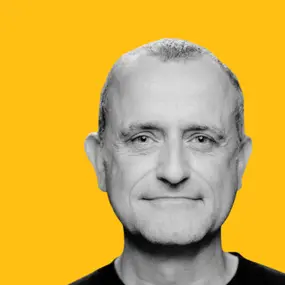
Author, The Octopus Organization

Author, The Octopus Organization

