

 Apple Podcasts
 Spotify
 Ecosystems Of Brilliance
On this episode of Daily Creative, we explore the myth of the lone genius and make the case for why sustainable creative brilliance happens when we grow and nurture real relationships. We’re joined by Daniel Coyle, bestselling author and researcher, whose new book Flourish examines how true growth emerges not through competition, but through intentional connection and community.
We discuss why relationships sit at the heart of creativity, what it means to build a meaningful circle, and how to design environments where both individuals and groups can grow. Daniel shares practical insights on “making meaning” and “group flow,” illustrating how small acts—like telling stories or organizing joyful gatherings—can catalyze shared energy and transformation. We reflect on why the most profound creative work, and indeed the solutions to our most complex problems, are more likely to be found at the neighborhood level than through grand top-down initiatives.
This conversation isn’t just about feeling less alone; it’s a blueprint for intentional action in your creative life. We leave you with a challenge: take one step this week to strengthen your creative community, whether that’s reaching out to a peer, convening a group, or simply asking deeper questions.
Five Key Learnings from the Episode:
- Community Is Creative Infrastructure: Creativity doesn’t thrive in isolation. The most resilient, sustainable creative work is built on relationships that provide stability, challenge, and honest feedback.
- Cultivate, Don’t Compete: Flourishing is about shared, meaningful growth—think gardens, not games. Real creative communities are spaces for nurturing, not just winning or accumulating.
- Design for ‘Beautiful Messes’: Innovation and group flow emerge when we intentionally create environments where people can experiment, collaborate, and bring out new facets in each other—even if things get a little messy.
- Deep Questions Build Trust: Asking ambiguous, personal “deep questions” unlocks vulnerability, connection, and trust far more quickly than waiting for trust to appear before opening up.
- Power With, Not Power Over: Leaders unleash real growth when they support, ask great questions, and give power away—moving from controlling outcomes to facilitating collective brilliance.
Get full interviews and bonus content for free! Just join the list at DailyCreativePlus.com.
Mentioned in this episode:
The Brave Habit is available now
My new book will help you make bravery a habit in your life, your leadership, and your work. Discover how to develop the two qualities that lead to brave action: Optimistic Vision and Agency. Buy The Brave Habit wherever books are sold, or learn more at TheBraveHabit.com.
Apply for Creative Leader Roundtable
What if you had a space every month to sharpen your leadership edge without the fluff? The Creative Leader Roundtable is where smart, driven, creative leaders gather to exchange ideas, solve real challenges, and grow together. So if you lead a team of thinkers, makers, or dreamers, this is your lab. We're launching soon with a new group of leaders. So, if you're interested, check it out and apply at CreativeLeader.net.
Todd Henry [00:00:02]:
You know, there's a pervasive myth in our culture that genius happens in isolation. We romanticize about the lone artist in the Garrett, the solo entrepreneur burning the midnight oil, the individual visionary who changes everything. But here's what I've learned over 20 plus years of working directly with leaders and creative pros. That's not typically how brilliance actually happens. In my book, the Accidental Creative, I introduced a framework called the five elements of Creative rhythm. It was focus, relationships, energy, stimuli, and hours. And notice that relationships sits right there in the middle. As a matter of fact, you really cannot extricate relationships from focus, from energy, from stimuli, even from hours.
Todd Henry [00:00:45]:
You cannot remove relationships from each of those other elements because it's not optional, it's not a nice to have. It's an essential infrastructure for sustainable creativity. We need other people. Most of us are paid to solve problems that we've never seen before, by deadlines that we didn't set, to standards that we don't control. Congratulations. That's what it is. That's the create on demand world. And when you're facing that kind of pressure, you can't afford to go it alone.
Todd Henry [00:01:12]:
As a matter of fact, you can't go it alone, period. You might think you are, but you're not. You can't. We need other people. I always encourage creative pros to build what I call a circle. And this is something I wrote about in the Accidental Creative. A group of four to six like minded people who meet regularly to share insights, to challenge assumptions and to help one another see around corners. To help one another grow our intuition, our ability to.
Todd Henry [00:01:37]:
To think of possibility, to. To dream together and to challenge one another and to speak truth to one another. Not a networking group, not a mastermind obsessed with productivity, but a creative community designed to keep you fresh, sharp, and engaged with ideas beyond your immediate work. Because here's the truth. In most work, a well organized team of creative pros, even if they're not highly skilled, will produce exponentially better results than a lone genius. They simply will. I've seen this over and over and over again over time. Community isn't just about feeling less alone.
Todd Henry [00:02:12]:
It's not just something we do to make ourselves feel more connected or to feel less isolated, though that matters for sure. But that's not what it's about. It's about building the kind of stimulating relationships that lead to creative insights that draw out of us things that we don't even see in ourselves yet. It's about having people in your life who can see your blind Spots who bring different perspectives and who challenge you to step up your game. So when I talk with leaders, I give talks about this all the time to organizations, to companies, to creative teams, to, you know, sales organizations. When I talk with leaders about what creative people need in order to flourish, it always comes back to this. You can't create in a vacuum. You need two things.
Todd Henry [00:02:56]:
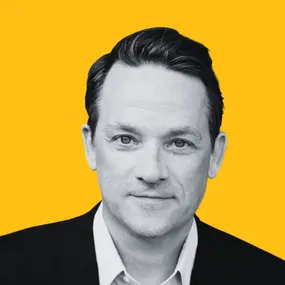
You need stability and you need challenge, which means you need clarity and you need inspiration. And you get both of these things through healthy relationships. People who know your work, who understand your challenges, and who care enough to tell you the truth, even when it's uncomfortable. On today's show, we have someone who knows this very well. He's one of my favorite guests. We've had him on before. His name is Daniel Coyle, and he has a new book called Flourish, which is all about community. As you listen to this interview, I want you to ask yourself, who is your community? Who is in your circle? Who are the people who are challenging you and helping you think different and helping you grow? And if you can't name them, maybe it's time to begin to build that community intentionally.
Todd Henry [00:03:39]:
Because the goal isn't just to be prolific for a season and to burn out. The goal is to be prolific, brilliant, and healthy over the long haul. And you can't do that alone. This is Daily Creative. Since 2005, we've served up weekly tips to help you be brave, focused, and brilliant every day. My name is Todd Henry. Welcome to the show.
Daniel Coyle [00:04:08]:
When I think our world, our modern world especially, it feels like a fast whirlpool, right, that keeps accelerating and keeps speeding up. And we have to be more productive. And all these forces are push, pushing us apart.
Todd Henry [00:04:21]:
That's Daniel Coyle, author of the new book Flourish.
Daniel Coyle [00:04:24]:
And I reached a point in my life after my folks died, that kind of the existential crisis that everybody has where you suddenly have kind of X ray vision and certain little things fall away. When I bumped into a quote, life is not a treasure hunt. It's a treasure creation. And the difference is one of stance toward the world. I think the stance of a treasure hunter toward the world is to grasp, to control, to, to predict, to measure, to keep score, to approach the world like it's a game to win. And the task and the mindset and the stance of a treasure creator is someone who's going to nurture, create space for other things to grow. So it's not a game, it's a garden. And during this time in my life, when I think a lot of us are feeling this speeding up, this whirlpool of modern life.
Daniel Coyle [00:05:08]:
These places, these green places where things grew, where people grew, where treasure was being created. The treasure of human possibility, the treasure of growth, the treasure of community. That's what the book's about. And I've spent five years visiting those treasure creators, and I can tell you they're really fun to hang out with.
Todd Henry [00:05:24]:
You use this word flourish, which is a very uncommon word. But I always tell my friends who are trying to write books, like, find a word that you can own. And as far as I know, like, that's a word that you own, because I've not heard that really used a lot. How do you define flourish? What does that mean to you?
Daniel Coyle [00:05:41]:
I start with a scientific definition, which is joyful, meaningful growth. Shared. Shared. It's a word that we always hear connected with biology, right? What flourishes? Ecosystem. Plants flourish, gardens flourish. And that's really where it comes from, this idea that nobody flourishes alone. Nobody. We need other people to bring out the best in ourselves.
Daniel Coyle [00:06:00]:
We're social beings, and every thread of science is converging on this fact that we're wired for shared, meaningful growth. There's a million little experiments I could tell you about, but I think it's best just to reflect on our own lives and ask yourself for a second, where have I flourished? And the answers are often the same thing. Usually people remember a time where they're in a smallish group, they're having some kind of little adventure. Like it's sometimes in nature, it sometimes resembles, like a camping trip where nobody quite knows where they're going. And you're coming together to solve problems. You're sharing intimacy together, you're sharing vulnerability together. And you're coming together to more than some of your parts. And you're all growing.
Daniel Coyle [00:06:42]:
And that's the kind of thing, that's the kind of word, that's really what the word means. This feeling of energy and a feeling of a natural growth that's not forced by outside forces, but something is emerging inside you that is transforming you into somebody different than you used to be.
Todd Henry [00:07:00]:
What are the kind of the two core practices you talk about in the book?
Daniel Coyle [00:07:03]:
Two things. It's making meaning. Every ecosystem has got an energy creation function, right? You have to create connection and energy. And the way we humans do that is making meaning, figuring out, having moments where we illuminate connection. That connection might be, hey, we all live in this neighborhood and we all have kids at the same school. That connection could be something in a business setting. It could be some higher value that you all are about. You illuminate connection.
Daniel Coyle [00:07:26]:
And that. That meaning is actually a form of energy. It's not. We sometimes say the word meaning, and we think, oh, that must be information. Tell me the meaning of that. But actually, meaning is when you feel a vibration, like a guitar string inside you. Whoa, that connects. And these flourishing places are finding they're practicing these.
Daniel Coyle [00:07:50]:
Creating open spaces where people can create meaning. And a simple example of it I see in a lot of flourishing businesses is they'll often take time at the beginning of a meeting to tell a story which makes no sense. Right? There's no information, and there's no utility in these stories, usually. Right. But they will tell a story. It's like the strangest little habit that they share. But that story, it's illuminating something of value, or it's illuminating maybe what not to do. But story is incredibly powerful.
Daniel Coyle [00:08:21]:
So these little practices, little moments where we open up our attention and. And notice a relationship to something that's not right in front of us, that's the first practice. And then the second practice is the opposite of that. It's action. It's group flow is the name. And that is when you have people gathered up and everybody's got some autonomy. I guess the visual would be like a pickup basketball game, in a way. You're moving towards some hoop, some target, and people can go wherever they want, do whatever they do within the bounds of the court, and you're flowing toward a result.
Daniel Coyle [00:08:53]:
And people are stepping up to do what needs to be done, doing the next right thing, without one person ordering everybody around. So those moments of group flow, which can happen, you know, in variety of contexts that are not just business, they could be creative, they can be family, they can be whole communities. But those are the two kind of essential things which are. The first one creates the energy. The second one expresses that energy in action. And so it's almost like a heartbeat, like you feel when you're around a flourishing group. It's this sense of aliveness, and it's because they're pausing and getting energy. And then they're, like, trying stuff, like making experiments, seeing what happens, exploring into the future together.
Daniel Coyle [00:09:33]:
And it's really fun to be around. It's, of course, it's a feedback loop. Like, the more you do that, the more meaning you get. And then you get to have more energy to do more stuff. So that's why communities feel so invigorating, because they are, like, tapped in to the exact same kind of natural Processes that, that, that create the world around us. You gotta connect and then you grow.
Todd Henry [00:09:54]:
What was an example of a community like this that you discovered in your research that either surprised you in some way or that you thought, wow, I learned something I did not expect to learn from this experience?
Daniel Coyle [00:10:04]:
Yeah, there's two of them that come to mind. One is a really small example, but it's. I know that you have a lot of creative folks on your podcast and. Linda Berry is an art teacher, University of Wisconsin. She has this practice where she pairs a master's student with. The thing that you see in these places is I think of them as designed messes. They're like beautiful messes. They're creating a space, a defined space for a mess to happen.
Daniel Coyle [00:10:25]:
And the way Linda does it is she invites an art student, a master's student, to pair with a four year old and do an art project together. It doesn't go smoothly, it's a complete train wreck. But through the course of that, the student kind of rediscovers the joy of making art. And the four year old has this incredible experience designing messes. One really well designed mess happened in this neighborhood in Paris. It was a typical big city, snobbish Paris neighborhood. Everybody had their nose in the air and looking at their phones. And there was a newspaper man named Patrick Bernard who decided to do an experiment.
Daniel Coyle [00:11:01]:
And it was really simple. He rented a 800. He rented, I think was it 70 tables and 700 chairs. And he had the longest lunch in Paris. He put it down the middle of the street there, the whole neighborhood. Everybody thought it was a crazy idea because it's like, of course we're snobbish, we're Parisian, like we're not going to do this kind of stuff. But he did it and people did show up and they had this marvelous time. Music and food and wine and cheese.
Daniel Coyle [00:11:27]:
And then he channeled that energy. Linda Berry did. He said, look, you guys can form your own interest groups around whatever you want. You want to do it around cats, you want to do it around drawing, do it around museums, you're on bike repair, do it around memory, whatever. And the only rule is that there's no politics and you have to do it around a joy device. He called it a joy device of food or wine or coffee or something. And 43 then 50 little groups started self organizing, self organizing, like in group flow around all these things. And over the course of.
Daniel Coyle [00:12:04]:
It's been a few years now, it's. That neighborhood feels like a village. There was a woman who broke her wrist, and there were 15 different people who reached out to try to help her. It's transformed the whole village because they took a different stance toward their community. It wasn't a game for them to win or a product for them to consume. It was a garden for them to grow and nurture those relationships. It's, it's. What's interesting is how powerful the transformation, how quickly the transformation happens, because we're so ready for it.
Daniel Coyle [00:12:36]:
The encouraging thing is because of the way we're wired, because of the way our attention systems work, because of the way we respond to these kinds of interactions, it's a lot closer than we think.
Todd Henry [00:12:45]:
With all of the angst about what's happening politically, economically, socially, in our country. I've often said, just in conversations with friends, our problems are going to be solved at the neighborhood level. They're not going to be solved at the national level. They're going to be solved by neighborhoods. Owning their space, owning their relationships, owning how we interact with one. And what kind of community do we want to have? Forget what they say. I don't care what people, what problems people tell us we have. Whatever.
Todd Henry [00:13:12]:
We're going to figure out how to have a healthy, thriving community here. And in some ways, I see that happening, but with that, you have to. You have to have understanding. And you highlight in the book several community builders like Peter Block, our mutual friend Peter Block, who lives here in my city of Cincinnati. And one of the things that you talk about is the importance of dropping armor and exploring deep questions.
Daniel Coyle [00:13:33]:
Yeah.
Todd Henry [00:13:34]:
What separates a deep question, and this is important for leaders in organizations as well, like what separates a deep question from just a common question?
Daniel Coyle [00:13:42]:
We ask questions all the time. We probably don't ask questions as much as we should. They're the most powerful. They're so much more powerful than answers. It's. It's crazy. Questions bring people together. Questions create space.
Daniel Coyle [00:13:54]:
And all of these sort of core things we're talking about making meaning and about creating group flow are all about space. And so asking that question is so important. And a deep question is one that is ambiguous. A deep question is one where it's personal. A deep question is one that does not have an easy or quick answer. A deep question is a little scary. Like, for example, if I were to ask you, like, hey, Todd, if someone were to become your best friend, what would they need to know? That's a deep question, right?
Todd Henry [00:14:26]:
Yeah.
Daniel Coyle [00:14:26]:
I don't know if you want to go ahead and go for it, but.
Todd Henry [00:14:29]:
That I function like an extrovert, but I'm actually an introvert. And I get my energy from being alone.
Daniel Coyle [00:14:35]:
Right on, right on. Very interesting. I like that. I know you're a little bit better now, I gotta say. I'm gonna say same this idea or tell about a time something you thought would break you birthed something new in you, right? Or what does good mean to you? Or when was the last time you sang in public or what? There's so many different ways to do it. And the scientists who study this stuff always have the same experience. Whenever they put the deep questions on the screen for people to answer, everybody says, oh shit, I'm scared, I don't want to do it. And they'll groan.
Daniel Coyle [00:15:07]:
And then they pair up and they ask the deep question. And then you can't bring them back because they're in a conversation that they are really excited that they're energized by. And it really shows, I think a lot of things. We go around thinking that we have to build up trust before we can be vulnerable with someone. But we have it exactly backwards. It's these moments of vulnerability that actually create connective energy and trust. These moments of vulnerability, of shared vulnerability. And that's what flourishing places are really good at creating.
Daniel Coyle [00:15:39]:
They're digging into these questions. And Peter is a great. He's like the. He's like the. I don't know, what was the old Kung fu. He's like the kung fu master creating this stuff. And he's. What's fun is that you'd think, oh, he must be really cool and groovy and woo woo.
Daniel Coyle [00:15:55]:
He's not. What he'll do is, he's very firm. He says, get into groups of three with people you know the least. Go gets groups of three people you know the least. And then he'll say, start exploring this question. You have 12 minutes and that's it. And he's also very open. He says, anybody who wants to leave, please leave.
Daniel Coyle [00:16:10]:
If you can't say no, your yes is worthless. Isn't that a great thing? If you can't say no, your yes is worthless. You're free. You're a free person. This is not some obedience contest like we. If you want to be here, if you don't, it's fine. So that's the kind of energy that you have where people aren't sitting in there obediently answering some question or trying to tick the boxes. He's challenging them to step into an experience that they.
Daniel Coyle [00:16:36]:
That would be part of a life that they might want to lead. He's asking them to take accountability.
Todd Henry [00:16:41]:
I think in a world where we're abdicating more of our thinking and our processes to machines, community is going to become so much more important for all of us. Intentional community. If you could give one word of encouragement to the leaders who are listening to this, who are responsible for growing those cultures, what would be your encouragement to them?
Daniel Coyle [00:16:59]:
The encouragement is that when you give people power, it's worth it. Like every. I've talked to so many leaders who have the same life journey, which is. I started off thinking I needed to know everything and have all the answers. And as I get older, I realize that really the thing I can do is ask a great question and give people reign and support them. And this idea of moving from kind of power over to power with that, it is so worth it to get on the other side of that. That would be my word of encouragement that it is immensely possible. The more you cling to power, the less you have and the more you give it away, the more beautifully your organization can grow.
Todd Henry [00:17:40]:
Daniel Coyle's new book is called Flourish, and it's available now wherever books are sold. And if you want to hear our full interview, you can hear. And if you want to hear our full interview, you can do so@dailycreativeplus.com just go there, enter your name and email, and we'll send you a feed absolutely free where you can listen to all of our interviews for free. As I was thinking about this conversation, I kept coming back to one idea. Community doesn't just happen. It has to be grown intentionally. And here's what I want you to take away from today's episode. You don't have to wait for the perfect community to show up.
Todd Henry [00:18:15]:
You can start growing it right now. Maybe that means reaching out to four or six people. You'd want to be in your circle and saying, hey, I'd love to meet regularly. Not to network, not to hustle, but just to help each other think better and create better. Maybe it means being more intentional in the relationships you already have, asking better questions, creating space for real conversation, and showing up with the kind of presence that says, hey, you know what? I see you and what you're doing matters. Or maybe it's just recognizing that the work you're doing, the problems you're solving, the ideas you're bringing into the world, they're going to be a lot better, richer, and more sustainable when you're doing them in community rather than in isolation. Remember, the goal is to be prolific, brilliant, and healthy. And you can't get to healthy if you're trying to do this alone.
Todd Henry [00:19:00]:
So here's the challenge for the week. Make one move toward building or strengthening your creative community. Just one. Reach out to someone. Set up the first meeting. Be honest with your team about what you need. Whatever it is, take this step because your best work, the work you're capable of when you're surrounded by people who challenge and support you. That is the work that the world needs from you.
Todd Henry [00:19:25]:
Hey, thanks so much for listening. If this episode resonated with you, would you share it with someone who you think needs to hear it? That would be a great step toward growing community. If you want to know more about me and my work, you can find it@todhenry.com including my books and my speaking events. And as always, if you want to hear our full interviews, just go to DailyCreativePlus.com it's absolutely free. Until next time. May you be brave, focused and brilliant. We'll see you then.
Author, Flourish

