


Human Fracking and the Design of Creative Freedom


There’s a silent war being waged on our creative lives, but it’s not the obvious enemies we expect. In this episode, we dive deep into the invisible threats constraining our creativity—both inside organizations and in the culture at large.
First, we speak with Cassie McDaniel, VP of Design at Medium, about the art of protecting creative space in a business world that increasingly values efficiency over deep thinking. She shares how real leadership involves building trust, creating the right constraints, and translating between the language of creativity and the demands of the organization. Cassie’s journey—nonlinear, multifaceted, and deeply intentional—reminds us that creativity thrives on diversity of experience and a strong sense of purpose.
Next, we’re joined by Peter Schmidt, Program Director at the Struthers School of Radical Attention and co-editor of Attensity. Peter introduces the provocative metaphor of "human fracking" to describe how our attention is being mined, fragmented, and monetized by the platforms we use daily. He argues that protecting our attention is no longer a personal discipline issue but a societal one, requiring collective action and a movement to reclaim the diverse, nuanced ways of being present in the world.
Together, these conversations meet at a critical crossroads: How do we defend and cultivate the inner conditions for creative work amid constant digital distraction and systemic forces designed to keep us fragmented?
Five Key Learnings from This Episode
- Constraints Foster Creativity: True creative freedom is built on transparent boundaries, supportive organizational structures, and clearly communicated expectations.
- Invisible Efficiency Matters: The most valuable creative processes are often “invisibly efficient”—they look messy or inefficient from the outside but are essential to breakthrough results.
- Leadership is Relational, Not Just Operational: Protecting creative space is less about enforcing rules and more about developing trust, negotiating for time, and translating needs between teams.
- Our Attention Is Systematically Farmed: The battle for our attention is not simply about willpower; we’re up against trillion-dollar industries engineered to fragment and monetize our focus.
- Artists and Dreamers Lead the Defense: The recovery of deep, diverse forms of attention—beyond the narrow “attention span” model—depends on the activism of artists, educators, and anyone daring enough to imagine a different future.
Get full interviews and bonus content for free! Just join the list at DailyCreativePlus.com.
Mentioned in this episode:
The Brave Habit is available now
My new book will help you make bravery a habit in your life, your leadership, and your work. Discover how to develop the two qualities that lead to brave action: Optimistic Vision and Agency. Buy The Brave Habit wherever books are sold, or learn more at TheBraveHabit.com.
To listen to the full interviews from today's episode, as well as receive bonus content and deep dive insights from the episode, visit DailyCreativePlus.com and join Daily Creative+.
Todd Henry [00:00:02]:
There is a quiet war being waged on your creative life. You may not know it. You may not realize it. You may not even notice it when it's happening. It's not the obvious enemies. It's not the bad boss, the impossible deadline, the client who wants it cheaper and faster. I mean, those things you all see coming. I'm talking about something more insidious, something hidden.
Todd Henry [00:00:21]:
The systematic erosion of the inner conditions that make creative work possible in the first place. Here's what I mean. Deep creative thinking, whether that's leading, strategizing, generating a product, whatever it is, it requires a certain quality of attention, focused, sustained, and unhurried. It requires the freedom to follow an idea somewhere uncomfortable before you even know it's going anywhere. It requires what one of my guests today calls the ability to want what you want. And all of that is under siege from the platforms that are competing for your eyeballs, from the organizations trying to optimize away any behavior that looks inefficient, And sometimes honestly, from our own habits. Today we have two conversations that approach this problem from very different directions, but they land in the same essential place. First, we're gonna talk with Cassie McDaniel, the VP of Design at Medium, about what it actually takes to protect creative space inside of an organization, how leaders build trust and how they build relationships and give their teams room to do the real work.
Todd Henry [00:01:26]:
And then we're gonna talk with Peter Schmidt, Program Director of the Struthers School of Radical Attention he's co-editor of a book called "Attensity" about what he calls human fracking, the way the attention economy is literally breaking up our capacity for the kind of deep, rich attention that a full creative life demands. This is Daily Creative. Since 2005, we've served up weekly tips to help you be brave, focused, and brilliant every day. My name is Todd Henry. Welcome to the show.
Cassie McDaniel [00:02:00]:
Very early on, knew that I loved words and knew that I loved pictures. I was identified as an artist. I think some kids are just like, oh, that kid really loves to draw.
Todd Henry [00:02:10]:
That's Cassie McDaniel. She's VP of Design at publishing platform Medium.
Cassie McDaniel [00:02:15]:
Or that kid would love to draw more than they would love to maybe say talk to other people or go to a party, that kind of thing. So I pursued that. I pursued art at a very young age, but I also just absolutely fell in love with writing probably around high school. And so that was always a part of my creative process. And I journaled from a very young age. I have some diaries from when I was probably 10. Just those things were part of my identity. I think they always have been.
Cassie McDaniel [00:02:44]:
And so in school, I naturally got pulled into graphic design and studying that very classic combination of words and pictures. And my program, I went to school at the University of Florida, it was very conceptual. This was like 2002. So it wasn't a very technical program. It was extremely oriented around concept, and that I felt like gave me a lot of possibilities for my career. And I ended up going to digital because I was very excited by the fast pace of changing technology at the time. I remember still my design class, everyone was joining Facebook at the time. We're like, what is this?
Peter Schmidt [00:03:25]:
What is this?
Todd Henry [00:03:26]:
And you had to have a.edu, right? In order to be able to join.
Peter Schmidt [00:03:28]:
Yeah.
Todd Henry [00:03:28]:
Right. Uh-huh.
Cassie McDaniel [00:03:29]:
Yeah. Then I remember shortly into my first job when Twitter came around, I was actually working in England at the time. So I had graduated from my graphic design program and I did a mini study abroad. I extended my graduation and that took me over to England. So that was my first job working at a little digital agency. And I remember when Twitter was coming onto the scene and everyone was, why do we want to talk about our lunch? And it was just so exciting to be at the forefront of some of those things. We were building at the time a film platform, but we were building a lot of different things as a digital studio. Yeah.
Cassie McDaniel [00:04:08]:
So I feel like design just allowed me to have a lot of different passions and a lot of different interests that I could explore in sort of a pop in, pop out kind of way. I'd go deep in something, learn a lot about it, get to experience it, and then go be able to do something else. And that led me to having design jobs in a few different industries and started working at another small agency. I ended up freelancing for a little while, did that for a little bit. Then I worked at Mozilla on, on the nonprofit side. I started my own company with my husband, who's also a designer. I actually burned out a little bit. And not in a big dramatic way.
Cassie McDaniel [00:04:53]:
So I took a little break and was trying to write a novel. I got 90% of the way there when I saw this job come by that was leading design at Medium, and I was like, this is just too perfect for me to pass up. So I applied and talked to our CEO and it was just a perfect fit. The deeper I got into that interview process, and it's just such a glorious fit for me. To be able to work on both design and, and words. And I love reading and writing. So yeah, it's a, yeah, a very special place to have landed.
Todd Henry [00:05:28]:
You describe your career and it sounds very similar to what my friend Mitch Joel calls the squiggly path.
Cassie McDaniel [00:05:34]:
100%.
Todd Henry [00:05:35]:
Yeah. Most people think that their career is gonna be this linear progression of I take this job and a slightly bigger job doing the same thing and a slightly bigger job doing the same thing. And that's very rarely how anyone's career actually maps out over the course of time. But the beautiful thing is, like you said, you've come back full circle where now you're working with design and words basically, but with the resilience of having all of these other experiences, all of these other contexts that you can bring to that leadership role. So you were around during that pivotal period where we were inventing a design language for the web. And in some ways you're now you're back full circle where you're designing what should text look like on the web? Like how does that, so. How do you, as a— you're shaping the design at Medium where content and readability are central to the user experience. How do you think about your role in design there?
Cassie McDaniel [00:06:28]:
Ah, such a good question. I, when I was in Toronto, actually had an, a recruitment email from Ev Williams who founded Medium. This was 15 years ago. And I at the time was going through some immigration stuff. We became citizens in Canada and I was like, oh shoot, like I love this opportunity. I was a senior designer at the time, but I can't leave Canada. I'm in the middle of the immigration process. So at the time I was like, oh man, this is a really tough one to not chase.
Cassie McDaniel [00:07:04]:
But looking back on that, coming full circle is like definitely, wow, I am so much more ready for this job than I would've been at that point. It would've been just a totally different experience. But now I feel like I have learned so much in those other things in between that now I feel like I'm actually ready for my dream job, which is just an interesting perspective because you realize just that things can happen when you're ready for them. All to say, I do think that the, my job that I'm doing now is very different than I would have done 15 years ago. And really, when we were defining a lot of the reading and writing language of the web, which I think was really how Medium became popular in the first place, was to be innovative and novel about that. The whole entire landscape of design language has changed. Our— the general public's ability to recognize good design, our design literacy is so much higher and more fluent. Than it was then.
Cassie McDaniel [00:08:04]:
And so now I think the nature of design problems has changed a little bit. We talk about craft a lot, but it's also you have to go 3 or 4 layers deeper in order to really have the impact that you want to have as designers. So we're thinking about purpose and intent and connecting all of the complexities of product design, the metrics, the usability, the business goals, and trying to marry those into great experiences for people. In consumer software. I think it's more complicated and, or yeah, or just different maybe, but it's more complicated in many ways than just thinking about the interface part of it.
Todd Henry [00:08:46]:
So one thing is that obviously the flow of information is accelerated, right? You have more data now and yeah, also analysis of that data. Whereas I think 20 years ago it was very different, right? It was like, I don't know, I think this'll work. Oh, it seems like people are clicking more, right? But now it's like you can literally see heat maps of where people's eyes on the screen and you can see where people are, how people are interacting with the material. What is the, how does that impact your design? Because obviously there probably are times when you have business goals that would be better met by something that would violate what you would consider to be good design principles. It maybe it'll generate more revenue, but it's not necessarily like good design, even though it accomplishes that purpose. How do you think about that as you're trying to lead design?
Cassie McDaniel [00:09:36]:
Oh, I feel so lucky and proud to be at a place that really won't accept things like dark patterns.
Todd Henry [00:09:47]:
Okay, just jumping in here to explain this term dark pattern, because it's maybe something you haven't come across before. A dark pattern is a user interface design choice that's intentionally crafted to trick or to manipulate users into doing something that they didn't mean to do, or they wouldn't do if they fully understood what was happening. The term was coined by a UX designer, Harry Brignull, around 2010, and the keyword is intentional. These aren't design mistakes, they're deliberate choices that serve the company's interests at the user's expense. So for example, something called a roach motel, which means it's easy to get in but nearly impossible to get out. Like signing up for a subscription takes 30 seconds, but canceling it requires finding a buried phone number and talking to a retention specialist. Or something called confirm shaming, the no No thanks button is written to make you feel bad. Like, no thanks, I don't wanna save money instead of just no.
Todd Henry [00:10:41]:
Or even, you know, hidden costs or misdirection or disguised ads, which are sponsored results styled to look identical to organic ones. So these are some examples of what we would call dark patterns that Cassie says they do not tolerate at Medium. Okay, back to Cassie.
Cassie McDaniel [00:10:57]:
That we're really principled about what we wanna be in the world. And it's interesting, I think if you think about algorithms, like I did this teach-in for my daughter's middle school class, and we were talking about algorithms and the kids were co-designing solutions to a problem that they identified. And the problem that they wanted to fix was the TikTok algorithm. They were like, why does it show us stuff that's bad? Why does it show us stuff that's mean? Why does it encourage this world that we don't really want to live in? It's like, wow, that's deep coming from 12-year-olds. But they understood the ins and outs of it. They understood that we needed to mitigate some harm in the world. And so Medium, we recommend content to people. We are also algorithmic.
Cassie McDaniel [00:11:44]:
And so I think we are deeply thoughtful and really try to be principled about making trade-offs in the product that allow us to be sustainable as a business and valuable for our members, but also that's not gonna bring harm to the world that we want to live in. So it's— I feel very lucky that's— that the principles of our leadership and of our company's mission and vision is that we are making those trade-offs that very much align with the design ethos to do good in the world. So that feels— I feel very lucky and grateful to be at a place that, that embraces that.
Todd Henry [00:12:24]:
It's becoming more and more rare, I would say, in a lot of spaces, right, to have that kind of ethic, that kind of mindset, or at least privately to have that kind of mindset. I think publicly a lot of people say that, but to have somebody walking the walk is a little more rare. One of the things that I think about often is how we've removed friction so much from the ability to scale. Like we, we basically, like any, anything that is in the world has far more potential to have influence for good or for bad than it did 20 years ago. And so I know we often talk about the free flow of information. We talk about ensuring that we don't want to have a point of view. We want to let Everybody express themselves however, and at the same time, we're now at a point where there really are no stops on the way that information can influence. And so part of that too, I think, is that's a design problem, right? How do you allow for maximum expression while also providing safeguards for things that could be harmful? And that's a really difficult problem in a world where the friction is getting lower and lower, especially with AI.
Todd Henry [00:13:29]:
Now and the ability to automate so many things, that friction is getting lower and lower, right? To, to do that. That is a, that's a big design problem.
Cassie McDaniel [00:13:37]:
Yeah, absolutely. And one of the things that I like doing as a leader is my team is very responsible for the experience of the product, for the pixels and the, the actual implementation details. And, but I will also say that as a leader at the company, I'm also responsible for the org design that supports these things. And it's really wonderful to be in a place where I can pull different levers to make those things work together. So because often I find design teams are very well-intentioned, but if their intentions aren't married with leadership or with the goals of the business, that they are climbing an uphill battle. And I think that's why a lot of designers end up burned out or frustrated with leadership or whatever, that it's just a mismatch of intention or goals.
Todd Henry [00:14:24]:
So do you have a— do you have a design philosophy? How do you allow people on your team the freedom to be able to explore and to push bounds and to ask maybe inconvenient questions sometimes, or to introduce work that might be outside of the bounds of what's expected while at the same time sort of keeping the whole team on track, like within some set, like design ethic that is consistent with the brand. How do you do that? How do you encourage freedom while at the same time keeping everybody on the same track?
Cassie McDaniel [00:14:51]:
Yeah, creativity thrives in constraints. I've learned over the years without constraints, it is just complete spiral and almost a mess. And it's frustrating because you don't necessarily get it anywhere. There's a time and a place for freeform, but I do think that some constraint supports designers, whether that's brand guidelines or set of rituals that you stick to over, over the course of a week or a month. And so we have a lot of boundaries that are Like we do design critique. That's a given. We do it actually 2 or 3 times a week. That's a given.
Cassie McDaniel [00:15:31]:
That feedback is going to make your work stronger. We set standards, set a culture where it's, you know, it's expected that you're going to be able to communicate about your design, to talk about your design, to take feedback from stakeholders, from user research, and be able to incorporate that into your into your designs. And I think career-wise, that's helpful too. You set boundaries for people. This is what's expected of you. Have you ever had a manager who, who has this implicit expectation of you but doesn't say exactly what they're expecting of you? That's— it happens to all of us and it's so frustrating. And as a manager, it's hard if you're maybe a nice person, you get into management because you want to support people. You think that supporting people is just letting them do what they want.
Cassie McDaniel [00:16:19]:
That's not actually what people want. They want to know what success looks like. They want to know how to succeed and how to do that. If they don't have the skills for the thing that you're asking them to do, then they need support and coaching. And I think all of those things are boundaries. And the more you get familiar and comfortable with being in a position of creative authority, you can negotiate the freedom that people need to explore with the boundaries that they need in order to know what success looks like.
Todd Henry [00:16:52]:
That's always one of the challenges of leadership, right, is that we are measured on things that are not necessarily directly correlated with the outcomes we're trying to achieve. For example, we're measured on efficiency-type metrics, whereas the creative process— I was doing a workshop last month with a large auto manufacturer, and one of the senior leaders said, I kept saying the phrase that creativity is inefficient but doesn't waste anything. And they came back and said, it's not inefficient, it's invisibly efficient. It's, you can't see the efficiency. And I love that phrase, invisible efficiency, but often organizations, because they can't see how the benefit of that under-the-radar activity that we have to do in order to come up with the ideas, tries to optimize, tries to squeeze that out of the organization. So What advice do you have for leaders who are trying to protect that space that their team needs to be able to do some of those maybe inefficient-looking behaviors that lead to the results we're trying to get? How do you, what advice do you have for leaders who are trying to protect that space for their team?
Cassie McDaniel [00:17:56]:
So much of what I do is actually not very design-oriented. It's, it's people-oriented. It's communication-oriented or it's relationship-oriented. Oriented. So I think one of the strongest things that you can do as a leader in any discipline for your team is to develop the trust that you need with your peers and with your stakeholders to be able to say, you know what, we really need another week on this, or this goal should really— it doesn't make sense the way it is, and can we tweak it? Figure out how to navigate that kind of conflict, because when you have the trust and you have the communication skills to be able to navigate those things, then you really are doing your team a huge favor, your creative team, because they don't necessarily have those skills or those relationships, or like you said, their goals are different. And so when you can be the translator for that team, for those people, then you are in effect protecting their creativity, protecting their ability to, to take risks in particular.
Todd Henry [00:19:03]:
What I love about Cassie's perspective is how practical it is. Protecting creative space, protecting attention, it's not romantic, it's relational. It's capital that you build and you spend. It's constraints that paradoxically create freedom. It's leadership that functions as translation between the world of creative work and the world of business outcomes. But here's what Cassie's framework assumes: that your team still has the raw material to do the work. That they have the focus, the sustained attention, the capacity to go deep. And that's where my next guest comes in, because he'd argue that the thing that Cassie is working so hard to protect inside of organizations is being systematically dismantled outside of them, and we can't separate the two.
Todd Henry [00:19:48]:
Peter Schmidt is a co-editor of "Attensity," a manifesto for what he and his collaborators call the attention liberation movement. And his argument is both alarming and in a strange way, hopeful. We'll be right back with Peter Schmidt after this break.
Cassie McDaniel [00:20:03]:
Stick around.
Peter Schmidt [00:20:17]:
Human fracking is some alternative language for what's generally referred to as the attention economy. That's Peter Schmidt, co-editor of "Attensity: A Manifesto of the Attention Liberation Movement," a phrase that has crested over into the mainstream over the past few years, really over the course of writing this book. The attention economy sounds friendly. It sounds like something that you might choose to study in college, and we feel that it obscures a lot of the violence of the business model that's come to define how we live our lives and how we do our politics. So human fracking is a metaphor that we use to, to call that violence into the light a little bit. Fracking, as I think most of your listeners will know, is a way of extracting petroleum that's way down in the earth and otherwise in such small quantities that it would be impossible to get. It consists in pumping extraordinarily high quantities of yucky toxic detergent deep down into the earth where it breaks down the shale deposits in the earth's structure, releases those little bits of petroleum, forces them up to the surface, and then collects them. It refines them and sells them as oil and other petroleum products.
Peter Schmidt [00:21:36]:
Hydraulic fracking is very bad for the environment. This is a known fact. It has been associated with micro-instability in the earth's surface and it pollutes the groundwater. So it's bad for the environment. Hydraulic fracking is what we call a perfect homology. So that is, it's structurally identical to what's going on between these tech companies and us. In the case of human fracking, what these tech companies are doing is pumping high quantities of very arguably yucky content out of our screens, into our eyes, into our brains, where the pressure of that content breaks up our attention into smaller and smaller durations that can then more easily be brought to the surface, collected in the form of my eyes on a corner of my screen for a tenth of a second longer than they would otherwise be, which is then sold, that little bit of glassy real estate, to advertisers. So my attention is broken up, extracted, and monetized.
Peter Schmidt [00:22:46]:
Like with hydraulic fracking, human fracking is associated with a lot of real harms. It creates instability in our psyches. It's been associated with lots of mental illness, and there's a similar pollution of the psychic water table, you might say. There's a lot of yucky stuff that's going into our minds and senses as a result of this, as a result of this system. So we really think of human fracking as the best way to understand this business model.
Todd Henry [00:23:16]:
I think some people would argue, just to offer a counterpoint, they would say, but wait a minute, nobody is holding a gun to my head and making me watch endless scrolls worth of political content or cat videos. Nobody's making me do this. So why do you believe that this is such an urgent crisis that's worth a manifesto like Intensity?
Peter Schmidt [00:23:37]:
Totally. Yeah, we get this a lot. It's very easy to feel that your relationship to social media or to your phone, for example, boils down to individual discipline, getting the right screen time app or having the right mindfulness practice or whatever. But it's important to remember this: 5 of the biggest companies in the world are in on the business of human fracking. That means when you're sitting in your living room holding your phone up, you're on one side of the glass And a, depending on how you do the numbers, $14 to $17 trillion industry with all the most powerful machines and the smartest college graduates is on the other side of the glass. So you are going to lose that tug of war 10 times out of 10. It's at the scale that we call it a systemic issue. This is a systemic issue.
Peter Schmidt [00:24:31]:
They have invaded the most vulnerable parts of human beings, parts of human beings that were never previously accessible to capital, have taken those parts of us and figured out how to make money out of it, which is in some ways a tale as old as time. So recognizing the profound asymmetry of power across our screens is really important. Because one, it helps people move away from a sense of personal shame, which I think a lot of people feel in relation to technology. Two, it helps them recognize that tricky question that you brought in of, I think maybe I like this, and helps us understand that, in the words of philosopher Harry Frankfurt, these— or to paraphrase Frankfurt— these things interfere with our ability to want what we want to want. It's a biohack at the scale of society. And the only way to push back against form of exploitation that's operating at such an enormous and powerful scale is, we argue, and this is the main thesis of the book, movement politics. We need people to organize around attention newly conceived as a diverse and rich and complex and really hard to pin down human faculty that's deeply connected to our flourishing. And we need to find new forms of politics that can allow us to protect these forms of attention and push back against these industries that have come to exploit it over the past 20 years.
Todd Henry [00:26:16]:
I wanna talk about what you call the attentional monoculture, which is I think what you're describing there, which is that we As much as we think we are diverse in what we're experiencing or what we're doing or we're putting our attention, you would argue that really we're basically like in a field that only grows one crop. So what are some of the wilder, like more diverse forms of attention that we're losing in this environment? And how do we begin to reclaim those forms of attention?
Peter Schmidt [00:26:43]:
Yeah. And a moment on that metaphor for your listeners. I'm from Missouri. I spent my childhood driving out to the floodplains for soccer tournaments. If you dropped a Martian in those floodplains of Missouri, Kansas, the Midwest, they would look around and say, huh, that's weird. There's only one plant that grows here. There's a whole bunch of soybeans and maybe a bit of corn. And they would say, I guess that's just how it is out here.
Peter Schmidt [00:27:08]:
But of course, that's, that's not just how it is. That's the result of industrial agriculture, a very specific history of using land for the purpose of making money. If you had been dropped there 300 years ago, you would have seen 140 species of forbs and grasses and all the rest, a rich ecology of plant life and animal life for that matter out on the plains. The same is true of our attention. We think that attention is much broader than people usually think, or the way that people usually talk about it. And again, we avoid definitions because we want this kind of endless unfolding of an understanding of what attention is, but attention is how our minds and senses move in the world, right? So it is as vast and diverse as the vastness and diversity of human experience. There's a form of attention. For every way of being in the world.
Peter Schmidt [00:28:08]:
Over the course of the past 100 or so years, our understanding of attention has come to be dominated by a paradigm, a way of thinking about attention that emerged from a very particular genealogy of laboratory psychology experiments that were funded by the military-industrial complex that were mainly preoccupied with optimizing young men's ability to shoot down planes and detect incoming bogeys on radar screens. So that left us with a form of attention and a way of thinking about attention that is track and trigger. You can measure it based on somebody's eyes. It's quantitative. This is why we all use this language of attention span. It's task-oriented, and it's principally in relation to machines. As it turns out, this is a way of thinking about attention that you can measure with machines. And if you can measure it with machines, you could pretty quickly turn it into money through machines.
Peter Schmidt [00:29:09]:
And it's therefore the kind of attention that our machines that we carry around in our pockets very cleverly teach us how to use day in and day out. So we're being very powerfully conditioned into a very narrow bandwidth of attentional forms that keeps us on our devices, keeps us hooked, and does not translate well into the kinds of ways of being with the world that we need. And so I finally got to your question. Thank you for your patience. What forms of attention are there? What ways of being in the world are there? We need ways of caring for the young. We need ways of being with the dying. We need ways of imagining the future, creating things that have never existed before, making spaces comfortable for others. We need ways of having fun and partying and asking questions and studying and all the rest.
Peter Schmidt [00:30:09]:
Some of these activities are about productivity and about getting stuff done. Some of them are less task-oriented. Like daydreaming, we think is a very valuable form of attention that has come to be misunderstood as the opposite of attention. And that's hardly the case. So a perfect, or I would say a fitting way of gesturing at the range of attentional paradigms, all the different ways that you think about attention, is to think on the one hand of the mainstream language of attention span. Like, how long can I stay with this task? And to think at the far extreme of Simone Weil, French philosopher and mystic, who claimed that attention in its highest form is akin to prayer. That's a lot bigger than span. You can't really measure prayer with seconds.
Peter Schmidt [00:31:10]:
And we want to push people in the direction of understanding how rich and precious attention is, how deeply tied it is to the range of full human experience. Because if you're going to build a movement around something, it had better be something that's worth protecting. And building a movement around your ability to send 16 more emails at the end of the workday is not going to move the needle. And even if you won that battle, you would have won 16 more emails at the end of your workday. You would not have won the ability to be with the people that you love. And that's what this is really about at the end of the day, is the ability to share the world with the people we love and to flourish in it.
Todd Henry [00:31:48]:
You argue that artists and dreamers are the cavalry in this fight. Why do you believe that artists and dreamers are so critical to this?
Peter Schmidt [00:31:56]:
Oh man, this is so at the heart of it. And the Friends of Attention, we're a bunch of artists and dreamers. Like, that's really who we are. So I'm, I feel like I'm in good company here. Artists and dreamers. Artists have always been attention activists. They've always been testing how people can be in the world, right? People who create works of visual art are creating objects that demand our attention in new and challenging and generative ways. Performance artists create new environments for people's attention.
Peter Schmidt [00:32:26]:
We think that attention activists need to continue to expand the boundaries of what we are talking about when we talk about attention. And nobody does that better than artists. What's more, artists are always in the business of saying, what if, what if things were otherwise? How could things be otherwise? And that's precisely the kind of speculative, against the grain thinking that we need in this moment. And one of the great opportunities of where we're at right now is that as we come to understand in this new politics of intensity, that attention is like what power is made of these days. We're going to start to take more seriously the many traditions of attention that we've inherited. Some of the, many of those traditions live in the arts, right? You can think of the arts as this repository of attentional wisdom that has been passed down to us. We can think of the humanities as other forms of attentional wisdom and the spiritual traditions, and indeed the sciences too. They all have something to teach us about our attention.
Peter Schmidt [00:33:33]:
Artists are always out at the front imagining what the future is going to look like, and they're doing it through the medium principally of attention. So artists, writers, musicians, educators, those people we believe are really on the side of the angels in this fight, and they have so much to teach us about the future of attention activism.
Todd Henry [00:34:00]:
The book Attensity is available now wherever books are sold. So two guests, two vantage points, but really one conversation. Cassie is building conditions inside of her organization for creative people to do their best work, and Peter is arguing that we need to rebuild those same conditions inside ourselves and inside our society before the systems designed to frack our attention finish the job they've What strikes me about both of these conversations is that it's not about fatalism. Cassie doesn't throw up her hands at the tension between business goals and design integrity. She learned to navigate it. And Peter isn't predicting doom. He's drawing a parallel to the labor movement, saying that what people really need to understand is what's being taken from them so they can organize to take it back. Here's the question that I want all of us to consider today.
Todd Henry [00:34:52]:
What would it look like to take your attention as seriously as your skill? Most of us invest heavily in getting better at our craft. We take courses, we read books, we practice deliberately, but we treat our attention like it's inexhaustible, like it'll just be there when we need it. Peter would say that that's exactly what they're counting on. Your attention is the foundation of everything, so protect it accordingly. Hey, thanks so much for listening. If you'd like to hear the full version of all of our interviews, you can do so absolutely free at dailycreativeplus.com. We'll send you a private feed where you can listen to every interview in its entirety. My name is Todd Henry.
Todd Henry [00:35:34]:
If you want to know more about me, my books, and my speaking events, you can find it at toddhenry.com. Until next time, may you be brave, focused, and brilliant. We'll see you then.

VP of Design, Medium
Cassie McDaniel leads product design, brand and research at Medium as Head of Design. She previously led design at companies like Lattice, Webflow, Glitch, and Mozilla Foundation, where she gravitated toward simplifying complex workflows and contributed to industry innovations like passwordless login. Cassie began advocating for design to address real-world issues while working in a hospital innovation lab. Later, she built a creative design studio and wrote the first draft of a novel before returning to design leadership at Medium, a company she admired for its legacy of great design and commitment to writers. Cassie aims to bridge the gap between art and science in her leadership. Initially wanting to be a painter, she studied graphic design at the University of Florida, where a formative experience co-designing a perpetual calendar alongside the indigenous Wixárika community in Mexico solidified her belief that anything can be designed. After years abroad, she recently returned to Central Florida to renovate a historic home, where she now lives with her family as they attempt to keep hurricanes (among other southern dangers) at bay.
Co-editor / Program Director
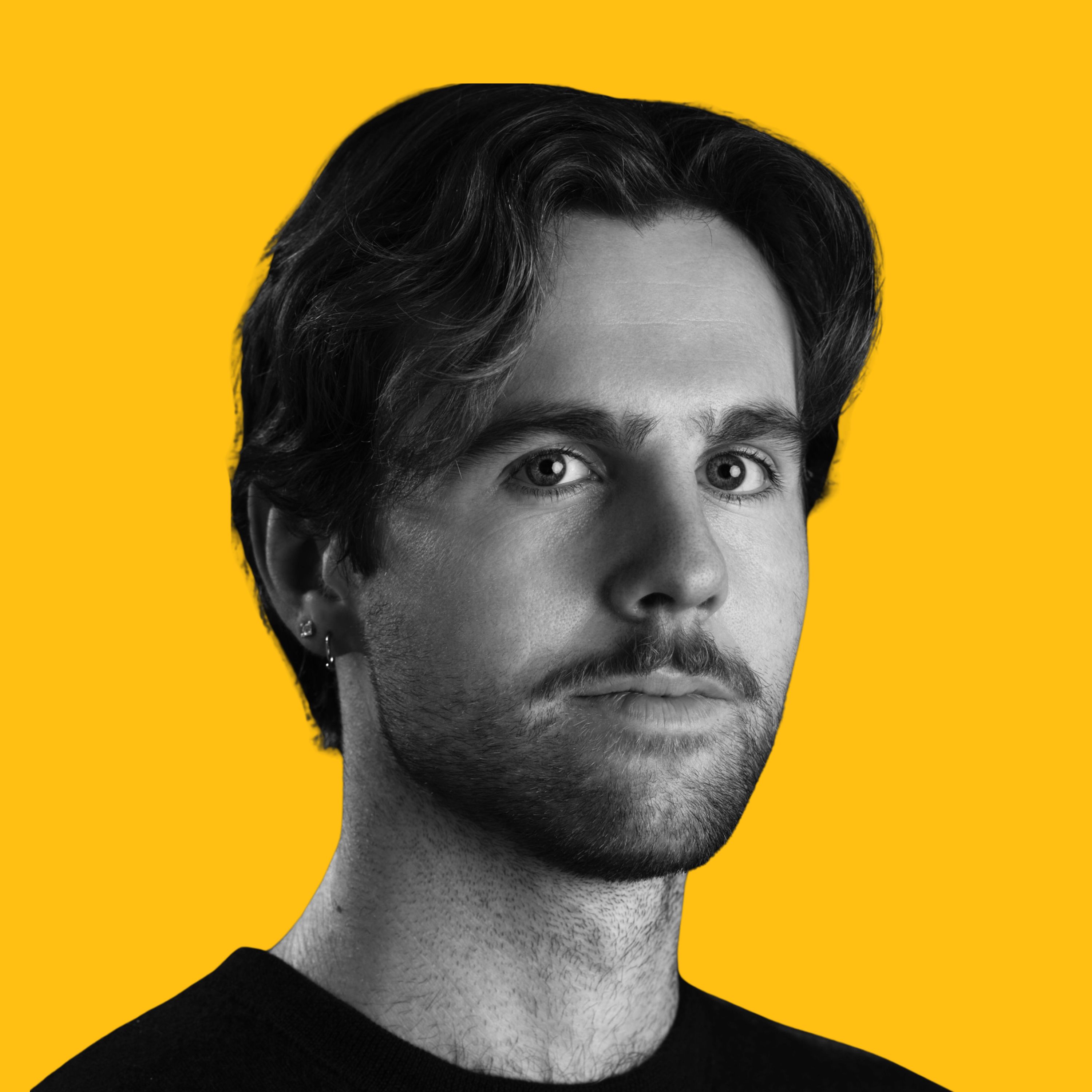
Peter Schmidt is the co-editor of Attensity! A Manifesto of the Attention Liberation Movement. His writing has appeared in Foreign Affairs, The Baffler, The Brooklyn Rail, and The New York Times. Since September of 2022 he has served as the Program Director of the Strother School of Radical Attention in Brooklyn.