What Do You Do When You're (Actually) Working?


In this episode, we dive deep into the real value of creative work—what we truly get paid for, beyond our time and output. We bring together two insightful thinkers, Rebecca Hinds and Jen Fisher, whose perspectives on meetings and hope transform how we structure our work days and support our teams.
We explore why most meetings sabotage productivity and how “visibility bias” tricks us into equating a full calendar with actual progress. Rebecca Hinds (author of Your Best Meeting Ever) challenges us to rethink meetings as products: expensive, important, yet often poorly optimized. She shares actionable strategies like "meeting doomsday" and the "rule of halves" to declutter calendars and refocus collaboration.
Shifting gears, we unpack the often-overlooked topic of hope in organizational culture. Jen Fisher (author of Hope Is The Strategy) reframes hope as a strategic, action-oriented process, not just a feel-good slogan. We discuss Gallup’s finding that hope ranks higher than trust as what people want most from leaders, and how misaligned incentives erode both hope and well-being, leading to disengagement and burnout.
Throughout, we challenge creative pros to rethink their real value—insight, intuition, and emotional logic—and encourage leaders to create environments where these qualities flourish.
Five Key Learnings:
- Insight is Indispensable: Our unique perspectives, intuition, and courage—not just our time or output—are what make us valuable in creative roles.
- Meetings Need a Reset: Meetings often serve as a status symbol rather than a tool for progress. Treating meetings as products and regularly auditing their purpose and effectiveness can dramatically improve collaboration.
- Subtract to Add Value: Applying the “rule of halves”—cutting meeting length, attendees, agenda items, or frequency—forces us to focus on what’s truly essential and breaks the cycle of addition sickness.
- Hope Is Strategic, Not Sentimental: Hope is a cognitive, actionable process that drives teams forward. Organizations must foster strategic hope to encourage risk-taking and innovation.
- Alignment Drives Well-being: Stated values must match incentives and systems. Misalignment between what leaders say and reward creates dissonance, burnout, and disengagement.
Get full interviews and bonus content for free! Just join the list at DailyCreativePlus.com.
Mentioned in this episode:
The Brave Habit is available now
My new book will help you make bravery a habit in your life, your leadership, and your work. Discover how to develop the two qualities that lead to brave action: Optimistic Vision and Agency. Buy The Brave Habit wherever books are sold, or learn more at TheBraveHabit.com.
Todd Henry [00:00:03]:
You know, I've spent most of my career, the better part of 3 decades, studying how creative professionals do their best work and how leaders help other people do their best work. And I've noticed something kind of fascinating. Most people, if you really drill it down, most people have no idea what they actually get paid for. Do you? I think it's worth considering. Now, if you ask a lot of people, you know, what they do, they'll tell you things like, I'm a designer, or I'm a writer, I'm a strategist, I manage manage a marketing team, but that's not what I'm asking. I'm asking, what do you actually get paid for? What's the thing that when you do it well makes you completely indispensable? And here's what I've discovered. You, you don't actually get paid for your time. Nobody's going to pay you if you show up at, you know, 8:30 AM, sit down at your computer, sit there all day, and then check out at 5 or 5:30 PM.
Todd Henry [00:00:54]:
You don't get paid for the output, for the designs, the copy, the campaigns. There are a lot of things that can do that. You get, you get paid for your insights. You get paid for your ability to see what others miss, to make connections that others don't make, to solve problems in ways that create disproportionate value, to make your manager say, oh, I never thought of it that way before. I mean, think about it. Anyone can spend 8 hours sitting at a desk. I mean, AI can now generate output faster than any human. Most of the output that you make can be generated by artificial intelligence, but what you bring, that unique combination of experiences, intuition, pattern recognition, intuition, creative courage, that's kind of irreplaceable.
Todd Henry [00:01:38]:
And that's what organizations are actually paying for when they hire creative pros. But here's the problem. If your job is to generate insights and to bring your best thinking to the problems you're solving, then everything about how you structure your work matters. How you structure your day matters. How much time do you spend actually working, actually doing the thing that you're getting paid for? The quality of your collaboration matters in this scenario. The way you spend your attention, your finite attention, matters. Your ability to stay resilient and hopeful in the face of uncertainty matters. That's why I'm excited for today's conversations.
Todd Henry [00:02:19]:
We're bringing together two brilliant thinkers who have written books that on the surface might seem to be about different things, but they're actually deeply connected to this fundamental question of how creative pros do their best work. Rebecca Hines has written a book about the thing that either makes or breaks a lot of creative collaboration: meetings. And before you roll your eyes, this isn't another meetings are terrible rant. Rebecca understands that for creative pros, for people who work with their minds, meetings are actually where insights collide, where ideas get pressure tested, and where the real work of collaborative problem solving happens when they're done right. And Jenn Fisher has written about something that might seem soft but is actually the hardest thing to maintain in creative work: hope. Not toxic positivity, not denial, but genuine strategic hope. The kind that allows you to keep bringing your best thinking even when the path forward is unclear, even when you've hit your 10th dead end, even when the world feels like it's on fire. Because here's the truth: if you can't maintain hope, you can't take creative risks.
Todd Henry [00:03:19]:
And if you're not taking creative risks, you're not generating the insights you're actually being paid for. You're just going through the motions, and machines can do that. So Today's conversation is really about the infrastructure of insight. How do we create the conditions in our meetings, in our mindset, and in our daily practices that allow us to do the thing we're actually here to do? This is Daily Creative. Since 2005, we've served up weekly tips to help you be brave, focused, and brilliant every day. My name is Todd Henry. Welcome to the show.
Rebecca Hinds [00:03:58]:
Fundamentally, we deploy meetings in a way that sabotages productivity.
Todd Henry [00:04:03]:
That's Rebecca Hines, author of the new book, Your Best Meeting Ever.
Rebecca Hinds [00:04:08]:
And one of the key reasons is when we think about collaboration. So collaboration is this activity that as knowledge workers, as desk workers, we spend 85% or more of our time collaborating. So much of that is invisible, right? It's hard to end the day knowing who you've collaborated with, how often and how effectively. Of it is meetings are quite visible when it comes to collaboration. Often we can see meetings on people's calendars, we can see them in the conference room, we can see the Zoom screen. And so because of that, we as humans have a visibility bias. We tend to associate presence with productivity. And so we've gotten into this reality where we use meetings to show we're productive and busy.
Rebecca Hinds [00:04:53]:
And that's why having a full calendar is often a status symbol, a symbol of importance. And it encourages us to deploy these meetings in a way that shows we're productive regardless of anything happening that's meaningful in the meeting. At least we've done something and sat through the meeting. There are lots of other reasons why meetings are so sticky and dysfunctional, but fundamentally I think it boils down to this visibility bias that we have and meetings very much fueling that.
Todd Henry [00:05:21]:
Meetings often, they make us feel like we're doing something, right? I think sometimes we confuse meeting with progress. Well, at least we met to talk about something, but I love this perspective that meetings, we should see meetings as products, right? If most of our meetings were actually put out as products the way that we actually do them, like they actually would not be very successful products. Why don't we apply that same scrutiny to our internal meetings that we apply to the products we put into the world?
Rebecca Hinds [00:05:53]:
Meetings are the most expensive, important product in our organization. They're where decisions get made, culture gets built, priorities get set, and yet they're the least optimized. And part of it is inertia. For decades, and one of the reasons I started with this Simple Sabotage Field Manual, that's decades and decades old, and our meetings, how we deploy our meetings, have largely remained unchanged. And so to jolt people out of the status quo, to get them in a different mindset around meetings, takes a dedicated effort. And it's not as simple as adding an agenda to your meeting. It requires a complete reset, which is not rocket science, but it's hard to get people out of that, that mindset.
Todd Henry [00:06:37]:
Let's talk about that concept of meeting debt. What is meeting debt and how does it impact us?
Rebecca Hinds [00:06:42]:
So meeting debt, we've all felt it. If we look at our calendars now, there are a whole bunch of meetings that have probably outgrown their purpose. Legacy meetings that were designed for one specific project that no longer exists. The weekly team meetings that probably don't serve serve a purpose as they were originally intended. And over time, we build up recurring meetings in particular that are on our calendar but probably don't deserve to be on the calendar. And so one of the key strategies in the book, and one that I've seen a lot of success with, is what I call a meeting doomsday— to delete your recurring meetings for a period of 48 hours and then consciously rebuild your calendar from the ground up. So delete the meetings that no longer serve the purpose and redesign the ones that have some value. But every meeting on our calendar can be improved, even if it's subtracting 5 minutes, if it's removing an attendee, if it's changing the cadence.
Rebecca Hinds [00:07:46]:
And again, treating our meetings just as we would products with constant iteration. And we've done the comparison in terms of how does this compare to a traditional meeting audit, for example, where The meetings are still on your calendar, you're evaluating them one by one. And what we see is that psychological jolt of having a fresh slate is enormously impactful in not just saving time, but also starting to reset our calendars in terms of what actually deserves to be a meeting and also removing the social pressure that we all feel when canceling meetings. It starts to feel like you're not just canceling the meeting, you're canceling the person behind the meeting in a way that is often taken personally.
Todd Henry [00:08:30]:
I think that's part of the challenge is I think a lot of people hearing this would say, yeah, for sure, I want to get rid of all of my meetings, or at least like 80% of my meetings. But those are not the meetings that are important to me. I want to keep my meetings, the ones that are important to me, but I want to get rid of everybody else's meetings. So how do you recommend we approach that conversation? Or when we, when we need to have that conversation, how do we approach that?
Rebecca Hinds [00:08:55]:
So there are lots of strategies. One chapter in the book is focused on user-centric design. So just as we would design products with our users in mind, we absolutely need to be taking the same approach and discipline to meetings. So the users of your meetings are the attendees. They're not you as the organizer. And there's fascinating research by my colleague, Steven Rogelberg, that shows the meeting organizer and the person who talks the most in the meeting, those are the two people who tend to leave the meeting most satisfied because we've designed the agenda, we've hogged the airtime, whereas the attendees are much less likely to rate the meeting as effective. So that's the first step. It's having an awareness of what value are your employees reaping from meetings or not, and in particular, the meetings you organize.
Rebecca Hinds [00:09:46]:
And so, I recommend in the book a concept called return on time investment that I learned from my colleague Elise Keith. Essentially, just as you would measure the return on investment for products, you measure the return on time investment. So simple, after about 10% of the meetings you run, ask attendees, was this meeting worth the time you invested? Was it a good time investment? Because everyone has a pretty intuitive sense of the value of their time, And you start to be able to have a gut check in terms of, okay, is this meeting actually valuable for the people in the room, or is it just valuable for me? And in those cases, usually you can convert the meeting into an asynchronous update. Usually it's the boss who feels the need for the meeting to disseminate information or to collect input from their teams or to collect updates from their team, usually those are things that can happen much more effectively asynchronously.
Todd Henry [00:10:47]:
Are there specific metrics that you recommend that we look at when we're trying to determine return on time invested? What are— I love that acronym. What do you— what metrics you recommend we look at?
Rebecca Hinds [00:10:59]:
So ROTI is a great first start. And what you don't want to do is you don't want to overwhelm people with too many surveys after the meeting. And so 10% of your meetings, It's a simple 0 to 5 scale. Was the meeting a complete waste of time, or was it more valuable than anything else you could have been doing with that time? Analytics and AI has enormous potential to supplement that subjective rating in terms of RODI. So, I recommend airtime. Airtime is one of the strongest predictors of team performance, and what's fascinating is we know that when airtime is off balance, when it's off kilter, which is often the case in meetings, it doesn't just frustrate people, it actually distorts our perception of the people in the room. It's sometimes called the babble hypothesis, where we know that the more someone speaks, the more we perceive them to be a leader regardless of what they're saying. And so having a good sense of, are my meetings relatively equal in terms of airtime, and then being able to course correct sometimes unequal airtime is indication that you should be removing people from the meeting.
Rebecca Hinds [00:12:07]:
Other times it should be you as a leader need to dial back, but it gives you a good sense of whether your meeting is effectively designed. Multitasking is another good one. Double bookings. It's phenomenal how many double booked calendars there are in our organizations and being able to understand, okay, lateness. Are people not showing up because the calendar is double booked or are they not showing up because the meeting isn't valuable, that offers some good insight as well.
Todd Henry [00:12:37]:
Tell us about what you call the rule of halves. What is this kind of minimalist approach that you recommend?
Rebecca Hinds [00:12:44]:
So the rule of halves is a concept I learned from my amazing colleagues Bob Sutton and Leidy Klotz, and they've done a lot of research on this idea of addition sickness. So we know that as humans, we're naturally inclined to solve problems through addition. And we all do this. When we have a problem, we add more people to it, we add more money to it, we add more meetings, we add more people in the meetings. The natural default is addition, whereas Leidy's research in particular shows that if you prompt people to subtract, it dislodges that addition sickness and they start to adopt a subtraction mindset. And often it's not because people hate subtraction, it's often that they, it doesn't even occur to them that it's possible or on the table. And so the rule of halves essentially looks at the 4 key dimensions of your meetings. So that is the length, the attendees, the agenda items, and the cadence, and encourages you to pick one or all 4 and cut that dimension in half.
Rebecca Hinds [00:13:53]:
So you have a 30-minute meeting on your calendar, try cutting it to 15 minutes. Sometimes you cut too deep, but in almost all cases, you start to realize what really is essential, and usually it's not the full duration, the full cadence, the full attendee list as the original. We know that meetings suffer from what's called Parkinson's Law, meaning work expands to fill the time allotted. And so if you give a meeting 30 minutes, it will probably take 30 minutes. If you force it into 15 minutes, you start to become much more judicious and intentional about what actually deserves to be in those 15 minutes.
Todd Henry [00:14:29]:
What would be your advice for a place to start for those who realize we need to do something different in the coming year with how we structure our meetings?
Rebecca Hinds [00:14:38]:
Mm-hmm. If you don't have an environment that is psychologically safe to start declining meetings, the simplest thing you can do as an individual but in particular as a leader on a team, is map out what does our communication system look like, what is our communication operating system, and what is the purpose of each tool. One of the biggest problems organizations face is employees don't have clarity in terms of when do I use Slack versus when do I use an email versus when do I use a meeting, and simply delineating that putting it on your intranet or wiki can give employees a lot of clarity in terms of what actually deserves to be a meeting and treating meetings like a last resort rather than this knee-jerk reflex. And so in the book, I outline a rule called the 4D CEO rule to determine whether a meeting actually needs to exist. So a meeting should only exist if the purpose is to decide, discuss, debate, or develop yourself or your team. And just that first part of the test helps eliminate a lot of meetings, all those status update meetings, all those boss briefings, giving employees clarity. And I encourage people to, especially if you're a leader, ask 5 of your employees what deserves to be a meeting in our organization. You shouldn't get more than one different answer.
Todd Henry [00:16:04]:
Rebecca Hines' new book, Your Best Meeting Ever, is available now wherever books are sold. If you want to hear the full interview, you can do so dailycreativeplus.com. It's absolutely free. Just go there, enter your name and email, and we'll send you a private feed to listen to all of our full interviews. This conversation about how to actually make creative collaboration effective is helpful, but maybe you're thinking, okay, great, now I know how to structure better meetings, but there's a deeper question lurking beneath all of this. Even the best meeting structure in the world won't help you if you show up depleted, cynical, or running on fumes. You can have perfect agendas and pristine facilitation, but if But if you and your team have lost the ability to believe that your work can actually make a difference, if hope has left the building, then you're just rearranging deck chairs. And that's what brings us to Jenn Fisher.
Todd Henry [00:16:54]:
Her new book is called Hope Is the Strategy, and we're going to talk with her in just a minute. Stick around.
Jen Fisher [00:17:17]:
Generally in society and business, we are used to the phrase that hope is not a strategy. And so that was the reason why I called the book Hope Is the Strategy. I'm not suggesting it's the only strategy, but it is absolutely a strategy for life and for business. And so when I talk to business leaders that are like, really, like, really, Jen, you want me to believe that hope is a strategy? The first thing I say is, yes, I actually do. And then I lead— and then I lead with, okay, do you want to be the leader of a hopeful organization or the leader of a hopeless organization?
Todd Henry [00:17:50]:
That's Jenn Fisher, formerly Deloitte's chief well-being officer and author of the new book Hope Is the Strategy.
Jen Fisher [00:17:57]:
And that tends to perk their ears up and say, oh, tell me more. And so hope, by all of the research and the science that exists, is not an emotion, which is what many of us believe. It's not just a feeling or wishful thinking. But if you look at the research of C.R. Snyder, who is the godfather of hope theory and hope research, and many others, hope is actually a cognitive process. And what I like about hope and what makes it a strategy, and a business strategy especially in today's workplace, is that hope requires action. Hope requires that you have a goal. Hope requires that you have identified at least 3 pathways, ways in which you can reach that goal, and that you understand your own ability and your own agency to actually move towards that goal.
Todd Henry [00:18:48]:
Jen argues that hope isn't just something nice to have, it's something that people actually want from their leaders.
Jen Fisher [00:18:53]:
Gallup did their World Report, and in their report they looked at the 4 things, or the 4 things that people want most from their leaders worldwide. And the number one thing was hope, and that surprised everyone. And it outranked trust by actually quite a bit. And what Gallup said was that trust is really important, but trust maintains the status quo. Hope is what actually gets people to move forward. Hope is what gets people to believe in a better tomorrow, to believe that your latest strategy or your latest business transformation is going to make them better off tomorrow than they are today. And that's why hope is a really important business strategy.
Todd Henry [00:19:41]:
As you mentioned, it's not enough to— and you say hope is not a feeling, and it's also not just a wish. You need— if you want to get anything done in the world, we need infrastructure, we need practices, systems, resources, all of those things. And so you suggest a new approach for organizations to structure and support human flourishing centered around this idea of hope. Can you describe What is the fundamental difference between what you have seen traditionally, the way that organizations organize themselves, and the way that you're suggesting we can organize around something different, around, around this concept of wellbeing?
Jen Fisher [00:20:14]:
For a long time, wellbeing has been seen as a program or set of programs, tools and resources and benefits that we provide to our people. And that's not to say that those things aren't really important. They are. In my mind, they're table stakes. They'll say things like, we've invested, like we have all these programs for our people. And I say, okay, that's great. And then they're like, but no one's taking advantage of them. Or I'm frustrated because everybody is still telling me that everything about work still sucks.
Jen Fisher [00:20:48]:
And I say, okay, that's because we haven't actually addressed the cultural norms, the ways of working, the, the things about our day-to-day work lives that are actually impacting people's well-being in a negative way. So much about work has changed and our expectations and needs from the workplace has changed, yet we're still working the same way we've been working for 100 years. We just keep adding technology on top of it, thinking that technology, including AI, is going to solve everything, and it never does. Yet we we haven't, haven't learned that lesson. And it's not technology's fault either, but like we as the humans have the agency, the ability, the authority to deploy these technologies in a way that is good for humans, as opposed to in a way that harms humans? What are the norms and behaviors that are real or perceived that are actually detracting from people's well-being in the workplace? And start to address those very real workplace issues that a meditation app will never fix because a meditation app was never designed to fix that.
Todd Henry [00:22:02]:
And this is something that I work with my clients on all the time. And we, when we're talking or having conversations with leaders, we talk about how we have these desired stated outcomes, right? For example, we wanna be a, a workplace that values human beings and we want to position people to be able to bring the best of who they are, which means, you know, preserving their energy and ensuring they have all the resources they need. And really refining their focus so that they feel alive every day when they're doing their work. And we're all connected and we're really like putting our best energy. But then their systems and their incentives and their rewards are completely misaligned from the desired outcomes. And so we say these things, but then we promote the people who completely fry themselves, or we promote the people who are whoever is the most like vicious competitor and is willing to like stomp out everybody else culturally. Those are the people we end up like So then what does that leave us with? We're asking the question like, I don't understand. There's this dissonance.
Todd Henry [00:22:58]:
So there's a lot of dissonance, 100%. Yeah, that's what I was going to say. So part of your story is you were promoted through this whole system that like rewards burnout. It rewards people who fry.
Jen Fisher [00:23:12]:
Everything that you said is— we almost, in many ways, people are really smart. And so when I talk to leaders, I'm like, you can't just say that you care about people or that you care about their well-being, and then to your point, continue to reward the behaviors that fly in the face of well-being, because then that erodes trust, that erodes hope, that erodes engagement, that erodes— and so I think a lot of what we're seeing from a workforce perspective, and it's all over the place, there's quiet quitting, there's quiet firing, there's— so I think The biggest problem that I see happening right now is there's not enough real conversation. We have leaders in the C-suite or managers of people, and then we have the younger generation, if you will. And I don't love to generalize about generations because I feel like we do that with every generation, but there's not a lot of conversation going on about like, this is the reality of work in the workplace and there are some realities and potentially there are things that can't be changed. But we get so dug in to, no, this is the way work is, or this is the way that I had to do it. And so now everybody has to do it this way. And when I work with leaders, I'm like, but really, do you want to continue to burn? You might have done okay in this system, but isn't your job as a leader to create a better legacy for the people that come behind you? I'm not saying easier, I'm saying better. I think people are sitting back and saying, I've been here a while, I've been doing it this way for a while, and the person that's doing it the other way, that's grinding all night and day, that's the first person to respond to emails, that they're the ones that are getting promoted and rewarded and all of these things.
Jen Fisher [00:24:58]:
And so people are feeling hopeless. They're feeling like what I do doesn't matter. I'm not seen here, I'm not valued, and that nothing is ever going to change and that they don't feel a sense sense of agency or responsibility or even permission to try to make change. And so a lot of people are just resigned to, I'm going to show up, I'm going to do my work, and I'm going to leave, and that's it. And so organizations are not getting the best of people, they're actually getting the worst of people. And so that's why I— like, something has to change. And I do think that hope is the way, especially when you think about the narratives around AI and AI taking everybody's job and the latest round of layoffs, and we don't have leaders that are communicating in a way that inspires hope. As a matter of fact, I think we're all operating from a place of fear.
Jen Fisher [00:25:49]:
And when you have— we all know what happens when you operate from a place of fear, right? Like, it just breeds bad behavior.
Todd Henry [00:25:56]:
Jen Fisher's new book is called Hope Is the Strategy. It's available now wherever books are sold. So what do you do when you're working? Do you just sit in meetings? You just, uh, follow protocol? Do you just comply? Or do you see your job as something more? Are you there to intuit? Are you there to connect dots? Are you there to create value? Are you there to inspire hope? Are you there to call people to something more, to help them see that there is something they are capable of that maybe they don't even see? Yet for themselves. So whatever your role, whatever your job description, I encourage you this week to spend some time thinking about what do I actually get paid for? What is the value that I should be producing? And more importantly, what is being called out of me that I bring to my work every day instead of allowing my job description to define my activities? Because at the end of the day, as creative professionals, what's being called out of us, our intuition, our ability to synthesize, as I've called it before, our emotional logic, that's the thing that makes us indispensable. Okay, thanks so much for listening. Again, if you'd like all of the full interviews, you can get them at dailycreativeplus.com. Just go into your name and email address, we'll send you a private feed where you can listen to the full interviews absolutely free. Also, if you want to know more about me and my work, my speaking events, my books, and more, you can find them at toddhenry.com.
Todd Henry [00:27:28]:
Until next time, may you be brave, focused, and brilliant. We'll see you then.
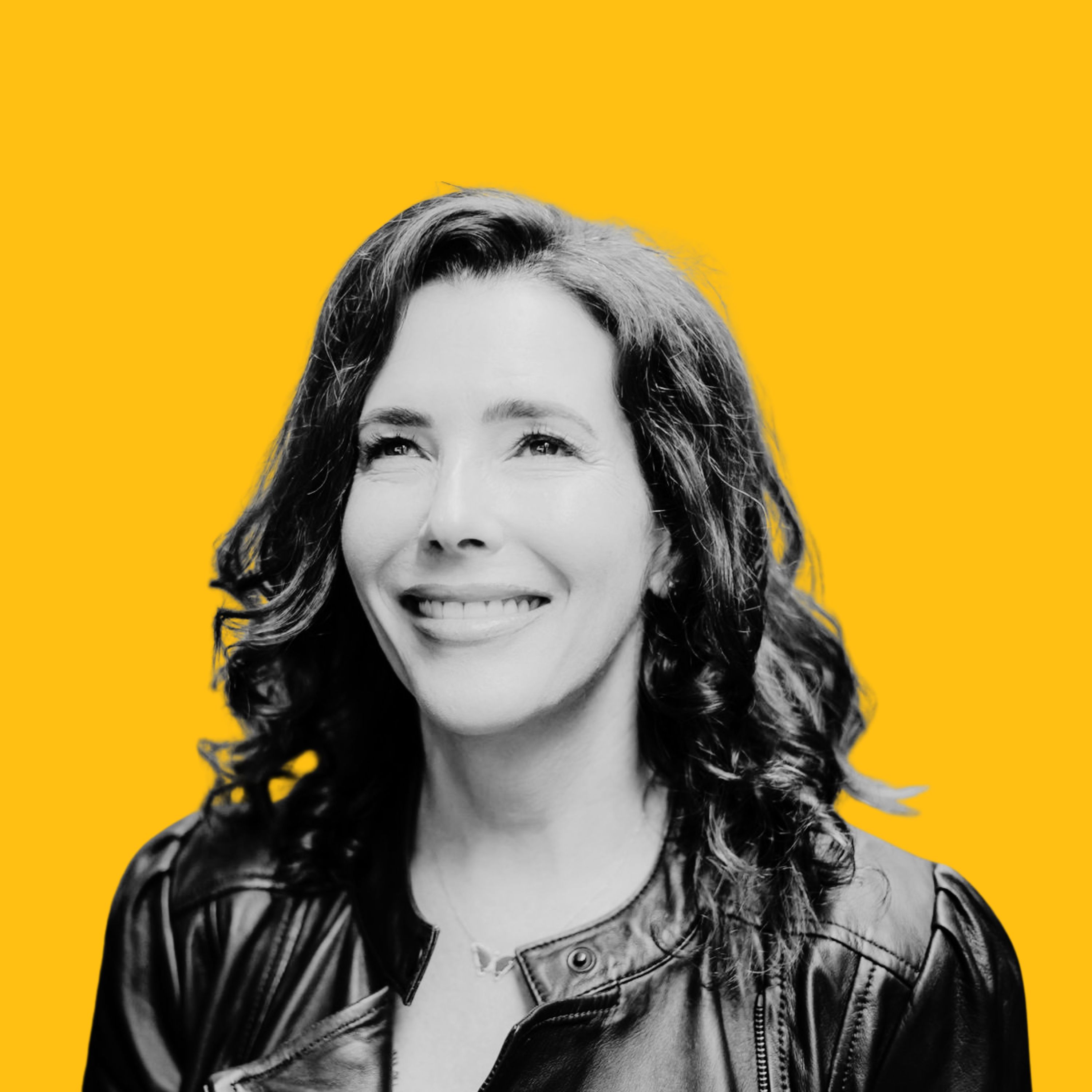
Author, Hope Is The Strategy
Jen Fisher is a global authority on workplace wellbeing, the bestselling author of Work Better Together, and the founder and CEO of The Wellbeing Team.
As Deloitte US's first chief wellbeing officer, she pioneered a groundbreaking, human-centered approach to work that gained international recognition and reshaped how organizations view wellbeing. From her personal experiences with burnout and cancer to her role as a trailblazer in wellbeing intelligence and co-creator of WellQ360, Jen has dedicated her career to helping leaders build work cultures where people can thrive—physically, mentally, and emotionally. Her work challenges outdated systems and champions a vision of work that sustains people rather than depletes them.
Jen is also the creator and host of The WorkWell Podcast, a TEDx speaker, and a sought-after voice at events like Workhuman, SXSW, Milken Global Conference, and Happiness Camp. She has taught at Harvard and UCLA, served as editor-at-large for Thrive Global, and contributed to leading media outlets including Fortune, CNN, and Harvard Business Review. At the heart of Jen's work is the knowledge that hope is not just a feeling—it's a strategic imperative. She helps leaders harness hope as a catalyst for cultural transformation, guiding them to reimagine work as a force for human flourishing.