

 Apple Podcasts
 Spotify
 The One and the Ninety-Nine
In this episode of Daily Creative, we explore the tension between individuality and belonging, drawing inspiration from both jazz legend Miles Davis and the philosophical tradition extending back millennia. Our guest, Luke Burgis—author of The One and the Ninety-Nine—joins us to dig deep into why it's so hard to be part of a group without losing ourselves in the process.
We discuss the perils of both extreme individualism and unthinking collectivism, highlighting how modern work environments (and even family structures) tempt us to trade authenticity for acceptance. Luke introduces the distinction between the "solid self"—rooted and consistent—and the "pseudo self" that constantly morphs to fit the crowd. We wrestle with the overload of information, opinions, and exposure in our hyperconnected age, calling out how these factors pressure us to conform and silence the voice that makes us distinctly ourselves.
We also tackle practical disciplines for holding on to individuality, the power of true perception versus mere information, and the need for leaders to create environments where distinctive voices can thrive. If you’ve ever felt the quiet urge to blend in—or the anxiety of standing out—this conversation offers a roadmap for contribution without disappearance.
Five Key Learnings
- Real Unity Is Not Sameness: Great teams, like great jazz ensembles, are unified not because everyone sounds the same, but because each person brings their full, distinctive self to the room.
- Solid Self vs. Pseudo Self: We risk exhaustion and detachment when we constantly negotiate or adjust our identities to fit group expectations, instead of rooting ourselves in deeper convictions and values.
- Information Isn’t Relationship: The overwhelming flow of information in our lives can fool us into thinking we have real connections, when what we really need are authentic, lived relationships.
- Protect Your Perception: Amid a culture obsessed with articulating opinions, it's critical to foster and trust our own perception and intuition—a distinctly human capability that no machine or collective can replicate.
- Leaders Build the Room: If we are responsible for others, our job isn't to enforce uniformity, but to build spaces where authentic voices and creative risks are both valued and protected.
Get full interviews and bonus content for free! Just join the list at DailyCreativePlus.com.
Mentioned in this episode:
To listen to the full interviews from today's episode, as well as receive bonus content and deep dive insights from the episode, visit DailyCreativePlus.com and join Daily Creative+.
Todd Henry [00:00:02]:
In the spring of 1959, six musicians walked into a converted church on East 30th street in Manhattan. Columbia Records used the building as a studio because the acoustics were extraordinary, like a lot of old churches were. And the men who showed up that day were pretty extraordinary too. John Coltrane on tenor saxophone, Cannonball Adderley on alto, Bill Evans at the piano, Paul Chambers on bass, Jimmy Cobb on drums. At the center of it, the trumpet player who had called them all there, Miles Davis. What they made over two short sessions that spring became Kind of blue. More than 60 years later, it's still the best selling jazz album ever recorded. And it sits near the top of almost every list of greatest albums in any genre.
Todd Henry [00:00:49]:
Now, here's what you would expect. You would expect that a record that unified, that seamless, that whole came out of months of rehearsal. You would expect that Miles drilled his band until people moved as one. That, friends, is not what happened. Miles arrived with sketches, a few lines on paper, some of them written only hours before. Just enough to tell each player the shape of the thing and where it was headed. He gave brief instructions and then they rolled the tape. Most of what made it into that album was a first complete take.
Todd Henry [00:01:22]:
In a real sense, the musicians were discovering the music in the same moment that we are still listening to it today. Now, the reason that Kind of Blue sounds so whole is not that six people blended into one voice. It's the opposite, actually. Coltrane sounds nothing like Cannonball. Cannonball sounds nothing like Evans. Every one of those players is unmistakably, stubbornly himself. Miles did not build a band where everyone disappeared into the group. He built a room where nobody had to.
Todd Henry [00:01:51]:
The unity you hear is the sound of six people being completely themselves at the same time. In my book, Herding Tigers, I made the argument that the people we lead do not need us to control them. They need us to build the kind of environment where they can bring their full, distinctive selves to the work and take real risks while doing it. Creative people need two stability and challenge. What they do not need is to be drilled into sameness. Our job as a leader is not to make everyone play the same note. It's to build the room. But that raises a harder question.
Todd Henry [00:02:24]:
And it's not only a question for leaders. It's a question for every one of us who's ever joined a team, a company, a community, and felt the quiet pull to fit in by becoming a little less of ourselves. How do you belong to something without disappearing into it? How do you stay yourself and genuinely be part of the whole. That's exactly the question that today's guest has spent years thinking about. My guest today is Luke Burgess. Luke is the director of the Clooney Institute and a professor at the Catholic University of America. You may know him from his best selling book, Wanting, which took the ideas of the philosopher Rene Girard and made them genuinely useful for our understanding of desire, ambition, and the way we catch our wants from the people around us. He writes at the intersection of philosophy, ethics and business, which is a rare combination, and he does it without losing the thread of how it actually applies to your Tuesday afternoon Today.
Todd Henry [00:03:19]:
He's here to talk about his new book. It's called the 1 and the 99. It took him five years to write, and it grew out of a story he had heard dozens of times, the Parable of the lost Sheep, the shepherd who leaves the 99 to go find the 1. And Luke got curious about that 1 sheep. What was it like to be the One who wanders off? And what does that have to do with the tension that all of us feel about wanting to be known as individuals and wanting to be part of something larger than ourselves? This is Daily Creative. Since 2005, we served up weekly tips to help you be brave, focused and brilliant every day. My name is Todd Hen. Welcome to the show.
Luke Burgis [00:04:01]:
One of the perennial problems in philosophy, the problem of the one and the many. Why are we one and yet many? Why are there many things and yet there's some commonality among them?
Todd Henry [00:04:10]:
That's Luke Burgess, author of the new book the 1 and the 99.
Luke Burgis [00:04:14]:
So it's a perennial problem in the world that philosophers have been thinking about for thousands of years. And I've been struggling with the tension between the swings from individualism and collectivism. And both of those extremes, I think, get something fundamentally wrong about the nature of the human person as a relational creature who is both one and also wants to be in relationship with others. So I've been struggling with that for years in the various communities that I've been a part of. And then one day, after a kind of a crazy series of events and some health struggles in my own family with my father, I was reading the Parable of the Lost Sheep from the Bible, which I'd read dozens of times or heard dozens of times in my life. And for those who don't know, it's very simply, it's the story of a shepherd who has a hundred sheep. One of them goes wandering and the shepherd goes in search of the lost sheep. And in that story, sort of Jesus asked, which one of you wouldn't leave the 99 to go in search of the 1? Which, to modern ears is, I'm not so sure.
Luke Burgis [00:05:15]:
What I sacrificed is to preserve the One. And it just got me thinking, maybe there's more to that story there. And maybe I can get inside the head of that lost sheep a little bit and write an entire book from inside the head of that lost sheep and try to figure out what's going on in my own relationships to various groups and communities that I'm a part of. And what is it, this simultaneous drive that I have to both be differentiated and be known as an individual and known as myself? And yet that's a very strong drive to be in community at the very same time.
Todd Henry [00:05:44]:
Why is it so difficult, especially, and I find this in the creative community, to belong without disappearing. Right. Belong to a community without disappearing into the community or just feeling like you have to adopt all of the norms and the expectations of that community. Why is it so difficult for us to navigate that line?
Luke Burgis [00:06:02]:
I think we have some kind of false narratives about what it means to be in community. We show up to be in community, and certainly there might be certain sacrifices that we have to make to be in community. If I'm sitting around with my family and my in laws and we're trying to pick a movie to watch on Christmas break, maybe I just need to kind of sacrifice my own ideas about what I would like to watch in that moment so we can have a nice family night and watch something that all the kids want. But in a lot of professional environments and workplaces, even in churches, many of the different kinds of communities I've been a part of, I think that people do fundamentally sacrifice something essential to who they are, maybe even part of their creative instincts, something that causes them to die a little bit inside in the wrong ways. And I've been trying to figure out in what cases do I need to sacrifice something for the common good? And in which cases would I be sacrificing something that actually harms the common good and myself at the same time.
Todd Henry [00:06:58]:
Right?
Luke Burgis [00:06:58]:
Because the group should benefit from my unique history and ideas and who I am. And I think one of the narratives that we have and our society has to be in community. We all have to be on the same page all of the time. Dissent is not tolerated very well. There are not even good mechanisms and processes for even handling that. We tend to just want to squash any anxiety and make it go away as quickly as possible. And that Tendency to want to just get rid of anxiety and flee from it by any means necessary, I think just leads to a lot of problems in our world.
Todd Henry [00:07:31]:
I've heard people say that it feels like these days we. It feels like we used to understand who we are, understand our beliefs, understand our desires, our goals, all those things. And then we chose a tribe to meld into, and it feels more and more like we are instead choosing a tribe and then backward engineering our beliefs, our perceptions. And in some ways, I see this playing out in organizations as well. People identify where they want to go, what they think they want to be, or the career path they should be on. They backward engineer, then this is how I need to behave, or this is who I need to mimic in order to get there. And you introduce this idea of the solid self versus the pseudo self. Could you describe what that is and talk about why that makes it difficult for us to be ourselves inside of an organization instead of just reacting to the group's anxiety?
Luke Burgis [00:08:19]:
Yeah. And before I comment on that, I would say not only do we choose tribes first, a lot of times the tribes choose us and apply certain labels to us without us even knowing it. And we assimilate ideas about who we are from the tribes that have chosen to say or identify us as part of them. So it actually, I think, works in reverse, especially in the online world, where all we need to do is log on and the algorithm will basically put us in one. And if we're not careful about it, if we're not intentional, we just begin to become a little bit more like it. The pseudo self and the solid self is this distinction that came from a family system psychologist named Murray Bowen. He was at Georgetown in the 50s and 60s, and he's the first family therapist to apply systems theory to the family. And he would say, when an individual comes to me, it's very difficult, maybe impossible for me to help them without understanding the emotional system and framework and situation that they find themselves in their family.
Luke Burgis [00:09:16]:
How many siblings do they have? What are the dynamics there? And he says the family is the first group that most of us are part of, where we learn certain patterns and ways of behavior. And one usually either learns to differentiate themselves within a family or not to varying degrees. Right. It's not one or the other. It's not black and white. But we learn the process of differentiation, which means that our emotions, our ideas, our feelings, our thoughts, we can separate ours from other people. Right. If other.
Luke Burgis [00:09:46]:
If everybody else in the family is mad, it's me recognizing that actually that thing doesn't make me mad. Rather than just becoming fused into the system that I find myself in. And this happens at work all the time. But it happens with gossip. It happens when there's anxiety. We catch the anxiety or the emotions of the people that we're around the most by contagion. And Bowen says that's a pseudo self operating. When we're in those situations.
Luke Burgis [00:10:11]:
We can't differentiate ourselves to know ourselves and where we end and another person begins, or where we end and the group begins enough to act as what he would call a solid self, which is the kind of self that's not negotiating who it is in real time, which is. First of all, it's very exhausting to have to negotiate your sense of identity in real time as we move through the world in different groups. A solid self. That doesn't mean that the solid self doesn't change, but it means that the solid self is just rooted in something deeper. And it stands on certain convictions. It has a deeper sense of self. And if it does change, it happens in a more deliberate, usually a slower and more intentional way.
Todd Henry [00:10:51]:
I'm curious to get your perspective on the impact of exposure. So we are exposed to vastly more information situations, arguments, other people's work, other people's living situations than at any point in human history. And I'm really curious to get your perspective on how that impacts some of this solid versus fluid self response that we might have. Right. Or some of the ways we feel pulled into trying to be something maybe that we aren't. I know this is. It's a problem of human existence, human psychology, but do you believe that we are in a situation where we are having to wrestle with this in ways that maybe past generations have not had to wrestle?
Luke Burgis [00:11:36]:
I absolutely think so. I don't think that we're built to live in this kind of an environment. And we need to figure out ways to set boundaries. It's both a relational overload and an informational overload at the same time. And what's interesting is that sometimes those two things get conflated. And that's what's really causing a lot of the disconnect. Most people are familiar with Dunbar's number. Robin Dunbar, who realized humans can't really have more than 150 relationships.
Luke Burgis [00:12:02]:
Not everybody knows that. What he was actually saying is that that's like the max, like a period. Right now we just log on and we have hundreds of thousands sometimes, actually, really, we can only have a handful, maybe even seven or eight really close relationships that shape Us. And then there's the information problem, which is we're just exposed to way too much information. We know what everybody thinks about everything all the time, right? There's kind of. There's been a change in the permission structure, where everybody just feels like they need to have to weigh in on everything, even if they don't know anything about it. What's your take on that? What's your take on this? So we're being bombarded with information. We can forget that we actually don't have to have an opinion about everything the first time we hear about it.
Luke Burgis [00:12:46]:
And I think what's really what worries me quite a bit is that we see a lot of people online that give opinions, and we get bombarded with more information than we can frankly handle. But information is not the same thing as relationships. And sometimes we just get to hear so much information from certain groups or certain people, it gives us the impression that we actually have a relationship with them and we really don't have a real relationship with them. So I think this kind of distinction between information and relationships, we have too much of both. And then the problem is compounded a layer deeper, because I think we conflate information with real relationships, and that just causes tremendous problems with the formation of the cell itself. And I'm a big believer in intentionally shielding ourselves from information. I often think the less I know about something, the better decision that I can make. Even in the process of writing this book, I had to go into my own form of cave for a while.
Luke Burgis [00:13:44]:
And otherwise, I think I wouldn't have necessarily said anything really that interesting or that true to what I actually believe. If I was spending, if I was reflexively worried about what everybody else thought, what everybody else's opinion was. So I think even in the creative process, and which I know is something that you talk about a lot, I think that we all have to be very intentional about how we manage that oversupply.
Todd Henry [00:14:06]:
One of my, actually the most influential writers in my life is Thomas Merton, who was outside of Louisville, Kentucky in the mid 20th century, and I think wrote some of the more profound things about life and frankly, about business. It's so funny how many things I have read that have immediately made me think about some application to something I'm working on. I'm like, this is really pretty incredibly deep stuff. But the lives of the contemplatives, or the lives of those who spend time disconnected deeply in thought, preparing themselves to be able to respond versus react to the world, it feels like that's in some Ways a. A lost art in our time. And to your point about opinions, I routinely have to tell myself, you don't have to have an opinion about that. It's okay. It's perfectly fine for you to experience something and not have an opinion about it, and to not feel the need to.
Todd Henry [00:14:56]:
Or maybe if you don't have to express your opinion, you can sit with your opinion, just spend some time with it and ask yourself, I wonder why I have that opinion. Right? But it does feel like there is this pressure to be constantly reactive. What advice do you give people who want to build some disciplines into their life to help them deal with this information glut, or this relational glut that we're experiencing, or the pseudo relational glut that we're experiencing right now? What disciplines can we implement to help us As a hedge against that, I
Luke Burgis [00:15:27]:
could probably draw some wisdom straight from Thomas Merton here, which I share a lot of admiration for. And I'd finished writing the entire book, the one in the 99, and then I picked up Merton's book no Man Is an Island, which I highly recommend. I hadn't read it in 10 years, and I forgot that he had essentially written like this, the spiritual, contemplative version of The 1 in 99, I think. And I ended up putting a quote from him, from that book in one of the chapters. One of the things that I've learned from him that I would try to apply is the importance of really trying to see in the people that we encounter, their kind of essence, their individuality. Right. Their face. And if you learn to, it's an exercise.
Luke Burgis [00:16:14]:
It's not easy to do. But encountering the other is how we end up encountering ourselves. But it's an other directed orientation and way to do that. And you realize that the world is a very exciting place when you do that. And you can learn something from everybody that you meet, but spend a few beats longer, actually truly encountering just the people that you meet during the course of the day. Stand in the awkward silence before you say goodbye to somebody, rather than hurrying off and see how many times that leads one of you to remember something that you might want to share. It's just incredible what happens when you make that a daily practice. And it's one of the things that Merton wrote about beautifully in many of his books.
Luke Burgis [00:16:59]:
He describes this as a hermit, right? He was a hermit who spent most of his life alone. And he describes a sort of a mystical experience that he had one day standing on a street corner where he felt Mysteriously connected to everybody that he saw all around him. And I got the impression that he very much began to see, and I think he said I wanted to almost cry as I began to see these people that had just been people bustling about. I began to see them in their, in their glory and their uniqueness. And it's not easy to do that today. But I think doing it in the real world, even as you walk down the hall of your office, can be incredibly powerful.
Todd Henry [00:17:35]:
I want to get to a distinction that you make between perception and information. You talk about how so many of us are steeped in this kind of educational favoring of information. But as we move into an age where AI is going to become probably much more part of our everyday lives, how do we instead lean into perception? Or how do we sharpen our perceptions so that we can leverage some of these tools more effectively, but also just so how we can retain our humanity in a world that is increasingly moving toward what feels like machine like efficiency at the expense of human inefficiency. But beauty.
Luke Burgis [00:18:14]:
Right now, perceiving our perception of the world is something that we have as humans, that the AI, the machine doesn't have. There might come a day, it might be here in five years when we have AI powered machines walking down the street that have some kind of a nose where they can smell things and some kind of an ear where they can hear things. But it's probably going to be a while. But maybe that day will come. But even when it does, it will not be the human senses. And I was inspired a lot by Marshall McLuhan on this, who was writing about all of this in the 60s. And he basically said, in the age of the Internet, in the age of information and technology, in the digital era, education really needs to be the education of the senses to be able to perceive the ways in which the world is changing. And the senses are going to be more important than information.
Luke Burgis [00:19:07]:
Just learning how to taste, for instance, is just one example of that. But it's an analogy for all of life. In some sense, when your sense of taste gets dulled, you can't tell the difference between fast food and actually good food, or between a bad wine and a good wine. That's why I love the Slow Food movement. They have this beautiful treatise on how we've lost the ability to taste. And they actually view it as like a moral duty almost to teach people how to taste again. But if you apply that across all of the senses and even our non physical, we all know the five physical senses, but I think there are sort of intellectual senses, there are spiritual senses, and in the philosophical tradition, that's called the sensus communis. When all of them come together to form some power of perception where you just have a really strong intuition about a person or a thing, you can't.
Luke Burgis [00:19:58]:
It might even be hard to articulate why you think you know it. But I think that the world beats out of us this idea that we can trust our intuition. We always need to be articulate. We need to be able to argue, yet we need to be able to make all of the points on Twitter or X about why X, Y and Z is true. And that original sort of power of perception where we can see all of these different factors converge into one experience of knowing. It's an older mode of knowing, but it's a very important mode of knowing all of the great spiritual writers have known. And I think that is going to become more important. If there's one tremendously positive thing about AI, I think it's going to remind humans that we have that power to be able to do that and to be able to see aspects of reality that we may have missed when all we had was this kind of information overload.
Todd Henry [00:20:53]:
Luke Burgess new book, The1 and The99, is available now wherever books are sold. And if you want to listen to our full interview, you can do so@dailycreativeplus.com I want to take you back to that studio on 30th street for just a second. Six musicians, no real rehearsal, a handful of sketches, and out of that comes a record where you can hear on every track exactly, exactly who each person is. Nobody got smoothed out, nobody got absorbed. The whole thing works because the parts, the individual parts, refused to disappear. And that's the thing that Luke and I kept circling today. The pull to belong is real and it's good. But somewhere along the way, some of us picked up the idea that belonging means complete agreement that to be on the team, you have to be on the same page about everything, all the time.
Todd Henry [00:21:38]:
That dissent is a threat to be managed, and instead of a contribution to be welcomed. And so we do the quiet thing that Luke described. We let the group choose us. We back into our beliefs. We trade the solid self for the pseudo self, the version of us that adjusts to the room in real time until one day we're not even sure which opinions are actually ours. What Luke offers is a way out of that, and it's not to go off and be a lone wolf. It's the harder, better thing to stay connected, to know yourself, to pay attention to your senses, to know where you end and where the group begins. Protect a little margin from the noise and the information so you can actually hear your own voice when it counts.
Todd Henry [00:22:20]:
And if you lead people, the challenge is bigger because you're the one building the room. Remember, your job is to create the space within which other people can discover what they're capable of. So here's the challenge that I want to leave you with, and it's small enough to do this week. Find one place where you maybe have been playing into the pseudo self. One meeting or group thread or relationship where you've been adjusting to the room instead of bringing yourself to it. And this week, in that place, say the true thing. Offer the idea, or just hold the moment. Like Luke said, pay attention to what's going on.
Todd Henry [00:22:58]:
Pay attention to what you're intuiting. You don't have to leave the 99 to do it. And that's the whole point. You can stay and still be the one. Hey, thanks so much for listening. If you'd like all of our interviews in full, you can get them absolutely free@dailycreativeplus.com just enter your name and email address. We'll send you a private feed with the full interview of each of our guests. My name is Todd Henry.
Todd Henry [00:23:22]:
If you'd like more information about my books and my speaking events and all of my work, you can find it@todhenry.com until next time. May you be brave, focused and brilliant. We'll see you then.
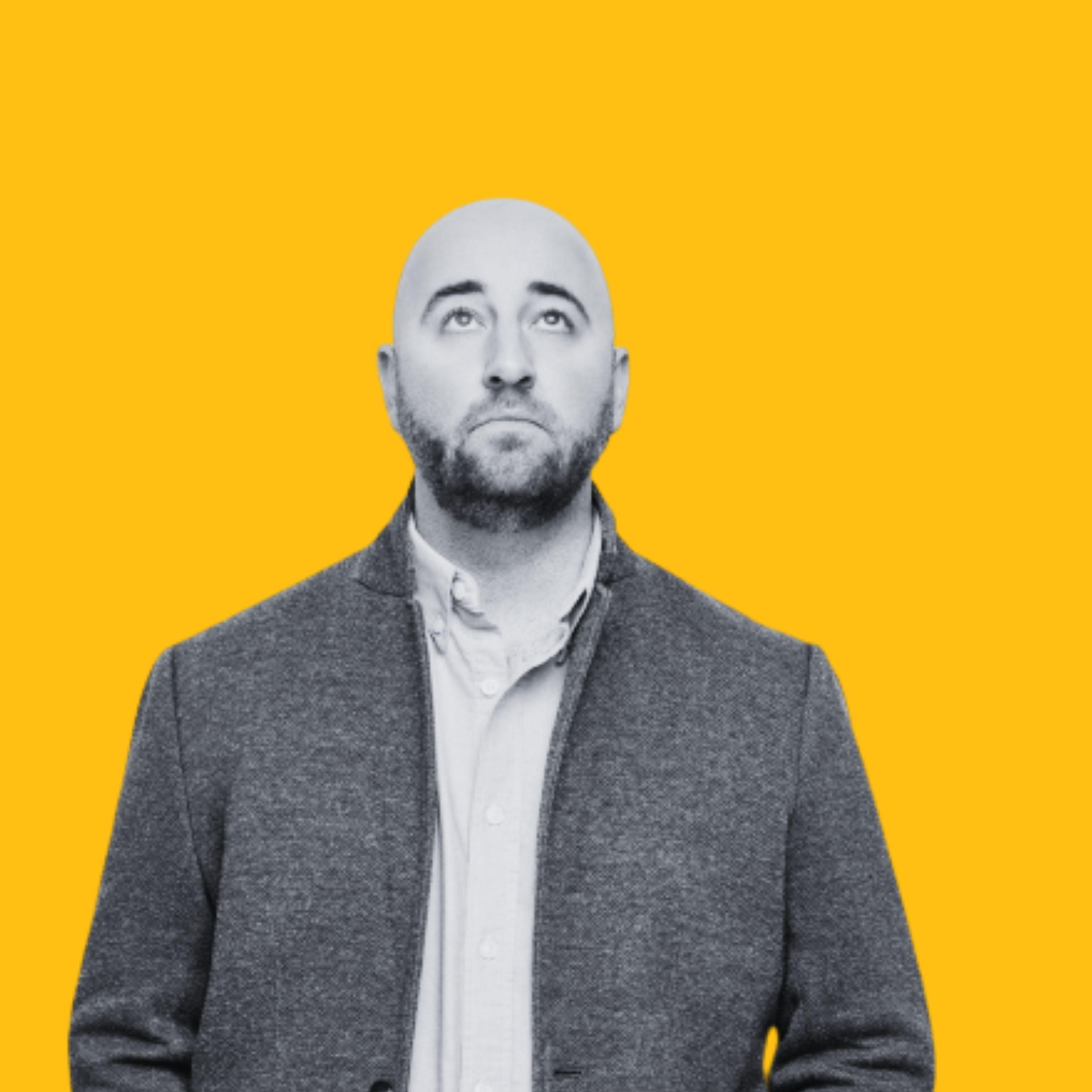
Author, The One and the Ninety-Nine
LUKE BURGIS is the director of The Cluny Institute and a professor at The Catholic University of America, where he studies the invisible forces that shape human behavior. He is the author of Wanting: The Power of Mimetic Desire in Everyday Life. He lives in Washington, D.C., and Michigan with his wife, Claire, and their children.

