


Unlocking Everyday Genius: From Memory Palaces to Getting Outside


In this episode of Daily Creative, we explore the often-overlooked link between our environment, memory, and creative potential. We kick off with the story of Cicero and ancient memory techniques, dive deep with 6-time USA Memory Champion Nelson Dellis (author of Everyday Genius) on the method of loci (the "memory palace"), and unpack the science behind our Indoor Epidemic with Dr. John LaPuma. Together, we consider how modern life—filled with screens and boxed-in routines—could be diminishing our ability to think, create, and lead at our best.
Nelson shares how anyone can build a powerful memory through intentional practice, breaking the myth that memory champions are simply born, not made. Dr. LaPuma explains how our brains and bodies weren’t designed for today's screen-centered, indoor existence, and offers tactical ways to reclaim our creative clarity and restore focus—many of which involve getting out in nature. Throughout the episode, we connect these ideas back to leadership, reminding ourselves and listeners that great communication, creativity, and strategy start with meaning, not just data.
Five Key Learnings from the Episode:
- Memory is Trainable. Extraordinary recall isn’t just an inborn gift; with techniques like the memory palace, anyone can expand their capacity to remember and connect ideas.
- The Brain Needs Meaning, Not Just Data. Raw facts aren’t sticky—stories, images, and emotional connections make information memorable and impactful in creative work and leadership.
- Environment Is Everything. Burnout and creative stagnation aren’t character flaws; they’re often environmental. Our brains thrive on sensory-rich, varied surroundings—not fluorescent lights and screens.
- Nature as a Creative Reset. Just 17 minutes a day spent intentionally in a green or blue space can boost creativity, clear mental fog, and improve overall well-being.
- Small Shifts, Huge Gains. Simple steps—like morning light exposure, breaks to look at distant horizons, and screen-free evenings—can restore mental energy and unlock new creative potential.
Get full interviews and bonus content for free! Just join the list at DailyCreativePlus.com.
Mentioned in this episode:
Apply for Creative Leader Roundtable
Leading creative people is rewarding, but it can also feel isolating. That's why I've started Creative Leader Roundtable, a private community where leaders like you connect monthly to get practical insights, honest feedback, and real encouragement. You'll leave every round table with fresh perspective and tactical ideas. You can apply right away. So if you lead a team of talented people, go check us out at CreativeLeader.net, because creative work deserves brave leadership.
Todd Henry [00:00:02]:
In 55 BC, a Roman senator named Cicero gave a speech that lasted several hours. No notes, no teleprompter, no index cards tucked in his toga. From memory, flawlessly, he moved through complex legal arguments, historical precedents, emotional appeals, point by point, without losing the thread one time. His audiences assumed he was a genius. Maybe he was, but maybe he wasn't. Actually, he was trained. Cicero had learned a technique that had been passed down through the Greek and Roman culture for centuries, a method so effective that practitioners could memorize the equivalent of entire books in sequence on demand. Scholars called it the method of loci.
Todd Henry [00:00:45]:
We've come to call it the memory palace. The technique was elegant in its simplicity. Take the thing that you want to remember. An argument, a list of names, a sequence of numbers, and convert it into a vivid image. Then place that image somewhere familiar. Walk through your house in your mind. Put the first idea at the front door, the second in the entryway, the third in the kitchen at the table. And when you need to recall it, you simply take a stroll through your house.
Todd Henry [00:01:12]:
The Romans weren't doing anything supernatural. They were just working with how human memory actually functions, not against it. This is essential for the creative process, our ability to recall things, to be able to combine ideas that we heard once upon a time. Our memories are essential in our ability to be effective as a leader, as a creative pro. But somewhere along the way, we forgot. We stopped training our memories. We started offloading them first to paper, then to devices, and now to the cloud. Now we just offload our memory to AI tools.
Todd Henry [00:01:45]:
And on top of that, we moved our work indoors. We moved our lives from out in nature where we're experiencing a diversity of different kinds of stimulus to sitting in front of screens all day. We traded blue sky and open fields for fluorescent light and notification badges. And we called it progress. Today, we spend 93% of our lives indoors in the same environment. We work in boxes. Our nervous systems were never designed for these boxes. And then we wonder why we feel burned out, why we feel distracted, why we feel creatively stuck, as if the problem is something wrong with us.
Todd Henry [00:02:25]:
Well, it isn't. It's something wrong with our environment. And today we're going to talk about that interplay between how our minds work and how we can shape them to think better every single day. And how our environment impacts our ability to recall and to utilize the best of who we are. Today, we have two guests, a 6-time US memory champion and a physician who studies what the built environment is doing to our brains. And we're going to make a case that's harder to ignore the more you hear it. That mind that you think you have is only a fraction of what you're actually capable of. And the gap between where you are and what's possible isn't a talent problem, it's an environmental one.
Todd Henry [00:03:14]:
This is Daily Creative. Since 2005, we've served up weekly tips to help you be brave, focused, and brilliant every day. My name is Todd Henry.
Dr. John La Puma [00:03:22]:
Welcome to the show.
Nelson Dellis [00:03:29]:
I was, to be clear, not born with any memory abilities that would have ever given me a memory championship.
Todd Henry [00:03:37]:
That's Nelson Dulles, and contrary to what he just said, he is actually a 6-time USA Memory Champion and the author of a new book called Everyday Genius.
Nelson Dellis [00:03:47]:
I didn't even have it on my radar. I didn't even know that memory could be something that you could improve, work on, and do the things that I discovered people were doing at these things I'd never heard of called memory championships. It all seemed out of the realm of possibility for someone like me, an everyday kind of person. Now, I will say that I always love to work on things. I have a natural fascination to a lot of things, but memory was really the first thing that I dove into deeply because of my grandmother. I watched her disappear in a way, and that was many parts terrifying and sad to watch, but also fascinating to watch. That made me realize how important memory is to who we are and how big of a part it plays in our everyday life. And I discovered that there's this championship called the Memory Championship, and they basically as you might presume, test your memory under time with large amounts of data, how many cards you can memorize in a certain amount of time, how many names, how many strings of digits you can memorize, poems, all sorts of stuff.
Nelson Dellis [00:04:52]:
And what surprised me the most when I first discovered this competition was that everybody who competed at a high level or even were champions at that point in history, historic champions, were all coming from the same story. I never had a good memory. I learned these techniques, I practiced, and then I was able to do this. And I was like, yeah, I don't know about that. Maybe, but you must've had something. And no, and I went through that same process because I truly never had a good memory. Maybe average. I wouldn't say I had a terrible memory, but nothing to write home about either.
Nelson Dellis [00:05:24]:
And the techniques are pretty simple to learn and to practice. And I practiced, I took it to the next level. I was trying to train to win these things. And that was really the first moment it taught me that there's a lot more to what we think we're capable of, especially mentally, and opened the floodgates from there.
Todd Henry [00:05:43]:
I know everybody is wondering right now, what is an example? You say you practice these techniques or you practice these hacks to help you. What is an example of a technique that you practiced in order to help you remember better?
Dr. John La Puma [00:05:55]:
Yep.
Nelson Dellis [00:05:56]:
The history of memory is fascinating. And if you think about it, it shouldn't be that confusing to think like it's not that unobvious that back in the day we had to remember things. Things were not written down. We didn't have the mediums to do that. And to pass on traditions of one culture to another, it was all through memory. And there were people in these cultures, societies that had to train their memories to hold all this information in. And if you couldn't do that, right, you would not survive. Memory techniques have been around for thousands of years.
Nelson Dellis [00:06:28]:
And in more recent years, we don't need it. So it's just something that's fallen by the wayside. But one of the top techniques that we use at memory championships to memorize hundreds and hundreds of numbers, hundreds of decks of cards and things like that is something called the memory palace. And this isn't the only thing I would train. Preparing for a competition, I wanted to break these records for these different disciplines, cards, numbers, names. And so I would practice this specific technique for that specific thing over and over again. And you'd find that what at first feels a bit clunky new to, to do in your mind becomes almost second nature and you can get faster at it. So when I first memorized my first deck of cards, sounded impossible.
Nelson Dellis [00:07:10]:
And even the first time I did it, it took like 20 minutes, which that is still impressive. I remember doing that and be like, wow, this whole thing forwards and backwards, this, I'm holding a deck of cards in my hands. I could do it forwards and backwards in 20 minutes. And it was there in there. It wasn't like I had to struggle. I had it. And then through practice, just doing the same drills in my mind of visualizing pictures for the cards and this memory palace idea, which I'll talk about in a second, I could get faster and faster, eventually getting to the point where I could do a deck of cards in 30 seconds. If you think about what's the limit, and now that time is slow these days compared to current athletes, the world record's maybe 12 seconds and constantly improving.
Nelson Dellis [00:07:53]:
Yeah. Yeah. The technique is memory techniques in general are largely based on visualization. So you're taking the abstract information that you'd like to memorize, whether it's a number, a list of instructions, whatever. And for our brains, that stuff is quite abstract. So to remember abstract things that don't really have much meaning, our brain says, no, that's not essential. I will not be paying as much attention as even though you, the driver in your mind, want it to be, I'm not going to, and then it doesn't stay, right? But if you can convert that into something that, or encode it into something that's more meaningful to you with tons of color and richness to that image, then it has a better chance of staying because it lights up in your brain as, hey, this is something that I can gravitate to, has meaning to me, connects to a lot more things in my brain. And then the memory palace portion of it is where you How do you store it? So thinking about it is one thing, but coming, being able to come back to it and retrieve the information reliably is another memory problem.
Nelson Dellis [00:08:55]:
And the memory palace allows you to organize all those images by thinking of a palace. I guess back in the day they had palaces. You can think of any place. It doesn't have to be a palace. And you imagine walking through that place, putting the images of the things you want to memorize along a route. And the route, which you come back to later, is what preserves the order. So I could store a deck of cards in, say, my house. I'd imagine the first few cards on the front door, the picture for it.
Nelson Dellis [00:09:24]:
Then I'd walk in the door and there's the entryway, the next few cards, and so on. And so later when I want to recall it all, I just take a stroll through my house from the front door and I see if the images are memorable enough, what I placed there, and I can convert it back to the information, or in this case, the cards.
Todd Henry [00:09:39]:
I guess what I don't understand from a technique standpoint is what it feels to me still like you're just basically memorizing a random string of things, right? What is it about the imagery that makes it more memorable than just memorizing a series of numbers or a sequence of numbers?
Nelson Dellis [00:09:54]:
Correct. So yeah, you're still memorizing something. The idea is that you're turning it into things that our brains are better designed to memorize or remember. And that is on one end, more meaningful visual things. We remember pictures better. And pictures that have associations to things that we already know. Right? So when I look at, let's take for example, I don't know, the 5 of hearts. For me, this is my best friend, Mike.
Nelson Dellis [00:10:19]:
He's a climber of my, a friend of mine. We climbed many peaks together. So when I see this card, it's him. I don't see a 5 and a little red shape that is a heart in a sequence of others. I see that guy and I see him and me struggling in a tent. On Denali on one of trips where we were stuck for a week freezing without food. That's a lot richer than just this symbol, these two symbols together, right? It pulls on deep memories. It pulls on feelings, right? Of I'm suddenly cold.
Nelson Dellis [00:10:49]:
I'm suddenly hungry. Not really, but like thinking about those feelings. And that's a lot stickier than just the raw information that's on this card. And then on top of that, using this storage idea, this memory palace. Again, I'm using a place that I know. I don't have to memorize my house. I already know the order of how I walk through the door and get to my bedroom, let's say. So you're basically piggybacking off of things that you already know.
Nelson Dellis [00:11:16]:
Um, spatial information, which we also are really good at remembering and putting those together makes it a lot easier to memorize than actually trying to brute force, look at the card and try to repeat the sequence until You know, your eyes bleed. Yeah, which takes a lot of time. It's inefficient if you do it that way.
Todd Henry [00:11:39]:
What Nelson just described is worth pausing on for just a minute because it's not just a memory trick. I know it may seem like it's just a memory trick, but it's not. It's actually a map of how creative thinking works. He doesn't see the 5 of hearts as data. He sees his friend Mike. He sees a tent on Denali. He feels cold. He feels hungry.
Todd Henry [00:12:00]:
One small card unlocks an entire world of sensation, of emotion, of meaning. And that's what makes it stick. Here's why this matters for you as a creative pro, as a leader. The same principle that makes a memory palace work is the principle behind every great idea, every compelling presentation, every piece of communication that actually lands with an audience. Raw information doesn't move people. Meaning is what moves people. So when you're trying to get a team aligned around a strategy, you don't lead with data. You lead with the story that makes the data matter.
Todd Henry [00:12:35]:
When you're trying to solve a hard problem, you don't force it. You connect it to something you already know, something that you can feel, and you let your brain find the pattern. Nelson calls it piggybacking. Attaching new information to the spatial memory and the emotional experience that maybe you already own, right? Leaders and creative pros do this instinctively when they're at their best. The breakthroughs come when you give your brain what it was actually built to work with: image, place, emotion, story.
Nelson Dellis [00:13:07]:
If we're talking about memory, what memory techniques are, it's just a large elaborate way to focus on something better. And the other part of it is tension, right? And interest. We will pay attention to things that are more interesting. So I'm tricking my brain in a way to find this boring stuff that I'm trying to memorize more interesting. And that's, I think, a great analogy for everyday stuff that we're trying to focus on is like, how do I find a way to make this more interesting to me?
Todd Henry [00:13:40]:
Nelson Dulles's book Everyday Genius is available now wherever books are sold. And if you'd like to hear our full interview, you can do so at dailycreativeplus.com. So here's what Nelson just walked us through. Your brain doesn't struggle to remember things because it's weak. It struggles because you're asking it to hold on to things in the wrong format. Abstract information, numbers, lists, names, ideas— those don't stick. But images do. Spaces do.
Todd Henry [00:14:06]:
Stories do. That's not a design flaw. It's how the human memory system was built to work over hundreds of thousands of years in a world full of sensory richness, color, texture, your movement, smell, the feel of uneven ground underfoot. Which brings up a question worth sitting with for a second. If our brains were designed to work in that kind of environment— vivid, multi-sensory, outdoors— what happens when we pull our brain out of it? What happens when we spend 93% of our lives inside, pointing our minds at flat rectangles that emit blue light? Well, Dr. John Lipuma has spent years studying that exact question. He's an internal medicine physician who specializes in what he calls the indoor epidemic, the slow, largely visible toll that our built environment is taking on cognitive performance, on creativity, on sleep, and on long-term brain health. His answer is not subtle.
Todd Henry [00:15:05]:
We are burning out our most important creative tool, and we're calling it productivity. We'll be right back with our conversation with Dr. Lipuma after after this. Stick around.
Dr. John La Puma [00:15:28]:
We live 93% of our lives indoors, 86% in buildings and 7% in vehicles. And our bodies were never built for this.
Todd Henry [00:15:38]:
That's Dr. John Lepuma, author of the new book Indoor Epidemic.
Dr. John La Puma [00:15:42]:
So we're the first generation that has experienced this indoor epidemic. And as a result, we're burned out, we're sleep deprived, we're aging faster than we should. Our telomeres are shortening. We just are exhausted. And it's primarily environmental. It's a deficiency in the right type of environment that actually can help reset this.
Todd Henry [00:16:07]:
I want to talk about this other concept that you share. You call it digital obesity.
Dr. John La Puma [00:16:11]:
Right.
Todd Henry [00:16:11]:
Versus analog wellness. Yeah. What is digital obesity? I think this is especially for those of us who are creative pros, people who are perpetually online, we're constantly absorbing stimulus. What is digital obesity and what is the solution?
Dr. John La Puma [00:16:23]:
Well, I just finished reviewing 2,200 studies and writing this book. I know what it's like to sit in a chair. This is my 8th book actually. And although the first of those didn't involve screens, the last few did. And digital obesity is sugar burns— too much sugar burns out your metabolism. Too many pixels burn out your brain. And it's when you are overwhelmed by pixels, it's more than your brain can actually metabolize. So you experience this kind of exhaustion and burnout that I don't think is normal.
Dr. John La Puma [00:16:58]:
In fact, certainly isn't normal. We evolved as a species for 200,000 years outdoors, and in one generation, We've moved inside and we've never left and became normal to have a screen-centered life after COVID. But most people don't know that just 17 minutes is the minimum effective dose of outdoors. That's the 7% side that you asked about. 17 minutes is a minimum effective dose of experiencing targeted intentional nature in a green or blue space that can help restore some of your creative processes reset your mood and your memory and your clarity and focus in ways that looking at a screen or scrolling about something different just never can.
Todd Henry [00:17:42]:
A number of years ago, I noticed that I would hit this kind of early afternoon malaise in my work. Again, working inside all the time, looking at screens as a writer, as a communicator, somebody who's on online perpetually. And I built this little routine into the middle of my day where I would go for a walk in the middle of my day. And it originally was like, it was just some of the walk around the block and then it became like a half hour walk. And then pretty soon it was like an hour of walk I took every middle of my day during warm weather. And I noticed how much that impacted not just my physical health and my mental health, but even my creativity, my ability to synthesize. And I'm sure you described this. It's interesting how we don't realize how interrelated all of these things are.
Todd Henry [00:18:23]:
They're not independent systems.
Dr. John La Puma [00:18:24]:
And that being outdoors during that walk is doing so many things in your brain that are just not anticipated. For one, it's giving the outdoor stimulus of bright light, of blue light. Outdoor light is 25 to 50 times brighter than indoor light, even though you have LEDs and screens all around you. The wavelengths of outlight are much brighter, have a much bigger impact on your cortisol level and on your level of alertness. The other thing you were doing when you're outside for that hour, and actually I'd even add, and this is a key point, 10 to 15 minutes in the morning within 60 minutes of waking because bright light at that time gives you a big initial cortisol boost, helps you wake up. So that light first, coffee second, and then it gives— sets you for deep sleep that night, helps you make melatonin in about 14 hours so you get sleepy. And then deep sleep, which is in only the first couple, 3 cycles of sleep primarily. Is the time that you clean your brain.
Dr. John La Puma [00:19:26]:
It's the time that you get rid of beta amyloid and tau, which are the proteins that accumulate during Alzheimer's disease. It's the time where you repair muscle and build bone. And you want all of that, but you only get deep sleep if you get morning light, which makes everything better.
Todd Henry [00:19:43]:
On a related note, and it's interesting because I, as I'm reading this, I'm thinking, okay, this perfectly resonates with so many experiences I've had. But what I loved about the book is that it systemizes some things that maybe we might do haphazardly or might discover over time, but I love that you put this into sort of recommended practices. But you talk about how vast landscapes like sky, space, sea can quiet the default mode network, or what you call the narrator of me. Could you share a little more about that dynamic and how it impacts us and how that might affect also like our creative process or our ability to think and to synthesize and intuit and those kinds of things?
Dr. John La Puma [00:20:19]:
Yeah. So the default mode network is the collection of neurons in your brain. That are all about whatever's going on with you at the moment. It's related to the prefrontal cortex where you ruminate. And rumination's really different than turning over ideas to create something new. Rumination is fixating on something that you just can't let go of and you, there's no new space for that. But the default mode network can be let go of when you engage your parasympathetic nervous system. And you do that primarily by using your senses.
Dr. John La Puma [00:20:51]:
And this is what creatives are really good at, right? As people who are creative, and I count myself as one, we are very interested in sensory input too. And our cognitive minds are very good at figuring out logical things, answering queries, responding to notifications, making lists and checkmarks, but it's not a creative process. It's a structural, almost technical one. You actually have most creative insight in, in more groggy moments, in moments that are just a little off. That's why the shower is so good because you, you're not focusing on some pixel that's in front of you or a screen that's in front of you. You're letting your mind wander and you're also getting the alpha and theta waves that your brain is making because you're in regular water. And when you experience that in blue space too, by the way, blue space is being in or near water. And the running water, particularly gentle rain and a light stream, even the ocean waves of the Pacific especially, give you that same transfer of an agitated beta wave state in your brain to a more relaxed alpha state.
Dr. John La Puma [00:22:06]:
The other thing that's going on when you experience anything out side your office or cubicle, even when you look at the horizon or a spot that's distant, but especially when you're near greenery or near a blue space, is that you use your senses. Touch, listen, see, smell, taste. And you can do this by— it's an exercise— by picking out as many shades of green as you can see in 30 seconds. And then if you watch another 30 seconds, you make yourself pick out 2 other shades of green that you didn't see before. And this allows you to use the part of your brain that is creative and lets you go back to cognitive work when you have to. It's a way of restoring your brain function. It's a way of calming your nervous system. It's a way of getting yourself a shift that allows you to be more creative and more productive, but not by staring at another screen, not by being digitally obese, not by what I call ultra-processing time.
Nelson Dellis [00:23:20]:
Cool term, huh?
Dr. John La Puma [00:23:21]:
Ultra—
Todd Henry [00:23:21]:
That's a very cool term, yeah.
Nelson Dellis [00:23:23]:
Yeah.
Dr. John La Puma [00:23:23]:
Ultra-processed time, like ultra-processed food, and by the way, Constant screens hit the same dopamine cortisol loop that ultra-processed food does. We spent like 40 years figuring out that ultra-processed food causes obesity and metabolic syndrome and diabetes and premature aging. Screens are doing the same thing in excess, and we're calling it productivity, but it's not. So the way to get away from ultra-processed time like ultra-processed food. And ultra-processed time is time that disappears quickly when you're in front of a screen. All of a sudden it's gone. Where'd it go? 3 hours later, I'm still sitting here. It's not nutritious, just like ultra-processed food, right? It's just usually empty calories and a lot of things you don't want.
Dr. John La Puma [00:24:14]:
And it's completely artificial, just like ultra-processed food. Ultra-processed time is time that disappears in front of screens. But nature, when you're outside and you're using your senses and you're allowing your creative brain to work, you can't alter process time. Can't alter process time outside. You have to engage your senses because that's how you get nature. You're not ticking off like how many leaves does this have or how many flowers does it have. You can do that if you want, but it's not the creative experience. And that's what we want.
Dr. John La Puma [00:24:51]:
We want to be able to generate new ideas. We want to be able to think of concepts in new ways. We want our brains to relax and forage, if you will. And you only do that by changing your environment. This isn't a character flaw if you're burned out. It's an environmental mismatch.
Todd Henry [00:25:09]:
What is one, I guess, one piece of advice you would give to people who are listening to this thinking, oh, I want to do something today. What would be something that we could do to begin to counter this indoor epidemic that you're describing?
Dr. John La Puma [00:25:19]:
Give you 3 quick things. One, use the morning light idea that I just gave you. Within 60 to 90 minutes of waking, stand in a doorway, go to a window and open the window. See, get 10 minutes, don't use sunglasses, get 10 minutes of morning light. That will reset your cortisol level, give you that big bump, let you sleep that night, let you clean your brain, make the whole day better. In fact, anything you do in nature with any of these hundreds of things that I suggest, allow everything else you're doing for your health to be amplified. 2, every hour, get up and walk to the window. You don't have to go outside if you don't want, or the weather's bad, and look at the furthest point you can see.
Dr. John La Puma [00:25:59]:
If you can see the horizon, great. If you can't, just the furthest point you can see. Why is that good? Because your eyes need distance like your lungs need air. You want to relax these ciliary muscles. You want the tension in your head and around your temples to go away. You want to reduce headache. That does all those good things for you, and it restores any sense of fatigue you might be feeling. And 3, that night, skip looking at a device 60 minutes before bed.
Dr. John La Puma [00:26:31]:
Do something else. Read a book, talk to your partner, pet your dog, have a cup of tea, meditate, do a puzzle. Do something that's fun because that will, A, not suppress the melatonin that you need to go to sleep, and which does, if you get bright light within 30 minutes, it suppresses it for an hour and a half and by 80%. And two, gets you away from the idea that screens are everything. They're not. And as you are thinking about doing these three things, be mindful of any incidental time that you spend outside, walking down a sidewalk, going from car to car, parking lot to parking lot. You're already spending 7% of your time outside. All I'm asking you to do is repurpose 17 minutes a day minimum to something effective, green and blue.
Dr. John La Puma [00:27:17]:
Do something in a green or blue space that you like. So walk in a green or blue space and meet somebody. Nature is social. And that's a powerful thing and a good thing, reduces loneliness, which equivalent mortality of 3/4 of a pack of cigarettes a day mortality that loneliness does. So here are 3 easy things. Think about the incidental time. Repurpose that into intentional time. 17 minutes a day, minimum effective dose, and you will actually be more creative than ever.
Todd Henry [00:27:49]:
Dr. John LaPuma's book, Indoor Epidemic, is available now wherever books are sold. So I want to go back to our Cicero story for a moment that we started with, because here's the thing about those Roman orders that we usually don't talk about. They didn't just have memory techniques, they had colonnades. The practice of walking while thinking, of moving through physical space as a way of ordering ideas, it was so central to ancient intellectual culture that an entire school of philosophy was named for it: the Peripatetics, from the Greek peripaten, to walk around. Aristotle reportedly taught while pacing the covered walkways of the Lyceum. His students followed, listening, thinking, and moving. They weren't just doing this because they like fresh air.
Todd Henry [00:28:30]:
They were doing it because they had intuitive that the thinking brain and the moving body are not separate systems. That insight comes differently when you're still versus when you're walking, that the mind opens up when the environment gives it something to work with. What both Nelson and Dr. Lapuma are describing from completely different directions is the same thing that those Greeks already knew. Your brain was built for a richer world than the one that most of us are working in. Memory isn't just storage, it's a sensory act. It encodes best when it's grounded in image, in place, in the kind of vivid specificity that our indoor screen-saturated routines tend to flatten out. Small acts of realignment with the kind of environment your brain has always been designed for.
Todd Henry [00:29:16]:
You don't have a bad memory. You don't have a creativity problem. You're not burned out because something is wrong with you. You're just working in the wrong conditions. Fix the environment and the mind will follow. Hey, thanks so much for listening. Again, if you'd like all of our full interviews, you can get them at dailycreativeplus.com. It's absolutely free.
Todd Henry [00:29:37]:
Just enter your name and email address and we'll send you a private feed. My name is Todd Henry. If you'd like more information about my work, my books, my speaking events, you can find them at toddhenry.com. Until next time, may you be brave, focused, and brilliant.
We'll see you then.
Author, Everyday Genius
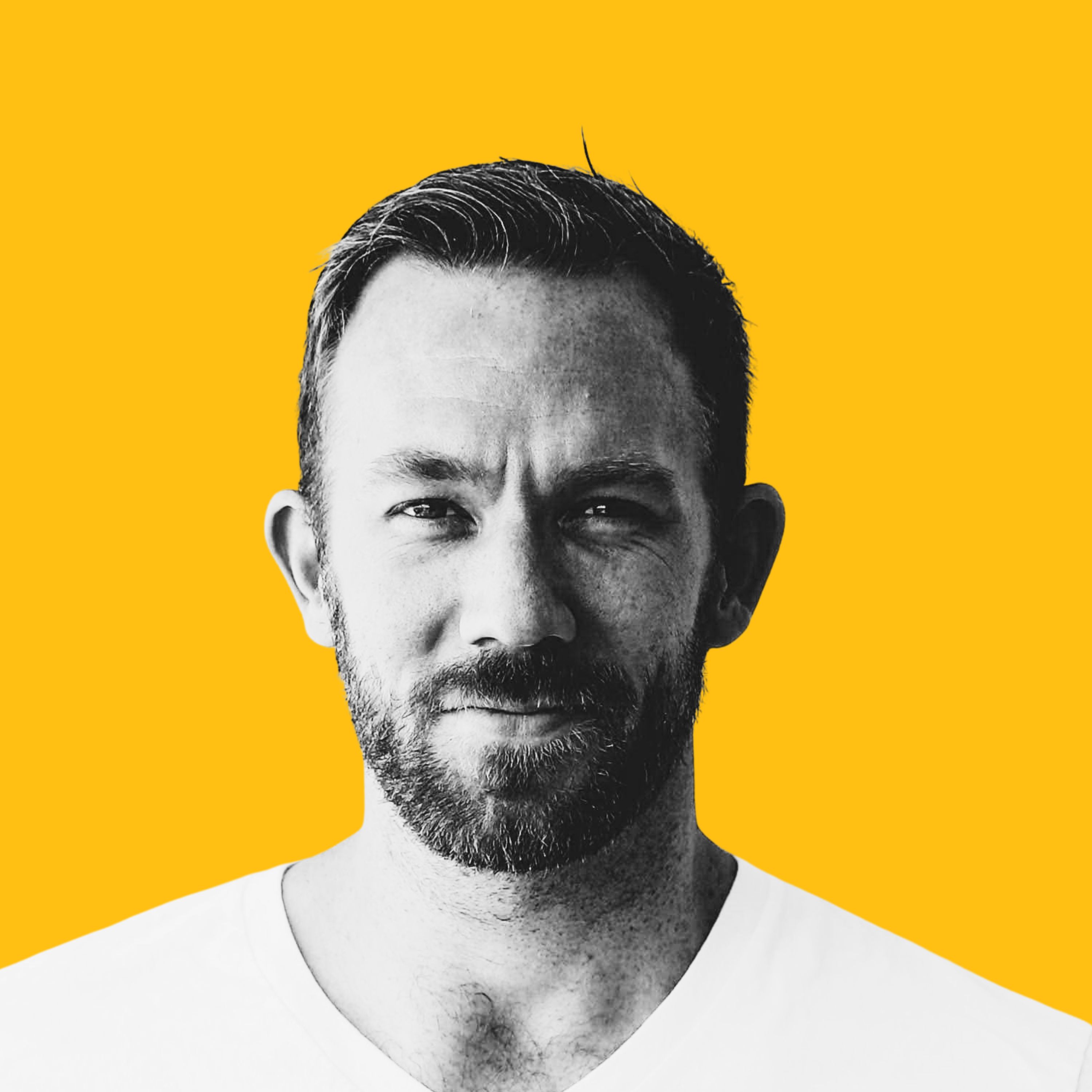
Nelson Dellis is a six-time USA Memory Champion, two-time Guinness World Record holder, Grandmaster of Memory, keynote speaker, and world-renowned memory coach. He teaches at the university level, holding degrees in computer science and physics, and is also an accomplished mountaineer with four Mt. Everest expeditions. Beyond the classroom and the mountains, Nelson has medaled in international competitions, contributed to remote viewing research on stock prediction, and even played on a professional card-counting Blackjack team that won over $100,000. He shares his passion for unlocking the mind’s potential with over 300,000 YouTube subscribers, where he makes complex skills practical, fun, and accessible to anyone willing to train their brain.

Author, Indoor Epidemic
John La Puma, MD, ChefMD™ is a two-time New York Times bestselling author, board-certified internist, and professionally trained chef who pioneered Culinary Medicine. He now pioneers EcoMedicine from his small regenerative teaching farm. His upcoming book, Indoor Epidemic, reveals how spending 93% of life indoors steals sleep, focus, and years, and how reclaiming just 7% outdoors can restore them using the evidence-based Outdoor Rx framework. This is clinically validated intervention, presenting nature as foundational medicine, an essential component of health and the missing pillar in optimizing longevity and healthspan.