

 Apple Podcasts
 Spotify
 Constraint & Uncertainty: David Epstein and Simone Stolzoff on Thinking Inside The Box
This week, we explore two forces that shape every creative journey: constraint and uncertainty. Drawing on the remarkable artistic reinventions of Hokusai, we look at how creative legends transitioned from running from the box to thriving within it—and how that same process plays out in creative work today.
Our first guest, David Epstein, author of Inside the Box, systematically dismantles the myth of the blank canvas and shows why true creative breakthroughs happen inside carefully constructed boundaries. He shares frameworks used by artistic innovators and practical strategies for leaders and teams to define the right limits—especially in an era of generative AI and limitless toolsets.
We then talk with Simone Stolzoff, whose book How Not to Know tackles the fog of uncertainty head-on. He makes the case that tolerating, and even harnessing, uncertainty is not a liability but the lifeblood of all meaningful creative work. Together, David and Simone reveal why “embracing the box” and “rowing in the fog” are not problems to solve, but the permanent address of anyone doing real creative work.
Five Key Learnings
- Intentional Constraints Fuel Creativity: Constraints are not the enemy; they’re the engine. Strategic limits—on format, palette, or process—block the most familiar solutions and force genuinely new connections.
- Define the Boundaries Early: Projects that begin with rapid execution but no clear boundaries almost always bog down. Slow, deliberate thinking at the outset (setting priorities and constraints) leads to faster, more focused execution.
- Constraint is not Suffocation—It’s Clarity: The most productive creative environments, whether in art, business, or writing, use narrow briefs and paired constraints to drive original outcomes.
- Our Tolerance for Uncertainty Is Eroding: As answers become more instantly available, we lose the ability to sit with the unknown. Microdosing uncertainty—through small experiments and unfamiliar choices—helps rebuild that vital tolerance.
- Progress is Acting in the Fog: The work that matters is rarely created in total freedom or certainty. Leaders who admit what they don’t know and take action anyway (with humility and open curiosity) model the mental flexibility required to innovate.
Get full interviews and bonus content for free! Just join the list at DailyCreativePlus.com.
Mentioned in this episode:
The Brave Habit is available now
My new book will help you make bravery a habit in your life, your leadership, and your work. Discover how to develop the two qualities that lead to brave action: Optimistic Vision and Agency. Buy The Brave Habit wherever books are sold, or learn more at TheBraveHabit.com.
Apply for Creative Leader Roundtable
What if you had a space every month to sharpen your leadership edge without the fluff? The Creative Leader Roundtable is where smart, driven, creative leaders gather to exchange ideas, solve real challenges, and grow together. So if you lead a team of thinkers, makers, or dreamers, this is your lab. We're launching soon with a new group of leaders. So, if you're interested, check it out and apply at CreativeLeader.net.
00:00 - Untitled
00:30 - Intro & Katsushika Hokusai's Constraints
04:26 - David Epstein on Inside The Box
23:32 - Simone Stolzoff on How Not To Know
36:27 - Outro, Summary, Learnings
Todd Henry [00:00:02]:
One thing that is certainly true about Katsushika Hokusai is that he spent his entire life refusing to be put in a box. He was born in edo, Japan, in 1760, and by the time he had reached his sixties, he had gone by dozens of different artistic names. Not pen names, not stage names, but complete reidentifications, each one making a formal break from whatever style or tradition had begun to feel like a cage. He moved between schools. He rejected masters who tried to claim him. He reinvented himself whenever the walls started to close in. His working theory of creativity seemed to be very simple. Freedom was the oxygen.
Todd Henry [00:00:39]:
Constraint was suffocation. Then, around age 70, he accepted a commission. He had just survived a stroke. His wife had died. His grandson's gambling debts had nearly bankrupted the family. And by his own account, he had no money, no clothing, and barely enough to eat in that state. Broken, desperate, starting over, he accepted a commission from a publisher to produce a series of woodblock prints. The subject was fixed, 36 views of Mount Fuji.
Todd Henry [00:01:09]:
The format was fixed, the wood block, the palette was constrained. And Hokusai made a deliberate choice to build the entire series around a single, newly imported pigment, Prussian blue, which had just arrived from Europe. Treating those limitations not as a problem to solve, but as a foundation to build on it was, by any measure, the most constrained work of his career. And from inside that box, he produced the Great Wave. You've probably seen it. Even if you don't know you've seen it, you've definitely seen it. That enormous blue curl of ocean reaching over the fishing boats, with Mount Fuji small and steady in the distance. One of the most reproduced images in the history of art, made by a man who had spent seven decades running from constraint.
Todd Henry [00:01:56]:
In the exact moment of his life when running was no longer an option, he's reported to have said afterward, all I have done before the age of 70 is not worth bothering with. He kept painting until his last day, believing his best work was still ahead. Not certain it was. Not knowing, just working inside the box, inside the fog, until there was no more time. Today we're going to talk about both of those things, constraint and uncertainty, two things that creative pros spend enormous energy trying to eliminate. We want the freedom to go anywhere. We want to know where we're going. We want to know where the evidence is pointing in the same stubborn direction.
Todd Henry [00:02:41]:
We want to know where we're going. And yet the evidence keeps pointing in the same stubborn direction. Our best work is almost never born with the absence of limits. It's almost always produced when the outcome is guaranteed. Our first guest today is David Epstein. He's a New York Times best selling author and investigative journalist known for his work on science and human performance. You may know him from his book range. His new book is called Inside the Box and it systematically dismantles the myth that total creative freedom is what enables our best thinking.
Todd Henry [00:03:14]:
His argument, the box isn't the enemy, it's the engine. And after David, we'll be talking with Simone Stolzoff. He's a journalist and author whose previous book, the Good Enough Job became a touchstone for people rethinking their relationship to work. His new book is called how not to Know. And it explores what happens when leaders and creative pros stop treating uncertainty as a problem to be solved before they start and start treating it as the native condition of every worthwhile endeavor. This is Daily Creative. Since 2005, we've served up weekly tips to help you be brave, focused and brilliant every day. My name is Todd Henry.
Todd Henry [00:03:51]:
Welcome to the show.
David Epstein [00:03:58]:
It is more than just a folklore misconception. In fact, there was a survey done recently by psychologists that found of known creativity myths from research, and the most popular one was that people are most creative when they are most free.
Todd Henry [00:04:12]:
That's David Epstein, author of the new book Inside the Box.
David Epstein [00:04:16]:
And we know that's not true, in fact, because as the cognitive scientist Daniel Willingham likes to say, you may think that your brain is made for thinking, but in fact, your brain is made for preventing you from having to think whenever possible because thinking is energetically costly. And so when you're given a blank canvas, your brain will default to the easy or convenient solution, one that you've seen before or one that is just easy to do. And so it actually becomes almost impossible to be truly creative unless the familiar or convenient solutions are blocked. And so one side, one, one psychologist has come to call this the green eggs and ham effect, after the story of Dr. Seuss, who famously wrote green eggs and ham on a bet that he couldn't write a book using only 50 words. And that restriction forced him to experiment with rhythm in ways that nobody had ever done before. So it's actually the greatest creative prompt, is blocking the easiest solution that someone can reach for.
Todd Henry [00:05:12]:
One of my favorite quotes on that front is, I think Orson Welles said the absence of limitation is the enemy of art, which I always thought was a really great way to describe it. Right. Because there's a kind of paralysis that happens. You call it the cul de sac of the customary. I love that phrase. Could you share what that phrase means with us?
David Epstein [00:05:30]:
Yeah. I took that from a creativity researcher named Patricia Stokes. And what she was basically saying was that and she had worked in advertising before she became a creativity researcher. And in advertising they actually have a famous saying, give me the freedom of a tight brief, which is when you have a really well defined box to work in that actually liberates you to start solving the problem. And what she saw, both in her work in advertising and then in her work as a psychologist studying creativity, was that when you really removed all the boundaries, people did very conventional stuff. Right. It was that they. They only did things that they had seen before.
David Epstein [00:06:06]:
They relied on familiar solutions, or what cognitive psychologists call the path of least resistance. That when all the boundaries are taken away and you're not forced to think creatively or forced away from the easiest solution you can grab for that, you go down this path of least resistance, which is inherently not a creative path.
Todd Henry [00:06:23]:
I want to talk about your advice regarding setting these boundaries, this kind of bounded autonomy. The limits for our thinking. You contrast thinking fast on big ideas with thinking slow to define boundaries. Could you describe that process and why it's important that we establish those early limits so that we can actually move faster later in the project?
David Epstein [00:06:43]:
Yeah. And again, this is language that I'm taking from researchers, in this case a Danish guy named Bent Flubier who studies an Oxford professor who studies projects of all types and how they go well or not. And the typical pattern that he found in projects that don't go well is what he called think fast, act slow, where you have a big idea and you just jump in into execution without defining the box that you're going to work with and the boundaries. And that turns that think fast turns into act slow because people start having trouble figuring out what they shouldn't be doing and what the priorities are and the momentum. A project builds a lot of momentum, then it becomes hard to change and to pivot. The opposite pattern that he called think slow, act fast is where you stay small. Early on, you define what problem are you trying to solve, what are the boundaries, what are the priorities? And that takes a while. It's hard.
David Epstein [00:07:37]:
But then once you move into execution, you're able to do it so much more rapidly because you've set these boundaries. So a great example from the book was Tony Fadell, who, when he. He was the lead designer of the ipod, and then he co founded Nest. And with Nest, he was like obsessed with setting constraints. And so at Nest, he Forced his team to work inside of a literal box where he had them prototype the box, the packaging before the product. Because he said, look, this will force us to say what are our priorities that we're trying to communicate? What are the concise ways we can do that? And if it's not on this box, maybe it's not one of our priorities. And so it really gave them one of the things that useful constraints can do is force you to clarify priorities and then your creativity is liberated within that. Right.
David Epstein [00:08:20]:
It's not stifling, it's actually liberating. And I should say I adapted that for my own work on this book. This isn't in the book, but if you want me to share about my
Todd Henry [00:08:29]:
own creative process, exactly what I was about to ask you is how did this apply to the creation of this book? And as somebody who's also written books, I would love to hear about how this informed your process.
David Epstein [00:08:38]:
Yeah. And this whole book, by the way, is a hefty dose of me search. This is a topic I wanted to take on because I've been terrible at it in the past. My first two books, I wrote 150% the length of a book and then had to cut it back because I didn't define. So my first one, I had to get asked the publisher for an extension on the deadline because I didn't do that hard work early on of figuring out what I was doing. So this time around, my book process is about two years for each of them. And this time I did not write a word that went into the book for a year. I only researched, I interviewed, I organized information.
David Epstein [00:09:14]:
At the end of the year, I made this. That for anyone, is it just. I'll just. So obviously if you're listening, you can't see this, but it's a one page outline where I wrote very small and structured all of my different ideas. And I forced myself to do it on one page only at the suggestion of Tony Fadal. And if it's not on that, it forced me to ruthlessly prioritize. And if it's not on that page, it's not in the book. And so this was the first time I wrote one book to get a book.
David Epstein [00:09:38]:
I became a parent between books two and three and I was like, I cannot be working 150% doing 150% of the work for 100% of the product. And it's the tightest writing. It's 20% shorter than the others. And I turned it in early even though I started writing way later in the process, because I had such clear boundaries that once I executed, I felt so liberated to go ahead and really work on my writing craft within those bounds instead of spending all my time wondering about how to organize the information.
Todd Henry [00:10:07]:
I had a very similar experience. I wrote my first book, started writing it in 2009 with Penguin Random House with a portfolio. And I was working with David Moldauer, who's a. Was a senior editor. And it's funny because he let me figure out for the first couple of chapters, like, what I was doing. And I went away and I started writing chapter two. And I kept writing and I kept writing and I kept writing and I kept writing. And then I got to the end, like, I was writing in a Word document, and I realized chapter two, my entire manuscript, was supposed to be, I think, like, 80,000 words, 75,000 words.
Todd Henry [00:10:39]:
Chapter two was 56,000 words when I finished writing it. And I thought chapter two was 56,000 words. Yes. And I thought, okay, something's not right. This is not going to work. Right. And so we had to go back and define a new process for how I was going to approach this. And I had a very similar experience to what you had, which is, okay, let's get a tight outline, let's figure out what the structure, the idea set is, and let's really define what's going to be in this book.
Todd Henry [00:11:04]:
He said, you're trying to write seven books in one book. You need about a seventh of what you're trying to do. And once we really defined that idea set and went back, it was very liberating, to your point, because. And now, similarly, when I write a book, I have the structure. It's very defined. I know the idea set. I know how it's going to flow. It's all very defined before I ever start writing.
Todd Henry [00:11:26]:
And then I can write from the inside out. I can move around to different sections, and whatever I want to work on that day, I can, because I know what's going to be in the book. It doesn't matter what order I work on it in, because I know exactly what's going to be there. I'm not waiting for inspiration to strike.
David Epstein [00:11:40]:
Exactly. Most writers don't do this, though. I know, again, most writers, including me, for my first two books, I think in part because it feels wasteful, because you're doing all this thinking when you could be, like, you pumped out 56,000 words on one chapter. That's a lot of work that you're doing.
Todd Henry [00:11:57]:
It's a lot of work. Yeah.
David Epstein [00:11:58]:
So it feels. And that's how I felt where I wanted to start writing really early because I'm like, I'm ahead, I'm doing something. Whereas with this process, I was just thinking and organizing, so I wasn't getting toward that word count that I needed. And so it can feel scary because you're not racking up the words, but then. So it slows you down doing that thinking. That's why Ben Plubier called it think slow, act fast. But I found it both. It both made me much more efficient.
David Epstein [00:12:25]:
But it also really did liberate me to be like, okay, I organized the information. I know where the boundaries are. Now I can think about being a good writer within that and focusing on storytelling, not what's going to go where. And so I just found it much more fun also than I had with the previous two, even though I was a little scared because I was starting so much later in the writing.
Todd Henry [00:12:44]:
In the process, people underestimate the amount of the work that is comprised of the thinking itself. Regardless of your role, if you're design, if you're strategizing, if you're writing a book, whatever it is, the big part, the biggest part of what we do is thinking. It's organizing the work to be done right. And I think when we forget that, to your point, we don't do it because we feel the pressure of, I got to get going, I got to get moving. But that's such wasteful energy. Often. I want to talk about something, the Preclude promote framework, the idea of paired constraints. Because I thought this was really interesting.
Todd Henry [00:13:15]:
Could you describe what that is and how that can help us get to a place of freedom in our creative.
David Epstein [00:13:21]:
Yeah, again, a framework from the psychologist Patricia Stokes. And what she did was basically studied mostly, but not only artistic innovation throughout history and found this theme that artistic innovators would typically very consciously use. What. So she called it paired constraints. Because there were two phases, basically. And the first phase was what he called a preclude constraint, where they would get a really good understanding of what the status quo was. They would often do status quo work. And then in an effort, because they wanted to do something new and original, they would block that thing in a very particular manner, you know.
David Epstein [00:14:03]:
And then the second phase was called a promote constraint. They would say, okay, with that thing blocked, what can I put in its place? So to give an example, a well known example, Claude Monet, father of Impressionism, he decided to. To block the use of black to darken colors and different hues. Of color. So he wouldn't use light and dark shades of color. So that's what people were doing. He said, I'm precluding, I'm blocking that because I want to do something new. And then the thing that he promoted in its place was the use of pure colors, but in very close proximity next to one another so they would give a different impression of light.
David Epstein [00:14:39]:
So I called impressionism on the impression of light to the viewer. And so that was a very. And by the way, he banished black so much that at his funeral, when there was a black shroud braced over, draped over his coffin, one of his friends started yelling, no, no black for Monet. And went in and ran and got a floral tablecloth and put it over the coffin. But this was a case where he had studied what the status quo was and said, okay, so I know the thing I have to block to force myself to find something new. And then he started these experiments with something new that led to impressionism. So. So Professor Stokes saw this over and over again with artistic innovators where they would very consciously self impose these kinds of constraints in the interest of getting somewhere new.
Todd Henry [00:15:21]:
It reminds me of the story I heard about Peter Gabriel, I think, making the album us, whatever the album was, with sledgehammer on it. And he, when he went into the studio, he said, we are not going to use cymbals on this record.
David Epstein [00:15:34]:
Really?
Todd Henry [00:15:34]:
That went down. I didn't know that there will be no use of cymbals on this record. And it was. The goal was to try to create impact and dynamism in the music without using cymbals. Now in the end, I believe, I think he was like, yeah, we're not doing that. We're going to use cymbals. But when they were doing pre production, it forced them to think differently about how they would build excitement into the music and all this into the music itself. And they said, what an interesting.
Todd Henry [00:15:59]:
First of all, what an. Seems like an arbitrary stance to take. But at the same time it forced them to think differently about how they create dynamics in the music. Because you can't just rely on the. That frequency of the symbol, the sizzle of that. Now this is an interesting example of that.
David Epstein [00:16:13]:
Yeah, and it's, it's, it's like you said, it seems very arbitrary. It may seem silly because it seems. Why couldn't you just do that without this constraint? Right. But it doesn't happen because of the way our brains work so that the greatest creative prompt is taking something away and it instantly forces people to Start problem solving, and there's tons of it. And sometimes it's not as arbitrary as. It's just like with Van Gogh or Jackson Pollock. They. They both wanted to be draftsmen.
David Epstein [00:16:43]:
They wanted to draw and paint traditional figures, humans. And they turned out they just weren't good at it. So they couldn't succeed that way. There was a great. There was a great draftsman in the Pollock family, and it was Jackson's brother, not. Not him. And so in that case, they were forced, if they wanted to succeed, to basically rewrite the rules and do something differently. So in many cases itself, like the cubists who said, we're not going to use normal perspective anymore, instead we're going to.
David Epstein [00:17:08]:
We're going to depict something from all different perspectives and then overlap them at once. But in other cases, Miles Davis wanted to play like Dizzy Gillespie, and he said, I can't do this. And Dizzy told me, you have to do something different. So in some cases, just because someone is unable to do the thing that they aspired to, but instead of giving up, they say, what's something different that I can do?
Todd Henry [00:17:28]:
There are two lines of conversation I would love to explore with you. The first one relates to technology and how that's impacting some of our perception of limitations and freedom. And the second one is, I would love to get your advice about. For leaders. We have a lot of leaders listening to the show, senior leaders of organizations who are responsible for leading creative work. How can we be better at setting boundaries? So on the first topic area, specifically as it relates to AI and generative AI, it feels like some of the. Not arbitrary, some of the biological and psychological limits of what a human can do are being lifted from us. And it's creating this abundance of ability to explore ideas and push boundaries and all of that.
Todd Henry [00:18:10]:
How should we be thinking about imposing effective limits on ourself when essentially we have access to this, what seems like an unlimited resource for exploration and for asking questions and learning. So how should we be thinking about these tools as it relates to imposing limits on ourselves?
David Epstein [00:18:29]:
Yeah, I was very curious about that. So I've spent a lot of time with one particular AI company that helps other companies implement AI over the last year. And one of the things I've seen is that a lot of organizations have rushed to implement AI because they know competitors are. Or they just.
Todd Henry [00:18:49]:
They.
David Epstein [00:18:50]:
It's alluring, et cetera. And that implementation will happen so quickly that it will be sprawling, basically, and will lead to kind of what MIT researchers are now calling Workslop a Huge volume of kind of mediocre stuff that someone has to deal with at some point, has to connect it to the strategy. And because of that, you're not seeing some of the productivity gains you might expect. And so I think one of the morals I've taken from that is that it has never been easier to do too much than it is now. And in fact, the organizations that are doing better with it are mapping the jobs to be done or defining problems really well and saying, what does the tool do that matches this problem or not? And so in some ways, I think setting up those boundaries is more important than ever because you can just do everything right. It reminds me of Bill Gurley, the venture capitalist, when I was interviewing him, said, we have a saying in venture more startups die of indigestion than starvation. It's too much, not too little. So their problem is often that they have so many good ideas they can do so much.
David Epstein [00:19:53]:
So they do, and they lose coherence and they can't figure out what not to do. And. And so I think we. There's incredible promise. Obviously, there's an AI tool I use that changed something I used to take me 10 hours into one. But I think it's more incumbent upon us than ever to put some boundaries in place. And I think that gets up to this may be a little different take on an aspect of creativity, but it's also become clear to me over this last year that people in organizations are using the public models of generative AI whether they're supposed to or not. And in some cases, this is like putting organizations at risk because they're right.
David Epstein [00:20:28]:
But if the tool's there and they think it's useful, they're trying to use it. And so I think a much better thing leaders can do is create that walled garden for them where they say, look, we don't want everyone using it differently and probably uploading things that they shouldn't be uploading. So here are the boundaries, here are the strictures that we want in place. And then let them experiment with it. If you set up those sort of guardrails and then say, we want you experimenting with it, I think all these productive use cases can bloom. But I think a danger is that people are doing that on their own because nobody has set the guardrails for them. And then it's both disconnected and has potential negative consequences.
Todd Henry [00:21:06]:
David Epstein's new book, Inside the Box, is available now wherever books are sold. What David just laid out is essentially a reframe of what we think limits are for. We've been sold that the blank canvas is a symbol of creative possibility, total freedom, no rules, nothing to push against. And what the research keeps showing, and what David articulates as well as anyone, is that the blank canvas can be a trap. When everything is available, the brain doesn't rise to the occasion. So embrace the box. Define the boundaries early. Think slow, act fast.
Todd Henry [00:21:38]:
Got it. But here's the thing that we haven't yet addressed. What do you do when you can't see where the box leads? You've defined the brief, you've set the limits. You've done all the hard thinking up front and you still don't know. You can't know whether what you're building is going to work, whether anyone's even going to care. And that's where my next guest comes in. Simone Stolzoff is a journalist and author whose new book, how not to Know, is about learning to tolerate and ultimately harness the uncertainty that is native to every creative endeavor. If David taught us how to embrace the box, Simone is going to teach us how to keep rowing when the shore isn't yet visible.
Todd Henry [00:22:18]:
We'll be right back with Simone Stelzoff in just a minute. Stick around.
Simone Stolzoff [00:22:34]:
As a leader, I think there's often a pressure to have conviction, to have confidence, to say this is where the market is going to head in the next five years.
Todd Henry [00:22:42]:
That's Simone Stolzov. His new book is called how not to Know.
Simone Stolzoff [00:22:47]:
But the research shows that if you are able to admit what you don't know and be frank about that, it actually builds more credibility and trust. As you said, it's coming at us from both a high level, from the world right now being so uncertain, and from the bottom up, as we are trying to navigate uncertainty in our personal lives and our careers. The truth is, the world has never felt more uncertain. At the same time, our tolerance for uncertainty is in decline. And so leaders are in an interesting position right now where their teams, their employees, their coworkers might be yearning for a sense of certainty that isn't always available.
Todd Henry [00:23:26]:
It feels like our visibility has expanded at the moment when things are less certain, right, they feel more unstable. There are bigger rocks moving, maybe, than we've experienced in the past, and we're more directly impacted by that. And also, when you think about the future of work and you think about just the nature of the work that many of us do, many of us are now working with our minds, it was a lot easier. Not easier, but it was a lot more simple when we had a plot of land and our job was to just grow vegetables on that plot of land. It's the uncertainty is the weather, but I can't really control that. Right. But now it feels like there's just so much in our sphere of concern. And I'm just curious, how have you, you've been doing this for a very long time.
Todd Henry [00:24:05]:
How have you seen that, that awareness impacting professionals on a day to day basis? What does that do to us psychologically as we're trying to deal with this uncertainty?
Simone Stolzoff [00:24:18]:
The short answer is that it makes us more anxious. We all know that we live in this information age where we can now track our children's every movement as we can crises that are happening on the other side of the globe. And there's been some really interesting research from this researcher named Nicholas Carlton, who's found that the rise of the Internet and particularly smartphones, has correlated with the rise of our intolerance of uncertainty. And so you may wonder why exactly this is happening. I think the first thing it does is it creates the expectation that answers should be readily available. So whereas 10 years ago I might have been okay not knowing the name of a given actor, now I feel an almost involuntary need to reach into my phone. But not all questions are that sort of acute level of uncertainty that can be answered by a Google search or a ChatGPT query. The second thing it does is that it robs us of the practice of being able to sit with what we don't know.
Simone Stolzoff [00:25:14]:
The tolerance that comes from being in an uncertain situation and persisting nonetheless, and you and I both know this is inherent to the creative process. No breakthrough piece of art or a generational company has come without someone getting to the precipice of what they know and being able to continue on. And yet these tools that are available to us, these distractions, often make it easier to circumvent feeling that uncertainty. And we grasp for something that might be more derivative or might be an easier answer that might not actually be reflective of reality.
Todd Henry [00:25:50]:
Not only does it make it easier, but these tools are actively trying to optimize for our preferences. Right? And you talk about this concept of the prison of preferences that flattens our experience in many ways. It actually tries to keep us in a more predictable set of options or whatever. How do we ensure that we're not being optimized for efficiency in that way, in the way that might kill our serendipity as creative prose?
Simone Stolzoff [00:26:15]:
Yeah, I think you hit the nail on the head there. The other side of Uncertainty, beyond being a threat or a source of fear, is the serendipity, the mystery, the magic that comes from nothing knowing exactly where we're going. I think of it similar to other sort of phobias that you might develop. So if you're scared of spiders, maybe you would start by exposing yourself to interesting facts about spiders and then maybe be in a room with a spider 20ft away before you let the spider come close. I think one of the best things that we can do is microdose uncertainty, put ourselves in safe, controlled environments where we are uncertain whether it's going to a restaurant that you've never gone to before, maybe ordering something new, or striking up a conversation with a stranger where you're not sure exactly how it'll go, or taking a new route to work. That uncertainty, that novelty, can train our brains to be more comfortable with uncertainty moving forward. And then from a sort of leadership or management perspective, I think we all, as leaders, need to normalize the. The experimental process over the certain route.
Simone Stolzoff [00:27:26]:
So whereas if I was creating sort of a blueprint for business 10, 15 years ago, it might start with a lot of planning and then some execution before you get to the results that you want. Whereas today, I think the feedback loop is much quicker, and it often looks like building first and then adapting from there. I used to work at this design agency called Ideo, and we used to have a saying, never come to a meeting without a prototype. And I think that's the type of thinking that we all need as creatives, as leaders today. How can we make our ideas tangible, even if they might not necessarily work out, because the barrier to creating a prototype has never been lower? We just need to normalize a culture of not always being right.
Todd Henry [00:28:10]:
I do think that when we don't know exactly how things are going to end up, sometimes we never get started. We don't actually even move in any direction. You use an interesting metaphor of an innovator. Like being on a rowboat in a lake shrouded in heavy fog.
Simone Stolzoff [00:28:25]:
Right.
Todd Henry [00:28:25]:
What's the difference between what we might call blind faith and the conscious faith of a leader who is like. Who needs to keep rowing when the shore isn't yet visible?
Simone Stolzoff [00:28:35]:
Yeah. So blind faith is basically committing yourself to a particular direction, being unwilling to update your thinking or open your mind to new possibilities. Whereas conscious faith is having a strong conviction, a strong belief, and being also open to new information as it presents itself. The metaphor is, if you are a leader today, it's like being on a lake shrouded In a heavy fog, in a rowboat. You have two jobs. One is to have faith that you'll eventually reach land. Remember you're in a lake. And the second is to have the courage to keep rowing.
Simone Stolzoff [00:29:17]:
You might not be able to see very far in front of you. You might not be able to know exactly where you'll end up, but it's that action that will absorb the anxiety. And too often we get caught in these sort of ruminative cycles. We get caught in these thought experiments in our mind. And it's actually by putting one foot in front of the other that the clarity begins to emerge.
Todd Henry [00:29:39]:
Love that I want to talk about the traps that we fall into. You identify three what you call primary certainty. Tr what are they and how do they impact us as leaders or as creative pros?
Simone Stolzoff [00:29:51]:
So the three that I identify in the book are comfort, hubris, and control. So comfort is voice in our head that say, stay where you know it's safe. You don't need to go outside of your comfort zone. Hubris is that voice that says you know what's best. And control is that voice that says, plan everything. And these are all sort of naturally adaptive behaviors trying to keep us safe and secure. The problem is they keep us also from learning and growth and accuracy. So on the other side of comfort is the growth that comes from being outside of our comfort zone of being able to say, I know this is the way that I normally do things, but I'm going to try something different for the sake of being on that steep part of the learning curve.
Simone Stolzoff [00:30:38]:
The other side of hubris is humility. Instead of thinking you already know all the right answers or posturing like you are absolutely sure being humble enough to be able to not only change your mind, but open yourself to the fact that even your deepest held convictions might be wrong. And lastly, this idea of control, this desire to want to be the master of the universe and to pull all the puppet strings on the other side of it is acceptance. I often think about the serenity prayer. God, grant me the serenity to separate what I can control from what I can't control and the wisdom to know the difference. I think especially at this time where the world is changing very rapidly, AI is undermining entire industries. It's really important to be able to separate that which we do have control over from that which we don't.
Todd Henry [00:31:29]:
I want to talk about how we begin to develop a tolerance for uncertainty. You argue it doesn't have to be the big things. Right? We can micro. I think you used that phrase a little bit ago. We can microdose on serendipity, and we can also microdose on uncertainty exposure therapy. What are some practical ways that maybe we can work that in, or we can build that into our lives to help us develop a tolerance for the unknown?
Simone Stolzoff [00:31:54]:
No one knows this journey better than someone who runs their own business or solo. I'm right there with you. I think the first thing that I always say is to find your anxiety. What are the things in your life that will remain constant amidst all of the changing winds? For example, in your business, that might be your values or your mission or your commitment to serve a particular type of customer. In your personal life, that might be your commitment to build roots in your community or live in a particular city or to your partner. But the research shows that when we are certain about some aspects of our lives, it makes it easier to hold uncertainty in others. The second thing is it's really important to not be too wedded to one particular direction that the future may take. I think often when we are in a business, we have a tendency to either pull towards the sort of catastrophe state, what if everything goes wrong? Or the sort of utopia state, what if everything goes right? And I think the most progressive and innovative leaders are the ones who can contingency plan, who can plan for multiple potential scenarios.
Simone Stolzoff [00:33:09]:
That might mean diversifying your sources of income, that might mean diversifying your identity. And so if one part of your business or your life gets taken away from you, your whole identity or sense of self doesn't crumble. But rather than just putting all of your chips on one bet, thinking about ways in which you might be able to plan for different contingencies in your life. And then the third is to choose curiosity over fear. It might sound easier said than done, but it's important to realize that uncertainty is both the source of threat and fear when we don't know. But also, that's where possibility comes from. I like to think of uncertainty as a birthplace of possibility. And there are so many examples of this in the creative world.
Simone Stolzoff [00:33:56]:
Brian Eno says, I want to create music unlike any music that I've ever heard. There's an example that I think of all the time, which is there was this gaming startup in the Bay Area in the early 2010s called tiny spec. And they were building this massive multiplayer online game. And it was really successful. They had raised $17 million. They were covered in the New York Times when they launched. They had tens of thousands of active players. And at the peak of their sort of on paper success, the founder decided to shut the game down.
Simone Stolzoff [00:34:27]:
He had this sort of sneaking suspicion that it wasn't a sustainable business. He made his investors whole. He gave his employees the opportunity to leave. And then with the employees that were left, he decided to pivot and build a new company all around this tool that they had built internally to build the game. Now that tool became what we know today as Slack. And that founder, Stuart Butterfield, is now one of the most storied founders in all of Silicon Valley. But talking to him about that moment, he said, we didn't know what we were doing. We didn't know exactly what our opportunity would be.
Simone Stolzoff [00:35:01]:
But by his willingness to turn toward and face that uncertainty, he discovered something that was greater than anything he possibly could have imagined when he was still building that game. And so I think that's the message of hope that we need to cling onto. To be a entrepreneur, to be a creative, it requires a level of optimism and to look at uncertainty and see maybe there is some risk, maybe there's some threat, but there's also possibility there as well.
Todd Henry [00:35:29]:
How not to Know is available now wherever books are sold. And if you'd like to hear the full interview with any of our guests, you can do so@dailycreativeplus.com, absolutely free. Hokusai kept working until the day he died. Not because he figured everything out, because he hadn't. He had genuinely the most recognized image in Japanese art behind him and still believed, genuinely believed, that his real work hadn't begun. That's not a failure of self awareness. That's the exact quality that kept him producing. David Epstein and Simone Stolzoff are both describing the same underlying truth from different angles.
Todd Henry [00:36:04]:
David Epstein says, stop fighting the box. Simone Stozov says, stop fighting the fog. The uncertainty isn't a problem to solve before you start together. They're pointing at something that most creative pros know but rarely say out. The work you're trying to do will never happen in a state of total freedom or total certainty. It will happen in the place that feels too tight and too unclear all at once. The people who can tolerate that place, who learn to work from there not in spite of the conditions, but because of them, are the ones who end up making something real. So here's the challenge for the week.
Todd Henry [00:36:41]:
Identify a constraint in your creative work that you've been fighting. Maybe it's a boundary you've been treating as an obstacle instead of a tool. Write it down and spend this week working with it instead of around it. And then name one uncertainty that you've been using as a reason to delay. What would you do differently right now if you trusted your future self to handle what you can't yet see? The box and the fog are not your obstacles. They're your address. That's where the work lives. Hey, thanks so much for listening.
Todd Henry [00:37:17]:
Again. If you'd like to listen to all of our interviews in full, you can do so@dailycreativeplus.com it's absolutely free. Just go there, enter your name and email address, and we'll send you a private feed where you can listen to the full interviews. My name is Todd Henry. If you'd like more info about my books, my speaking events, and more, you can find it@toddhenry.com until next time. May you be brave, focused, and brilliant. We'll see you then.
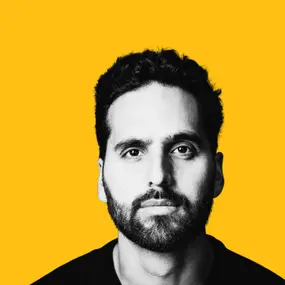
Author, How Not To Know
Simone Stolzoff is an author and journalist who explores big questions about work, meaning, and identity. A former design lead at the global innovation firm IDEO, he is the author of two books: The Good Enough Job and How To Not Know. His work has been featured in The New York Times, The Atlantic, The Wall Street Journal, The Washington Post, and on the TED stage. He lives in San Francisco with his wife and son.

Author, Inside The Box
David Epstein is the author of the #1 New York Times bestseller Range and the New York Times bestseller The Sports Gene. He has master’s degrees in environmental science and journalism and has worked as a senior writer for Sports Illustrated and an investigative reporter for ProPublica. He lives in Washington, DC. His new book, Inside the Box: How Constraints Make Us Better, will be published by Riverhead Books on May 5, 2026.

