

 Apple Podcasts
 Spotify
 What's Running The Show? Henry Cloud and Owen O'Kane on Strategy & Anxiety

In this episode, we examine what really drives our actions as leaders and creators, and why our best intentions often fail to deliver results. We open with the image of a child learning to walk—stumbling and falling, while well-meaning parents instinctively rush to protect. That same inner protection mechanism stays with us into adulthood, quietly shaping our creative work and leadership decisions.
First, we hear from Dr. Henry Cloud, author of Your Desired Future, who distills decades of executive coaching into five elements that must be present for any vision to materialize: vision, talent, strategy, plan, and accountability. Miss any one, and you’re not simply delayed—you’ve hit a ceiling. The challenge is not knowing the framework, but having the awareness and discipline to apply it, especially to the places where we’re weakest.
Then, Owen O' Kane, author of Addicted To Anxiety, unpacks how our anxiety isn't just random noise—it’s a legacy self-defense system that can sabotage us in moments that require creativity and clarity. He challenges us to stop fighting anxiety and instead learn to negotiate with it, ultimately turning anxiety from a saboteur into an overlooked strategic resource.
We end with a practical challenge: Identify a stuck place in your leadership or creative work, question the patterns running the show, and listen—rather than silence—whatever anxiety or protective instinct bubbles up. Awareness is always the first step to genuine change.
Five Key Learnings from the Episode
- The cost of overprotection: Well-intentioned interventions (like catching a falling baby) can hinder true growth; adults unconsciously repeat this pattern, avoiding short-term discomfort at the expense of long-term development.
- The universal pattern of achievement: Every realized vision—no matter the scale—requires vision, talent, strategy, plan, and accountability. The absence of any is a hard ceiling, not a setback.
- Effective accountability is partnership: Measurement and accountability should serve as lifelines, not punitive surveillance—helping teams and leaders course-correct rather than punish past performance.
- Anxiety as a misunderstood resource: Anxiety is a protective mechanism, often set in place during formative years. Avoiding or fighting it can create internal conflict and limit creativity; acknowledging and working with it opens up new potential.
- Self-awareness precedes change: Progress relies on the willingness to question whether our automatic patterns—driven by fear or outdated instincts—are truly serving our future vision. The most important transformations start with naming the patterns, not merely chasing better outcomes.
Get full interviews and bonus content for free! Just join the list at DailyCreativePlus.com.
Mentioned in this episode:
Apply for Creative Leader Roundtable
What if you had a space every month to sharpen your leadership edge without the fluff? The Creative Leader Roundtable is where smart, driven, creative leaders gather to exchange ideas, solve real challenges, and grow together. So if you lead a team of thinkers, makers, or dreamers, this is your lab. We're launching soon with a new group of leaders. So, if you're interested, check it out and apply at CreativeLeader.net.
To listen to the full interviews from today's episode, as well as receive bonus content and deep dive insights from the episode, visit DailyCreativePlus.com and join Daily Creative+.
Todd Henry [00:00:02]:
Sometime around 12 months, something remarkable happens. In most households, a baby who has been pulling themselves up on furniture, gripping anything within reach, finally decides to let go. They stand, they wobble, they take an awkward step, and then usually they fall. And here's the interesting part. If you watch closely, a parent's first instinct is to catch them. I know that was my first instinct with our children, or at the very least, it's to rush in and comfort them the moment they hit the floor. Which makes complete sense. It's love expressed as protection.
Todd Henry [00:00:38]:
But many developmental researchers have noticed something a little bit inconvenient. Children who are allowed to fall, whose parents stay nearby but resist the urge to intervene with every stumble, tend to develop balance and physical confidence faster than children who are constantly caught or steadied. The falling is part of the learning. The wobble is actually doing something. Now, that catching impulse, it makes perfect sense, right? It's protection, it's care. But here's the thing. It's optimized for this specific fall, not the child's desired future. It solves the immediate problem while quietly making the longer term problem much worse.
Todd Henry [00:01:20]:
The child doesn't need to not fall. The child needs to learn how to fall and more importantly, how to get back up. And here's what's interesting. That same dynamic between our protective instincts and our desired future plays out in adults every single day, just with higher stakes and considerably more complicated emotions. Today we're going to hear from two people who have spent their careers studying the gap between where people are and where they actually want to be. First, we have Dr. Henry Cloud. He's a clinical psychologist, a New York Times bestselling author, and one of the most sought after executive coaches in the world.
Todd Henry [00:01:58]:
His new book is called you'd Desired Future. And it maps the precise elements that have to be present for any vision to become reality and why without them, even the best intentions stay stuck in the realm of fantasy. Then we're going to hear from Owen o', Kane, a psychotherapist and a Sunday Times best selling author whose book Addicted to Anxiety will probably change how you think about the thing. Most of us spend enormously energy trying to eliminate what they each discovered from very different angles. It's your relationship with your own wiring. The habits, the fear responses, the protective instincts that were designed to keep you safe. These might be the very things keeping you stuck. This is Daily Creative.
Todd Henry [00:02:41]:
Since 2005, we've served up weekly tips to help you be brave, focused and brilliant every day. My name is Todd Henry. Welcome to the show.
Dr. Henry Cloud [00:02:53]:
I spend 80 to 100 days a year in the war rooms with leaders and creators and high performers.
Todd Henry [00:03:00]:
That's Dr. Henry Cloud, author of the new book, your Desired Future.
Dr. Henry Cloud [00:03:05]:
And what will happen is something will emerge over time that I continue to see over and over. And I have a little gift of pattern recognition. And when you begin to see, these aren't 12 problems, this is one pattern that keeps emerging.
Todd Henry [00:03:22]:
So speaking of pattern recognition, the book kind of starts with a story about your dog, Finley. Could you talk about how Finley inspired some of the thinking in this book?
Dr. Henry Cloud [00:03:30]:
Well, Finley is a great metaphor for this reason. What the book is basically about is how anything gets from here to there in life. That's the big thing we have to do. From waking up and going and making the coffee all the way to building a global company. There's a path that has to take, and people do it in a million different ways, a million different styles, a million different talents and abilities in a million different contexts. But what you find is there are some universal elements that must be present in the way that works. And the human brain is designed to get the body from here to there. So my dog, Finley, what Finley does, and Finley's a Doberman.
Dr. Henry Cloud [00:04:18]:
I love big working breeds. The thing about these big working breeds is they get from here to there, but they do it in the way that they're wired to do it. So if a stranger comes to our front door, Finley, our Doberman, does her mission. She runs to that front door. Nobody's coming in that door, I promise you, until I go to the door and recognize, oh, this is friend, Finley, friend. And then her ears go back and she'll lick your face off. But if it's a stranger, until she knows, you know, she's going to do her job. But here's the thing.
Dr. Henry Cloud [00:04:52]:
I've never seen Finley run to the front door and do what she does and then sit back and say, I wonder if that was helpful. And the bigger question, I wonder if barking the way that I did will get me closer to where I want to be on Thursday. She doesn't do that. The human species, prefrontal cortex is the only one that has the ability to create a desired future state and organize time, energy, and activities in a path that's going to make that a reality and not a fantasy. I don't know if Finley lies on the floor and fantasizes about a big rib eye or not. I doubt it. What she does is when I bring one home from the restaurant in the doggy bag, that Will cue her to go do what she's wired to do. But she never.
Dr. Henry Cloud [00:05:49]:
I know she doesn't lie there and go, I wonder, gosh, I want to go to a butcher shop on Thursday. How can I make that happen? And that's why she became. The opening example of our problem is a lot of times we go about trying to reach some vision or goal in the way that we're wired, but we never stop and get above it and ask, is that really going to get me there? And what has to be present to get me there? And that's what the book's about.
Todd Henry [00:06:24]:
You mentioned something a few minutes ago about how the human body is the best model of achievement. Could you dive more into that? You talked a little bit about the brain and how we can envision the future. What are some other elements that work as a metaphor?
Dr. Henry Cloud [00:06:37]:
The human machine. There's nothing that's ever been designed that has the complexity and the capacities and all that. The human machine has to get something from here to there. If what the body does first is you realize is it realizes where I am right now, My current reality is either not good enough or there's something I would want way better. So we either have a vision to end something negative. Martin Luther King said, I see a day. It's the greatest vision statement. I see a day.
Dr. Henry Cloud [00:07:16]:
It wasn't a fantasy. He could see it. A desired future state. It's going to really happen. Where a man is known for the quality of his character, not the color of his skin. Very compelling vision. So that's what your brain does first. They're talking about how the human body does this.
Dr. Henry Cloud [00:07:34]:
So if my body says, if I figure out, you know what, I'm sitting here at my desk talking to you, it would be a lot better if I were over on the other end of the room in a chair. So I got the vision right. Okay, brain, let's go. Your brain ain't going nowhere by itself. What does it do next? It identifies and engages the talent that it's going to need to take it there to get it there. Gonna need a couple legs, couple of eyes to focus. Gonna need an inner ear to bounce me. And it instantly starts to recruit the talent it's gonna need in order to make that happen.
Dr. Henry Cloud [00:08:10]:
Yeah, Real quickly. I'll run through this. We can go back, but. So now I got the team together. Okay, body, let's go. It asks the third question. How am I gonna get there? How am I gonna win? Okay, I could call an Uber. That doesn't really Fit the context.
Dr. Henry Cloud [00:08:27]:
I could ride a scooter. No, that. And we go through all these options of the best way to win. I'm going to walk. That's my strategy. But it instantly. And your brain is incredible instantly. Once you have a strategy, it's already developed a plan.
Dr. Henry Cloud [00:08:43]:
And the plan is the other side of the coin of a strategy. This is how we're going to get there. But we got to know what activities, by whom, when have got to happen to make that occur. So I got to take it looks like about 12 steps, one step per second on this heading and say, okay, let's go, let's start walking. But what happens along that when I start to walk, you know what if I get a text and I stop and I'm kind of get lost in here for a moment and for some reason I get to the other side of the room, my brain knows that what's going to happen is it has a measurement and accountability system that tells me, you said you were going to keep walking and make it there. By then it holds me accountable. And I instantly, oh, I got to get to, I'll read it over there. And I fix and adapt what my accountability and measurement made me aware of.
Dr. Henry Cloud [00:09:39]:
That's how anything gets from here to there. Knowing where we're going, what talent we're going to need to help us get there, what the strategy and the plan is, what we're going to measure and hold ourselves accountable to and others. And then what we find when we measure it, quickly fixing what we find and any goal that's ever reached, any vision that's ever reached, you'll find those five components. If it's reached.
Todd Henry [00:10:12]:
Okay, did you catch that? He just named the five things present in every goal ever reached. Not most goals, every goal. Vision, talent, strategy, plan, accountability, measurement, and the willingness to fix what you find. That's not a framework someone just invented in a conference room. That's the reverse engineered pattern from three decades of watching high performers succeed and watching them fail. And the reason it matters isn't the list, it's the word every. Because it means the absence of any one of these isn't a setback, it's a ceiling. Here's what I find myself sitting with.
Todd Henry [00:10:53]:
Most of us can name which one we're weakest at. We know maybe it's accountability. We hit a goal, we never look back to understand why. Maybe it's talent. We try to do everything ourselves. Maybe it's vision. We stay so close to the work that we lose sight of, of where it's actually going. The framework is simple, but living it is the whole game.
Todd Henry [00:11:17]:
Let's get back to Henry.
Dr. Henry Cloud [00:11:19]:
The problem is we do things, we build things in our own image and none of us is good at all. 5. We're just not. Somebody might be a great visionary or great engaging talent or a great strategist, but get to measurement and accountability. And I don't like details. And what if they're conflict? Avoid it. They don't hold people accountable. You're not going to get there.
Dr. Henry Cloud [00:11:42]:
But besides Finley, we have the ability to get above that and ask are all those things present in this endeavor? I may not be good at doing it all, but they better all be there. Pretty much everybody in the world has dreams and fantasies, but how many of those actually end up in reality? And the difference is that for something, for a dream or a fantasy to actually show up in a real result in the real world, that requires a process that includes all these elements. The vision of the Panama Canal is a fascinating story because they had it for a few centuries, because it made a lot more sense to go across this thing than all the way down around the Horn. And they lost over thousands and thousands of sailors and shipwrecks and the time that it took. So everybody had the fantasy, but they couldn't pull it off. Finally, the French tried it. And I want, I. I got the right number because I looked it up when I wrote the book, but it was, I want to say, like 25,000 workers died.
Dr. Henry Cloud [00:13:02]:
They spent all their money. They never were able to do it, and they gave it up. Well, what happened was Roosevelt came in and he was a leader that did the five things. First thing he did was recruited the talent that was going to be necessary to do it, which they. All those people died of malaria. So what does he do? He brings to the party the biggest disease doctor in the world and took care of the mosquito problem, took care of that. He built the infrastructure that was going to make the supply stuff able to be done. In other words, he had a plan and he had a strategy that worked.
Dr. Henry Cloud [00:13:52]:
So when I interviewed the historian about the Panama Canal, the leading historian that actually flew down to Panama, and he's the one that actually said the French had a vision, but a vision without a plan is a wish. And so basically it just outlined the. What your brain actually does to get anything from here to there. And these are very actionable steps that we need to do with ourselves and with teams and organizations.
Todd Henry [00:14:22]:
You frame accountability as partner work, not police work. I think sometimes it can feel like police work inside of organizations as leaders. How do we shift the culture so that our team sees measurement as a lifeline rather than a threat?
Dr. Henry Cloud [00:14:37]:
Boy, that is a good term. I wish I had had that term when I wrote the book. Todd, a lifeline. What does a lifeline do? It. It, if you're going under, it throws you a line to pull you back, right? Think about it this way. One of the things I say is accountability is not police work. It's actually your partner to ensure that you get where you're going. And it's not rear view mirror spanking somebody for what they didn't do last week or how they failed or they didn't hit their number or whatever it was.
Dr. Henry Cloud [00:15:09]:
The word accountability actually comes from a root word that means to answer to a trust. And so we've entrusted each other with this vision in certain roles and activities, and we're answering to the trust of how we're doing. And accountability is the most positive thing that we can have. But think of it this way. If you're an airline pilot, you got a vision, you're going to fly from LA to New York. That's your vision. Second thing you do is what I said earlier. You engage the talent that's going to help you to get there, right? You got a co pilot, you got a fuel person, you got, it's going to.
Dr. Henry Cloud [00:15:45]:
We need some people. The third thing, and by the way, those can be inside or outside your organization to engage the talent. It could be alliances, it could be network, whatever, but you don't even get there by yourself. But the third thing is she has a strategy. Okay, we're going to fly the 757, but there's a plan, a very specific plan of who does what by when. And she files a flight plan. All right, now think about this. 40,000ft, 540 knots.
Dr. Henry Cloud [00:16:17]:
A certain heading takes off. Okay? Now, she would never take off of that Runway without her accountability relationships, which start in her instrument panel. What happens? She dips down to 38,000ft because of weather or whatever. Her accountability relationship says flight. So the United Airlines flight plan shows 40,000. You're at 38. Can you correct. Oh, thank you.
Dr. Henry Cloud [00:16:47]:
Because if she hadn't, she'd be burning more fuel, she'd be going slower, she wouldn't get there on time. That measurement accountability of the activities of are we doing what we said we were going to do that ensures us getting there. Now, if she doesn't answer that, then it gets lateral to her next accountability relationship, which is a regional tower and they call make sure. Hey, you know what's going on, are we okay? And we need measurement account. And the problem with a lot of people, you know what they measure, they measure where they are in relation to the goal. That ain't going to get you there. Now, it will tell you that maybe you're not on track. Speed wise, we're not getting there as fast as we thought or we're not making movement.
Dr. Henry Cloud [00:17:39]:
But. But it will not give you the root cause analysis of why you're not. See, that's the value of the plan. In the plan, you have specified the specific activities that move the needle before. If we executed perfectly, did we get the result that we thought we were going to get? Because as Peter Drucker said, there's nothing worse in doing something perfectly. That's the wrong thing.
Todd Henry [00:18:10]:
So Dr. Cloud just walked us through the architecture of forward movement. A framework so grounded in how the human brain and body actually work that once you hear it, it's kind of hard to unhear it. Vision, talent, strategy, plan, accountability. Five elements that have to be present. If you miss one, you're not heading toward your desired future, you're just wishing. But here's the thing about frameworks. Knowing them and being able to use them are often two very different problems.
Todd Henry [00:18:38]:
That's the question that our next guest helps answer. When you're trying to build something, when you're trying to create something, to lead something, what's actually running the show? Is it your intentional, strategic, clear eyed self? Or is it the older, faster, more primitive part of your brain that's just responding to threat? Owen O' Kane has spent 30 years in physical and mental health. And what he's identified is something that most people never stop long enough to examine. The anxiety that we're trying to get rid of isn't necessarily our enemy. It's a protector that doesn't always know when to stand down. And until you learn to work with it rather than to fight it, it will keep showing up at exactly the wrong moments, shutting down the very parts of your brain that you need to do your best, most creative work. We'll be back with our conversation with Owen o' Kane in just a minute. Stick around.
Owen O'Kane [00:19:45]:
People often think of anxiety as something that's happening to you. And there's some truth in that. Obviously it's very much a physiological process. People feel anxiety in the body, obviously their mental state, they thought, and the emotions that come up with it. But one of the things that I was very aware of in Clinical practice for years is that many of us, myself included, we play a bigger part in our anxiety than we realize.
Todd Henry [00:20:09]:
That's Owen o', Kane, author of Addicted to Anxiety.
Owen O'Kane [00:20:13]:
And actually, that's a hard conversation to have, but actually, we're often way more responsible for the maintenance of our anxiety than we would want to take ownership for. I think sometimes you have to have brutally honest conversations about progress and moving forward. And my experience was that people do very much get hooked on anxiety, and it can become something that's very familiar and very comfortable, even though it's uncomfortable to live with. And without it, it can feel almost like a sense of something been missing. Or I'll give you a really good example, actually. A few months ago, I was working with a client and she had been making really good headway in therapy. And primarily she was struggling with burnout, exhaustion, overwhelm, and a very strong anxiety component to all of this. And as she kind of improved and started to feel better, she came into session one day and she said, I've been feeling really good.
Owen O'Kane [00:21:06]:
And I said, amazing. I'm really happy to hear that. And then there was a long pause, and she said, I woke up today and for the first time in five years, I didn't have that knot in my stomach. And I said, that's great. That must have been an incredible sense of relief. And then she paused and she said, wasn't really. And I said, oh, why wasn't it a relief for you? And she said, when I noticed that I didn't have the knot in my stomach, I then started to worry why it wasn't there. And I think it tells you everything, really, that she'd become so familiar and so dependent on the physiological feeling.
Owen O'Kane [00:21:44]:
But I think it can also play out in the way we think. We live in a society, we live in a world where we kind of feel like we need to be problem solving and finding resolutions immediately, and the human brain will do that. And of course, if we buy into that narrative where we feel like we can't stop, we need to be on it, we need to be a step ahead, we need to manage the uncertainties and try and almost bypass them, then we're kind of in this spiral. I think if you think of a textbook definition of anxiety in itself, it's an intolerance of uncertainty. And I guess we live in a world where there is a lot, a hell of a lot of uncertainty globally at the moment. And I know in the US at the moment particularly, there's a lot of uncertainty and a Lot of people feeling unsteady and not sure. And I think when we're living in cultures, we kind of feel the need to try and fix it and make it better. Whereas actually, there's a real clue in the intolerance.
Owen O'Kane [00:22:42]:
If you're intolerant of uncertainty, then you're going to struggle. And one of the key concepts in the book is about how can you become more tolerant of not knowing? And that can be a big ask, and it can feel maybe almost a little bit unsettling. But the getting tolerant is such an important part of this. And also the recognition that I talk about everyone having different parts of who they are, and your anxious part is a part of you, and it's a very valuable part of you. And it's very often needed and required. But very often most people, and in fact, probably 99.9% of people that I meet or work with, when I ask them how they feel about their anxiety, they will always respond with a negative. When actually I think, no, this is a really useful human mechanism. It's there to protect you, it's there to keep you safe.
Owen O'Kane [00:23:30]:
It's just working way harder than it needs to. And I think if you form a negative relationship with your anxiety and you see it as an enemy and you try to push it down, then you end up in an internal state of conflict. So a big part of my work, this book, is going towards the anxiety and working with it and learning to negotiate with it and understand the purpose and the parted place. And when I see people understand that and when that coin dropped for people and they get it, then suddenly I see remarkable breakthroughs.
Todd Henry [00:24:02]:
One of the themes that you address in the book is that this anxiety is often hardwired into us from a very early age. And it's interesting because when talked about this, I was like, wow, I have had so many experiences in the workplace where a manager has walked into a room and maybe said something a little more harshly than they should have, but certainly nothing out of bounds. They weren't being cruel. And one person hears it and they're like, oh, yeah, you're right. And the other person hears it and they just completely go off the rails and they just react like, way overreact to this. And I'm thinking, what is going on? And you say that this response is hard. This anxiety is often hardwired into us when we're very young. And so people respond like almost like a bullied child sometimes to anxiety.
Todd Henry [00:24:48]:
So tell us a little bit more about that.
Owen O'Kane [00:24:50]:
Yeah, most responses are never about the here and now. For most people, and particularly with anxiety, if our anxiety processes get triggered, often the response in the here and now is about something that's way back. Am I being underestimated? Am I being ignored? Am I being threatened? Do they think I'm not good enough? Am I about to be found out? Am I about to be exposed? Is inadequate? So there's often stories, and I should qualify here, that with anxiety, there's sometimes other factors. It's never an individual thing. It could be hormonal, it can be chemical, it can be related to health issues. Someone might have neurodiversity issues, and they can all contribute. I'm never a believer that one thing is the reason for anxiety, But I do say, unapologetically that I often think that we learn how to worry in our formative years, and that's very often within our families. Anxiety is very often a systemic family issue.
Owen O'Kane [00:25:47]:
So we can learn to worry within our families, within our cultures, within our religions. I'm Irish and Catholic, and I grew up in Northern Ireland during that period of sectarian violence that was known as the Troubles. So I was very primarily hardwired to be on guard during that period because I was growing up in a war zone. But it's really interesting, the example you give about, okay, why do we get triggered? So I can be in situations now as an adult where something might happen or something might do something, and it will trigger something in me that is, like, decades old. So we all carry this stuff with us. And I guess that's the important thing about doing this work and getting to know who you are, not just as a human being, but also as a professional. Whether you're part of a team or whether you're a manager or whether you're the MD of a global organization, you need to understand who you are. You have to understand the dynamics of what makes you tick, when you react, what belongs in the room, what doesn't belong in the room.
Owen O'Kane [00:26:45]:
Because when you have that insight, you then have a lot of power to navigate things in a much better way, but also in a much more creative way. Because you got to remember that if we're in a state of alarm and in a state of threat, we're not in a creative space at all in those moments. So if I'm working in organizations and I'm working with managers or people in senior positions, if they're in a state of threat and they're on guard and they're protecting themselves, they may function very well, and they may keep the Organization functioning, but in terms of growth, productivity and creativity and taking things to the next level, that rarely happens successfully when it's driven by fear and anxiety. I often find there's a limit to where that sort of success can go. Whereas working from a steadier platform and understanding what belongs to you and what doesn't belong to you, what's appropriate in the workplace, what's appropriate in the room and what's not, it just kind of creates an openness and a space to flourish in a very different way.
Todd Henry [00:27:46]:
I want to go back to something you said a minute ago, which is this concept of anxiety as a protector. So most of us view anxiety as an enemy to be defeated, or as this alien force that we need to squash out. But you suggest that we should meet and greet it as a welcome guest.
Owen O'Kane [00:28:01]:
That for me is the fundamentals of everything in my work. And I've been around 30 years working in physical and mental health. And I guess in the early days there was this kind of. A lot of the anxiety models were about hard to get rid of it. Even you go online today, you'll just see a lot of devices promising to banish anxiety forever and get getting rid of anxiety. But you think, why would you get rid of something that is part of your DNA? It's innately there because it's there to protect you and keep you safe. It's a mechanism that's fundamentally necessary for survival. Why would you want to get rid of that? Now, I think for most people who struggle with anxiety or anxiety disorders.
Owen O'Kane [00:28:41]:
I don't like the word disorders. Sometimes in psychology and psychiatry, they will use these terms. So someone might be given the diagnosis of an anxiety disorder. I think that we're human beings, we struggle sometimes that struggle may be greater than others, but we're not disordered because we struggle. So I should qualify that as a really important point. But I guess really when you become aware of this part of self that becomes frightened, that becomes insecure, that becomes a little bit fragile and vulnerable, pushing it down, trying to get rid of it, trying to in some ways alienate it, will only achieve one thing, which is it's just going to keep coming back until you're able to meet it and greet it.
Dr. Henry Cloud [00:29:20]:
It's.
Owen O'Kane [00:29:21]:
If you. For anyone listening who's got kids, you know that if a child wants something and it needs your attention, it doesn't give up.
Todd Henry [00:29:28]:
Absolutely. Yeah.
Owen O'Kane [00:29:29]:
It doesn't give up and it doesn't back off. And no amount of trying to push them away or ignore them or give them A distraction will stop them coming back until they get your attention. And I often believe our anxious self operates in a very similar way. Until you're able to go to that part of self and recognize it and say, I know why you're here. So it's kind of almost like you're in dialogue with it. I understand that this feels exposing. I understand this is difficult, but it's okay. This is what we're going to do.
Owen O'Kane [00:29:57]:
This is why we're here. You're not that 10 year old kid anymore. I'm your adult self and I'm looking after you. So there's a lot of internal negotiation in the spirit of honesty and transparency. A lot of my work these days brings me into public platforms and talks and TV and radio and stuff. There's an irony it because I spent most of my life trying to keep off for it or just keep my head down and I won't go into my story, but I just kind of wanted to do a job and get on with my life and ironically my career took this very different direction. And I don't think there's ever a time when I've gone to do a gig or a presentation when my own anxious self will come out and I'll feel it in my body and I will notice the thoughts. Particularly if it's a big auditorium event.
Owen O'Kane [00:30:39]:
Are you sure? What if they don't like it? What if it goes wrong? What if you forget your speech? What if it's. What if you make a fool of yourself? I'm so used to the narrative that I've now learned to see that as okay. That's a scared little boy in me that gets a bit intimidated by crowds and people. And I've kind of got to work with that part of self and say it's okay, there's no danger here, we're doing good work. This is going to be a great, this is going to be a great room of people. Come with me, we're going to go here. So I'll use the energy in a different way. So I'll take the anxiety with me and I'll bring the anxious part with me onto stage and I'll use it in a different way.
Owen O'Kane [00:31:14]:
I'll say, come on, let's go. And we're going to have fun and we're going to enjoy this and we're going to make the best of this time. So you know it's working with it and then like instantaneously you notice the thoughts quieten physiologically the body eases the emotional States start to regulate.
Todd Henry [00:31:29]:
I have the exact same experience being on a lot of big stages, speaking to a lot of people, and people ask me like, do you still get nervous? And I'll say, yes, of course I do, because I'm about to walk on stage in front of 5,000 people, of course I get nervous. I think that there's this myth that suddenly everything, one day everything will go away and you won't ever feel nerves. And the irony of doing creative work, specifically solving problems, inventing things, confronting uncertainty, is that most people who choose that work are in their head a lot. So they're really good with their thoughts. They can envision, they can imagine. But the irony of it is that because they're really good with their thoughts and because they're in their head a lot, they tend to experience a lot of anxiety when they confront uncertainty. So it's almost like you've chosen the exact profession that is like ill suited for your natural gift set.
Dr. Henry Cloud [00:32:18]:
No.
Owen O'Kane [00:32:18]:
Yeah. And that's the thing. And people often don't think about them. Even the fundamental mechanics of the brain, even that when we're in a state of anxiety, that right sided brain amygdala gets activated. So it's almost like a fire alarm going off, just scanning the room for danger. This can happen in a board meeting, it could happen in a creative process where it's on full alert, watching out for the next problem. Now the difficulty with that is that when the amygdala and the threat brain is activated, your prefrontal cortex, you know, that part of the brain that helps feel much more measured, that part of the brain will momentarily shut down when the amygdala is activated because it believes that there's danger, there's immediate threat. It's not a time to be rational, it's not a time to be measured, it's not a time to be creative.
Owen O'Kane [00:33:00]:
You need to get out of the building, there's danger. So it's kind of always worth remembering as well, is that even though we might think that there's real value in the working hard, the thinking, the trying to look out for every problem they're trying to solve, everything, the overanalyzing, the ruminating, all of the stuff that goes with that, it's easy to justify, that may be the right thing to do, but actually so many other things get lost, the creative parts of the brain can't fully function or operate when those systems are at play. So there is real value. And learning that art form of kind of thinking, I'm willing to Be vulnerable here. I'm willing to be tolerant with the not knowing. I'm willing to get it wrong. I'm willing to feel. I'm willing to be very human in this moment.
Owen O'Kane [00:33:48]:
So it's like we take all of the armor, we go on social media, and it's a world full of armor, where there's beliefs that we need to look like this, we should sound like that, we need to do all of the endless list of things that we should be doing. Whereas I work the opposite way. I think all of this is about you. Just take off the armor, bring yourself to the room, bring your honesty to the room, bring your integrity to the room, bring your passion to the room, all of that stuff. And there's where I think things land. Explode in the best possible way.
Todd Henry [00:34:21]:
Owen Okene's book Addicted to Anxiety, is available now wherever books are sold. So we started today's episode with a story about a baby learning to walk. And the most loving thing a parent can do, catch the child before they fall, can quietly work against the very development they're trying to protect. Henry Cloud would frame this as a vision problem you're solving for today when you should be solving for Tuesday. Oh, and OK would call it an anxiety problem. You're letting the protective part of yourself run the show in a moment that doesn't actually call for protection. And both of them would be telling you the same thing. Awareness is where it starts.
Todd Henry [00:34:59]:
You can't change a pattern that you haven't named. So here's the challenge for today and for this week. Think of one place in your leadership or in your creative work where you feel stuck in a loop, where you're working hard, your instincts are engaged and it still isn't moving. And ask yourself the question that Dr. Cloud says most people never ask. Is the way I'm doing this actually going to get me where I want to go? And if there's anxiety in that gap, and there usually is, don't rush to silence it. Get curious about it. What is it protecting you from? What is it trying to say? Because as Owen o' Kane puts it, if you can learn to befriend your anxiety rather than fight it, you're halfway there.
Todd Henry [00:35:39]:
The path to your desired future runs through you, not around you. Hey, thanks so much for listening. If you'd like our full interviews, you can get them@dailycreativeplus.com just enter your name and email and we'll send you a a private fee to listen to all of the interviews we do in their entirety. It's absolutely free. My name is Todd Henry. If you want more information about my books and my speaking events, you can find it@todhenry.com until next time. May you be brave, focused and brilliant. We'll see you then.

Author, Addicted To Anxiety
Owen O'Kane is recognized as one of the UK’s leading mental health experts. He is a practicing psychotherapist, a former NHS Clinical Lead, and a Sunday Times bestselling author. With a remarkable ability to simplify complex psychological concepts and mental health tools, he makes them both accessible and easy to understand. He speaks at wellness festivals and conferences, and frequently appears on TV, radio, and podcasts. He lives in West London with his partner Mark and their dog, Will.
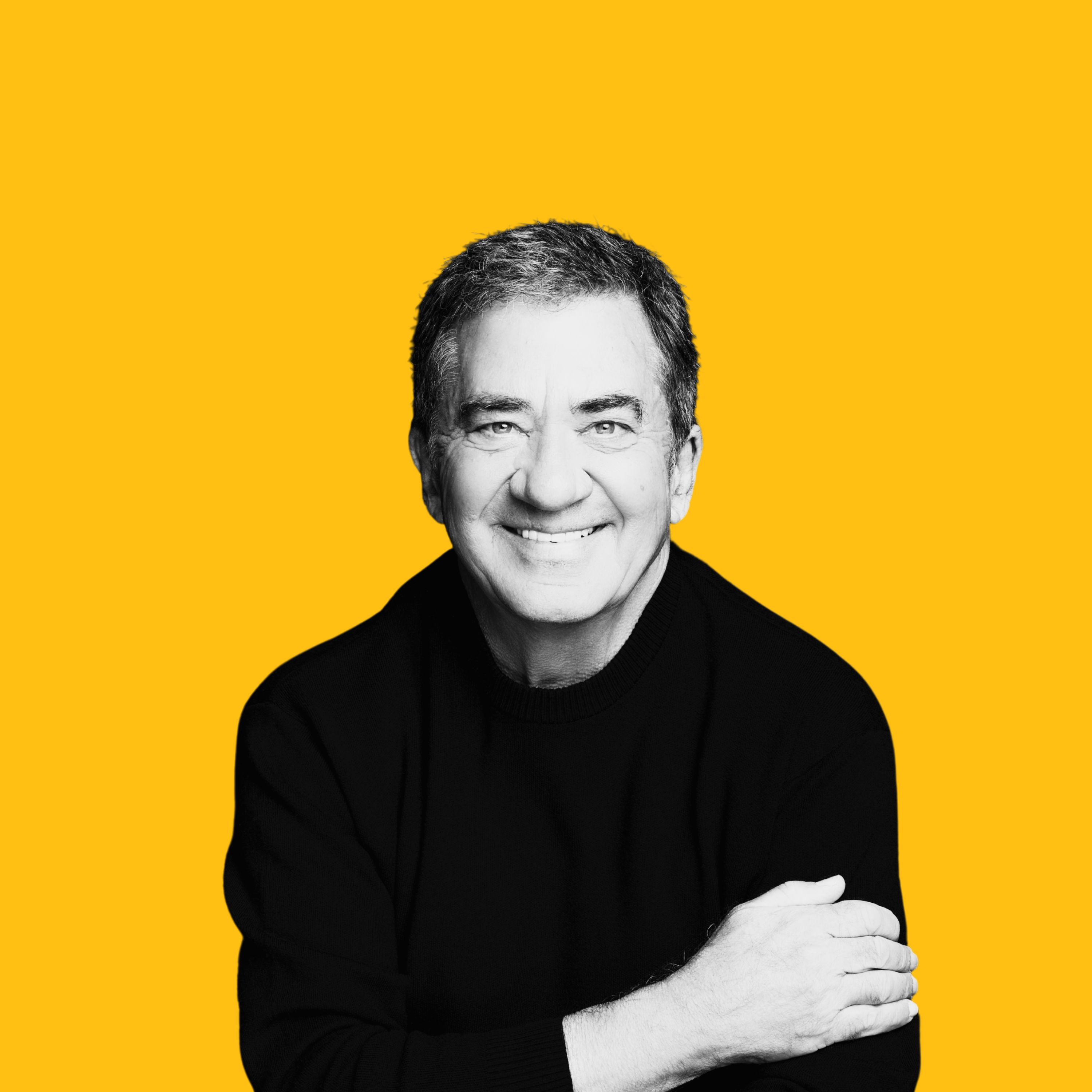
NY Times Best-Selling Author, Your Desired Future
Dr. Henry Cloud is an acclaimed leadership expert, clinical psychologist and New York Times bestselling author. His 45 books, including the iconic Boundaries, have sold nearly 20 million copies worldwide. He has an extensive executive coaching background and experience as a leadership consultant, devoting the majority of his time working with CEOs, leadership teams, and executives to improve performance, leadership skills and culture.
Dr. Cloud founded and built a healthcare company starting in 1987, which operated inpatient, and outpatient treatment centers in forty markets in the Western U.S. There, he served as Clinical Director and principal for ten years. In the context of hands-on clinical experience, he developed and researched many of the treatment principles and methods that he communicates to audiences now. After selling the company, he devoted his time to consulting and coaching, spreading principles of hope and life-change through speaking, writing and media.
Throughout the same years and until the present, he has devoted much of his career to leadership performance and development, blending the disciplines of leadership and human functioning to helping CEO’s, teams, organizations and family entities. From his early clinical training, Dr. Cloud became interested in how clinical psychodynamic ego psychology and Object Relations theory integrated with human performance past the clinical arenas, and continued to build models that could be adapted to business and organizational contexts. Much of his later writings have focused on these areas, wit… Read More

