

 Apple Podcasts
 Spotify
 Rules and Play: The Invisible Boundaries That Limit Us, and How To Break Them

In this episode, we step into the often-invisible world of cultural scripts—the unwritten rules that shape what we see, what we ignore, and even how we work and create. We begin with the unforgettable story of world-class violinist Joshua Bell playing incognito in a D.C. metro station, and explore why only children stopped to listen.
Our first guest, Oliver Sweet, head of ethnography at Ipsos and author of The Rules That Make Us, reveals how culture acts like an unseen operating system, shaping everything from our decision-making to organizational hierarchy and political divides. He guides us through the idea of the "cultural trinity"—identity, community, and belief system—as a tool for both diagnosing and transcending cultural divides.
Next, Piera Gelardi, co-founder of Refinery29 and author of The Playful Way, describes her journey from childlike creativity to stifling seriousness—and how reclaiming playfulness became essential to her creative leadership. We unpack the tension between “the serious suit” and the playful mind, exploring practical ways to reignite curiosity and courage in ourselves and our teams.
Whether you’re a leader looking to shift the patterns of your organization or a creative feeling trapped in invisible routines, this episode offers a non-obvious playbook for noticing (and re-writing) the unwritten rules—without slipping into cliché or oversimplification.
Five Key Learnings
- Invisible scripts govern not only our personal habits but also the way organizations function—most unconsciously inherited, rarely challenged.
- Cultural evolution now favors what’s memorable and emotionally charged, rather than what’s logical or true, shifting how influence and persuasion work in a social media-driven world.
- The "cultural trinity"—identity, community, and belief system—provides a framework for leaders to map and understand the real sources of alignment or division in teams and organizations.
- Playfulness is a resource, not a reward. Reintegrating play into serious work—in the form of curiosity, experimentation, and permission to make mistakes—is a non-negotiable for creative breakthroughs.
- Awareness precedes change: Only by noticing which rules we’re following—by choice or by inheritance—can we begin to reclaim openness, creative potential, and genuine leadership.
Get full interviews and bonus content for free! Just join the list at DailyCreativePlus.com.
Mentioned in this episode:
To listen to the full interviews from today's episode, as well as receive bonus content and deep dive insights from the episode, visit DailyCreativePlus.com and join Daily Creative+.
The Brave Habit is available now
My new book will help you make bravery a habit in your life, your leadership, and your work. Discover how to develop the two qualities that lead to brave action: Optimistic Vision and Agency. Buy The Brave Habit wherever books are sold, or learn more at TheBraveHabit.com.
Todd Henry [00:00:02]:
On a freezing January morning in 2007, a man in a baseball cap and jeans walked into a Metro station in Washington, D.C. he pulled a violin from its case, positioned himself near the entrance, and started to play. It was the middle of morning rush hour. Over a thousand commuters streamed past him. In the next 45 minutes, he played six pieces, including some of the most technically demanding music ever composed for the violin. He played them on a handcrafted 1713 Stradivarius worth $3.5 million. Almost nobody stopped. A few people tossed coins or bills without breaking stride.
Todd Henry [00:00:40]:
One man paused for a few seconds, then checked his watch and hurried on. In 45 minutes, the man in the baseball cap collected $32.17. Here's what the commuters didn't know. The busker was a man named Joshua Bell, one of the most celebrated violinists alive. Three days earlier, he had sold out a concert hall in Boston, where the cheapest seat was $100. The whole thing was a social experiment organized by the Washington Post. The writer Gene Weingarten wanted to test a simple In a mundane setting, at an inconvenient time, would beauty transcend? And the answer? No, not even close. But here's the part of the story that kind of haunts me, honestly.
Todd Henry [00:01:27]:
There was one group that consistently stopped, one demographic that heard the music and couldn't walk past it. Every single time. They tried to linger, they tried to listen, they tried to take it in. You know who it was? It was the children. Over and over, a child would stop and stare at the violinist, captivated. And every single time, without exception, a parent grabbed their hand and pulled them along. The adults, they had somewhere to be. They were wearing what you might call their invisible commuter uniform.
Todd Henry [00:01:56]:
Head down, earbuds in, get to the office. The children hadn't put on that uniform yet. I sometimes think about this story because it illustrates something that both of today's guests explore from very different angles. We walk through our world inside of invisible scripts, cultural rules that we absorbed a long time ago, and so much so that we've forgotten they're even there. These scripts tell us what to notice and what to ignore. What's serious and what's frivolous, what belongs in the workplace and what doesn't. And over time, if we're not careful, those scripts narrow our vision to the point where we can walk right past a masterpiece and not even hear it. So today on the show, we're going to explore these invisible scripts from two perspectives.
Todd Henry [00:02:47]:
First, we have Oliver Sweet, who's the head of ethnography at Ipsos, one of the world's largest research firms. He's the author of a new book called the Rules that Make Us. He's going to help us see the cultural forces that shape how we think, how we act, and how we create, often without awareness. Then Piero Gilardi, co founder of Refinery29 and author of the Playful Way, is going to show us how to break free from those scripts and reclaim the creative openness that most of us left behind somewhere on the way to adulthood. This is Daily Creative. Since 2005, we've served up weekly tips to help you be brave, focused and brilliant every day. My name is Todd Henry. Welcome to the show.
Oliver Sweet [00:03:36]:
So I think culture is a wonderful thing that we're all part of, we all grow up with. It's part of our organizations and part of our society, but it's also one of those things that we tend to shy away from. We think it's, I don't know, a bit fluffy.
Todd Henry [00:03:52]:
That's Oliver Sweet, author of the new book the Rules that Make Us.
Oliver Sweet [00:03:56]:
I was. I was in a big meeting two weeks ago with some C Suite executives, and I'd flown over there to go and meet them. And he turned. One of the leaders of these organizations turned around to me and said, oh, this must be something for you, because it's some of that sort of fluffy cultural stuff. And I paused for a moment. I said, I think culture's got quite a lot to answer for these days. We've got culture wars going on. We have a battle over whether we think woke culture is useful or problematic.
Oliver Sweet [00:04:30]:
And we have cancel culture going on. And the culture's got quite a lot going on. I wouldn't really describe it as fluffy anymore. What I've tried to do in this book is not make it fluffy. And I've tried to show how culture affects our lives in so many different ways. It's from how we design our homes, how we're brought up in daily life, how we greet people and meet people. Also to do with the levels of hierarchy in our organizations, how we relate to people on another side of the political divide, or what different types of national stereotypes mean. So all of these things fall under a bucket of culture, I would say, because it's all to do with how we interact with each other.
Oliver Sweet [00:05:14]:
It's the stuff between us. I think psychology has done a fantastic job at looking at what goes on inside our minds. Right. We have decoded many of the biases and heuristics in how we think we have done numerous different experiments to understand how people think and act in particular ways based on, in response to a stimulus. But as a result, we've downweighted some of this stuff which is about the interactions between us, how we were brought up, different modes or systems of thinking, which is really part of the culture that we live in.
Todd Henry [00:05:52]:
We're in an interesting time where. And we could talk more about the impacts of things like social media, our ability to communicate instantly with someone across the country, across the city, across the country, across the world, and how all of us, myself included, the advent of social media, we thought, oh, this is going to be a, what a wonderful opportunity we're going to get to share our ideas and our mind is going to be beautiful. And then pretty quickly we descended into this kind of hellhole of argument. And to me it's almost, it's an interesting case study in some of what you're describing, which is we start with this thing that feels pretty pure and it feels like, oh, we're going to bring the best of who we are and share our ideas. And then pretty soon that culture begins shaping itself to the point where it almost becomes its own thing. And then the culture begins to shape us, right? And the way that we, the expectations we bring to it. So I think we're in this interesting time where the friction involved in cultural shaping has been removed in some ways because we're having such instantaneous communication with one another. How do we as leaders, as responsible human beings, as people bringing ourselves to these cultures, how should we think about and process the culture that we're a part of, but also how the influence that we have on that culture.
Oliver Sweet [00:07:11]:
That's a, it's a, it's a very important question. I think there's two huge things that have happened. The first thing is that there's been a big reshaping of culture in a way that we haven't necessarily got to grips with in this new age of social media. A two minute potted history of how stories spread pre 1800s historians refer to us living in a moment in oral society. So that meant that stories were passed from peer to peer to peer for stories spread across the country. It went across lots of number of different people because everybody said the same story in order for that same story to be repeated. The most important part of it was that it was memorable. It didn't have to be right.
Oliver Sweet [00:07:59]:
It just had to be remembered so that the story could continue further. And that created a certain types of society where everything became memorable. Story driven post 1800. You had the development of printing press becoming more and more widespread. Widespread literacy gained traction, distribution of newspapers and books, which meant people read a lot more. And that changed a story from being memorable to being right. Now, that meant that you could write things down and then you could assess the argument. It was all about logic and rationality.
Oliver Sweet [00:08:34]:
Then the thing that's changed with social media is that it started to go back to some of the characteristics of an oral society, because everything is passed from peer to peer. A piece of information really only sticks if it's memorable. And therefore the message has to be memorable and impactful and it doesn't have to be right. Now, we can see that in politics, we can see that on social media. In politics we have these slogans. In the US it's Make America great again. In the UK we had Take back control and there's many more. But the best slogan wins.
Oliver Sweet [00:09:14]:
And it doesn't have to be, it just has to be memorable. So fundamentally, what this does is it changes our assessment of evidence. We don't necessarily care if something's right anymore. Now, some of us who have grown up, like me, I'm in my mid-40s, I grew up in a literate society. I was told to assess information about whether it was right or wrong. So this new world fundamentally baffles me quite a lot. But it's a very seismic change that that means that what I grew up believing isn't necessarily what wins the argument today. So, like this slightly chaotic, mad world that we live in, where everything on social media goes past us and it can all feel quite confrontational, that's because there is no winner.
Oliver Sweet [00:10:02]:
There's no winner of right and wrong. There's a winner of who's the loudest and. And who has the best message. So that's one big fundamental shift that I think a lot of us are still getting to grips with, because many of us who work in large organizations, business leaders who, you know, are my age and they've grown up in this literate society where they. Where fundamentally they've achieved things in life because they have been rational, logical, and they've had this idea of progress. They build organizations in that way. And those organizations aren't necessarily best equipped to deal with the way that the world's moving at the moment. So they might put out messages and communications and adverts that sort of showcase how good their product is or why it might be desirable, but they don't quite get on board with this idea that everything must be just memorable.
Oliver Sweet [00:10:56]:
And frankly, if You're a brand. You can actually start to put out conflicting messages these days. You can put out communications and adverts that might suggest that you are great at helping families come together, and at the same time, you are helping someone progress at work. Now, when I talk to brand managers, they're like, no, our brand must stand for one thing. I'm not sure that's the case anymore. I think actually you need to be memorable and compelling rather than logical and rational. So that's a really big shift, I think, that we've seen in culture, which explains a lot of the chaos that we seem to see around us.
Todd Henry [00:11:33]:
It is very. It's difficult to adapt to for. You mentioned you're in your mid-40s. I'm in my early 50s. And I think it's difficult to adapt to for those of us who grew up with a more rational mindset. I know often I work with leaders of organizations who talk about the way things should be, the way that they want things to be. This is how it should be. This is the right way.
Todd Henry [00:11:53]:
And we have to have the conversation about it doesn't matter what things should be. We have to deal with the way things are and deal with reality as it is. Which kind of leads to the. What you call the cultural trinity, the framework for analyzing culture or figuring out the way things are. Could you share a little bit about that with us and how we can use that to begin to understand culture more deeply?
Oliver Sweet [00:12:14]:
So the cultural trinity sits at the heart of the book that I've written. And what I've tried to do is create a framework that. That anybody can understand. So there's three parts of the cultural trinity. The first one is identity. The second one is community, and the third one is people's beliefs. And all three of these interact with each other. And just to unpack those slightly, someone's identity is how they look and how they want to look and how they want to be perceived.
Oliver Sweet [00:12:41]:
Now, how you. Your identity often means that you fit into a certain type of community. That community has unwritten rules on the things you're allowed to say and where and the music you listen to. And it also has unwritten rules on how you behave, but it really gives you a sense of belonging and against. Of support. So community is hugely important in terms of culture. And all of these communities underneath them all, they have a belief system, they have a set of values, and they have a moral outlook about what's right and what's wrong. That in turn feeds into your identity.
Oliver Sweet [00:13:18]:
So there is this sort of circular loop between identity, community, and belief systems that helps you try and unpick what's going on in front of you. So the first thing is that the cultural trinity is very good at helping you see the comparisons and see where the dividing lines are. But I also love the cultural trinity because you can zoom in and zoom out as much as you like. So the Republican and Democrat divide are cultures that I personally believe have been slightly manufactured and slightly built up to be bigger than they really are in people's lives. But I think that what that does is it misses or it helps obscure some of the many things that people have in common. And if you go a bit broader than that, you start to see that there are belief systems that Democrats and Republicans have in common. The importance of family, the importance of safety, the importance of bringing up your children in good education. Rather amusingly, if you look at the data, there's a lot of similarity between a belief system, between Republicans, Democrats, about how much they dislike the Senate, how much, how much they're against foreign wars.
Oliver Sweet [00:14:32]:
There's actually a lot of very political things that the Democrats and Republicans are united over, but those aren't the belief systems that a lot of divisive politicians seem to point to. So the cultural trinity allows us to zoom in and zoom out and pinpoint certain things that either help divide or unite us. Now, I think this is a very useful tool in a day and age like today. Like you mentioned on social media, many messages that come out, and they can be quite explosive. That's partly because they're tapping into a belief system that they know is divisive, or they might not say it's divisive, but instinctively they do it. It plays to a divide. What I think we can start to do by understanding culture better is start to find belief systems that we can all unite around. And that makes our communities far more united.
Oliver Sweet [00:15:24]:
And it means that the identities that we hold can be a bit more fluid and we can start to interact. We don't have to be so rigid in who we say that.
Todd Henry [00:15:32]:
I love that perspective. I heard that dynamic you're describing being cold conflict, entrepreneurship, which I thought was a fantastic way to describe that dynamic of taking advantage of those differences. And sometimes it involves misaligned incentives. We're incentivizing conflict. Actually, we're incentivizing that divisiveness, which is unfortunate. Could you talk a little bit about the. The word tribalism is something that's often used in a negative way, but you argue that it actually could be a It can be a positive. Could you share with us your perspective on that?
Piera Gelardi [00:16:04]:
Yeah.
Oliver Sweet [00:16:04]:
So, from an anthropological point of view, what it means is it's a mechanism by which we come together. So the most tribal form that I think that I can see in today's society is normally around sports, actually. And we talk. I'm a big football fan. I live in North London and Arsenal is my football team. And the Arsenal team is doing really well this season. And I can hear the ground from my apartment. And every time I hear the roar from a goal or when team comes out, I can literally feel it inside me.
Oliver Sweet [00:16:41]:
And my daughter has the same thing as well, and she's only 12 years old, and I take her to the games, and when I first started taking her to the games, she started to get the buzz. She could feel it. So all it is just a lot of people walking towards a big stadium, right? This shouldn't be a thing, but there's a buzz in the air, and there's something between people that you can't necessarily describe, but you can definitely feel inside you. There's excitement, there's a buzz. And then when you get into the stadium, it starts to really echo and roar. And then you walk up the stairs and you suddenly, when you start to see the pitch, it's so green and it's so bright and it's so exciting. You sit down and. And people start singing songs, and you're just taken with it.
Oliver Sweet [00:17:26]:
It takes you and tribalism takes you. And it's a glorious thing because it's one of those things that really sits inside you. Emil Durkheim, the famous historical sociologist, used to call it the collective effervescence that people have the bubbles inside you. But here's an interesting thing, is that when I go to an Arsenal game, they also sing lots of chants that are. They sing lots of chants that are great, enlightening, fun, get our team can get behind. But they also sing some pretty rude chants about the other team, and particularly Tottenham. We have a rival, and even if we're not playing Tottenham, we sing a bad song about Tottenham, and it's got some rude words in there. When I first started taking my daughter to the game when she was nine years old, she used to not sing those songs.
Oliver Sweet [00:18:17]:
And she used to turn to me and say, but, Daddy, Uncle Tom's a Tottenham fan. We don't think that about him. And I said, no, don't worry about it. It's just part of the fun. And she would like, no, I'm not singing that song. I'm not singing that song. And it's. It's amazing to see how shifts in culture shift tribalism.
Oliver Sweet [00:18:38]:
So this collective idea, this belonging to shifts constantly and how we belong to groups now. I also started taking my daughter to the women's football games. Now, the women's football games has got a different set of tribalism attached to it, a different culture as part of it. And they. They sing the songs of joy, they cheer when their team scores, they don't sing the rude songs about Tottenham. And at the end of the game, all the women on the pitch go up to each other and shake hands and say, good game, even if they hated each other during the game. And they never badmouth each other after the game. They never fall over during the game and pretend to be injured and do all this feigning stuff that the men do.
Oliver Sweet [00:19:20]:
And that actually is a place where I think that football tribalism is moving towards. So you can start to see how this element of collective belonging shifts over time and how culture changes that.
Todd Henry [00:19:33]:
And I would assume that same dynamic applies to organizations where you do see culture over time begin to. They're wonderful elements, but also culture can begin to erode within an organization as well.
Oliver Sweet [00:19:44]:
Absolutely. Organizational culture is a very fascinating thing because when a new person comes in, they don't have it, and they're constantly looking around for cues. And if people don't. If people eat lunch at their desks, they continue to. Other people will also eat lunch at their desks. And someone might come in from the outside going, I'm always used to having a lunch break. And eventually they'll probably end up having lunch at their desk. People might speak out in meetings against people who are more senior than them, but if no one else is ever doing it, they'll probably stop and they'll probably shift into that hierarchical form.
Oliver Sweet [00:20:24]:
When it comes to creativity, you can put creative elements into the heart of your organization that allow people time and space and inspiration to go and find new ideas and do things in a different way or not. And that's how organizational culture shapes the way we behave at work.
Todd Henry [00:20:47]:
The book the Rules that Make Us is available now wherever books are sold. And as always, if you want to hear our full interview with Oliver Sweet, you can do so by joining free@dailycreativeplus.com I loved my conversation with Oliver because it names the thing that we so rarely talk about. The fact that we're not just making individual choices all day. We're operating inside of systems of belief, of belonging, of identity, that were often handed to us, and we don't even realize it most of the time. And here's what strikes me. If Oliver is right, that culture functions a little bit like an invisible script, one that shapes everything from how we run meetings to how we respond to conflict. Then the obvious next question is, how do we rewrite those scripts? How do we shake loose from the patterns that are limiting our creative work, our perspective, especially the ones that we can't even see? And that's exactly where our next guest is going to pick up. Pierre Gilardi built one of the most influential media brands of the last decade, Refinery 29, and in the process discovered that the very thing that made her successful, the playfulness, willingness to experiment, was the first thing that she tried to hide.
Todd Henry [00:21:56]:
When the stakes got high, she put on what she calls the serious suit, and it nearly broke her. Her new book is called the Playful Way, and it's a blueprint for bringing back into artwork not just as a luxury, but as the engine of creativity itself. Play. We'll be back with our conversation with Piera in just a minute. Stick around.
Piera Gelardi [00:22:24]:
So many people think about play as something that's left in. That you leave in childhood when you enter the realm of serious adulthood. And we see it as something that's frivolous, that or that's something that's a treat, right? Like, we work hard so we can play hard.
Todd Henry [00:22:38]:
That's Pierre Gilardi. Her new book is called the Playful Way.
Piera Gelardi [00:22:41]:
Like, it's a reward for doing the hard work. But the way that I think about play is not. I think about playfulness more. And I think that it's not about necessarily a set of activities or about leisure time, although those are important. Playfulness is about approaching the world with a spirit of creativity, curiosity and courage. So in everyday life, how do we look at things from new angles? How do we experiment? And how do we unlock possibility through those processes? And I see it as something that can be integrated into any moment. So it's not so much about a timeout, but it's about a weaving into our lives.
Todd Henry [00:23:20]:
I want to talk about the pressurized way, the mindset that most of us experience. How would you describe that and how does it differ from what you call the playful way?
Piera Gelardi [00:23:29]:
Yeah, so the pressured way is when we are tight, when we're trying to control the outcome, when we have more of a fixed mindset or we're have this either or thinking. So it's. And I think of it as in a physical state. You can know when you're in it because usually you're clenched. You listeners can even do it where they tighten up their body, right? You clench your fists, you hunch your shoulders, you tighten your jaw. That's a pressured state that we often get into when we're in stress. And it comes from. Comes from a place of trying to control the outcome.
Piera Gelardi [00:24:04]:
And the playful way. I think of more as an inflated balloon. Right. It's more light, it's open, it's exploratory. So it's this spirit of curiosity, of experimentation, of exploration of. Yeah, this. Yes. And improvisational thinking.
Piera Gelardi [00:24:22]:
So the two feel really different. And we have to recognize it's totally natural to get into the pressured state. And I do it all the time. And the way I try to move out of it is I notice that I'm in the pressured state. And I pause, I have a. It's play. I pause, I lighten. So the lightning can come from taking a breath or moving my body a little bit to just basically regulate my nervous system and recognize that I'm moving through this stressed out, pressured state.
Piera Gelardi [00:24:53]:
Then I activate my play powers. I say, okay, what? Everyone has different powers of play that are unique to them. So for me, that might be activating curiosity, Right. I say, I'm going to activate my curiosity. And then it's yes. And so I'm accepting the challenge that's ahead of me. And I'm saying yes. And I can be playful.
Piera Gelardi [00:25:14]:
So that's how I'm from this pressured state that we all get in. That's totally natural to this playful state, which is really all about having more resources, having more creativity and curiosity so that we can be more resilient, be better problem solvers, and be more creative with the solutions that we find in the challenge. So I think that's another misnomer. We think of play as something that we do outside of challenges and outside of stress, as our escape vehicle, our vacation from those things. But it's actually really powerful when we can bring play into those areas of stress, into the deadline, into the pressure cooker, into the unforeseen change. That's where it's actually really fertile to play with, because that gives us so much more possibility than that clenched pressured state, really.
Todd Henry [00:26:07]:
Can I read a book earlier this year? It was an academic book called the Myth of the Objectives. Why Greatness Cannot Be Planned. And the whole premise of the book was if you look at historical breakthroughs, creative breakthroughs, whether it be in science and the arts, whatever, typically they didn't begin with someone saying, I'm going to create this thing. They began with someone following the stepping stones from one place to another and playing around with what was in their environment and experimenting. You can have an objective that focuses your energy, focuses your activity. If it's a very short term, okay, I need to create this, I need to make this creative brief, or I need to create this prototype for a thing. You can do that. But the moment you set the objective, the moment that you limit the scope of vision, you immediately limit possibility.
Todd Henry [00:26:56]:
And what I hear you saying is, no. In those pressurized moments, we need to structure time for play, structure time for our minds to wander outside of those realms. Because the moment we define everything and become very serious, you call it putting on the suit. Right. The moment we put on the serious suit, we immediately limit where our mind's willing to go to look for ideas.
Piera Gelardi [00:27:17]:
That's exactly right. Yeah. When we put the serious suit on, it does put us in that constricted place and it narrows our thinking. I think of it as that play, play opens and pressure narrows. So when we can give ourselves those little pockets of play. And it doesn't have to be much like I used to do a physical warmup with my team before we would do a brainstorm or a session. Because also often people are coming. You don't know where people are coming from, what mindset they're in, what their last meeting was, what they're ruminating on.
Piera Gelardi [00:27:47]:
So giving people just a physical moment to shake things off or to stretch or lighten in any way, deep breath, a movement break, that can really be just such a small but very physical way to get people into a more open state. I also think questions, curiosity. Sometimes when we're in a really, in that pressured state, a simple question like what would need to be true for this to happen can really open our minds and help us to see possibility or even to help us to name what the obstacles are that we need to clear to get to a solution. Or what if everything went right? Like, often it's normal for our brain to hone in on the negative and we have a negativity bias so we can think about all the worst case scenarios and then that shuts us off to the possibility of all kinds of amazing things or amazing ideas that can happen. Yeah, sometimes schedule like structuring play into our creative process doesn't have to be something that is happens at that one off site where you bring in someone to make that like fun moment. It's really about how do we do that in the day to Help us to be less stressed and more resource to come up with creative solutions and to find that possibility instead of narrowing our thinking into a place where we're unlikely to be innovative or come to a breakthrough.
Todd Henry [00:29:13]:
I love that. One of the ways, One of the strategies that you describe in the book for doing this is identifying what you call the eight powers of play. Could you give us an overview of some of those and how they might play into our strategy in trying to become more playful?
Piera Gelardi [00:29:28]:
Yeah, so I think a lot of people, when they think about. A lot of people tell me I'm not playful. And then when I start talking to them and asking them questions, I find out that they are. It's just not in the way that they think of play. So often when people think about play, they think of one archetype, which is the joyful jester. Right. That's the person that is humorous, that's silly, that brings a lot of levity. And those people are super important.
Piera Gelardi [00:29:52]:
They help us break through tense moments. They often help us to break through stress so that we can find solutions. They bring joy. But that's just one way to be creative, one way to be playful. But the. Some other people can. People can be playful through movement through their bodies. Right.
Piera Gelardi [00:30:10]:
A lot of people play through the way that they move their body in space. Other people do it in a quieter way through curiosity or imagination. So there's all these different ways. Some of my favorite ones in the workplace are the wonder wanderer. These are people that are always noticing details and patterns and beauty in the world around them. So they're often the ones that will notice a trend or a pattern that's happening or be able to. Yeah. Point out something beautiful within the swirl of whatever's going on.
Piera Gelardi [00:30:42]:
The curious quester is the person that is going to be the one that brings really great questions that illuminate new facets or that help you to think in a different way. They also tend to be more experimental. Often when we think about think in that experimental mindset that helps us to go from problem feeling so huge and daunting to being in that state of learning where we're actually able to uncover a lot more. A lot more possibility. And then there's. There's also the visionary dreamer. So that's someone that's bringing in imagination and that is looking towards the future and really. Yeah, really dreaming, bringing a lot of.
Piera Gelardi [00:31:20]:
A lot of bigger picture ideas into the day to day. So there's eight. There's eight types. I won't get into them all but I think it's really important. Important for people to realize and recognize that play doesn't have one shape, that playfulness takes many different forms. And so once we are able to see ourselves in some of these forms, we can lean into those play powers and use them as a strength when we face challenges. And we can also play as a muscle. So we think of it as a personality type, but it actually is something intrinsic to all of us, playfulness.
Piera Gelardi [00:31:51]:
But we often let it atrophy because we get into that serious suit, that serious mode, responsible adult mode. And. But once we start to practice it and once we start to value it and give ourselves permission to explore it, it grows. So there's. We are. We're able to grow any of these different play muscles when we exercise them. So I think it's great when people can recognize the ones they already have and they can develop those, and then they can also recognize ones that they might want to explore more and find ways to practice those.
Todd Henry [00:32:24]:
So is this something that's always been easy for you? Obviously you've or organizations, you're trying to help them develop this playful way. Is this something that's always been easy for you? Is this something that comes naturally for you? Or is this something you had to develop yourself?
Piera Gelardi [00:32:37]:
So I did grow up with a family that was very playful. So growing up, I did one of my favorite activities with my family was we sat around the kitchen table and did business brainstorms when I was in grade school. And we would pick a business, it would be some could be something absurd like a kids karaoke club. And then my parents would ask really thoughtful questions. What is it? What would it be called? How would the karaoke club be different from other karaoke clubs? How would. How would people find out about the karaoke club? So they. We did these fun brainstorms. And sometimes they were really absurd ideas, but they would take it seriously and they would ask us a lot of questions.
Piera Gelardi [00:33:14]:
And so that was an activity that we love, that my also. My daughter also loves. Like we were just on vacation doing brainstorm about what would be the most awesome hotel ever and just going on and on with all these ideas. So I did grow up with playful parents that showed me how play could be integrated into work into, yeah like our relationships, into even dealing with things like illness even. But even though I grew up with that, when I was starting to build Refinery 29 and we started to bring on people from more corporate background, I started to doubt if my playfulness was appropriate for the workplace. If it was if I was going to be taken seriously or not. And I had really bad imposter syndrome. And so I decided to try to tamp down and hide that side of myself.
Piera Gelardi [00:34:01]:
And what happened was we were, it was amazing. We were in a place in our business, we were hiring a lot of people and a lot of people from this corporate background. But then I tamped that side of myself down and I ended up just feeling so brittle. Like I found myself in this moment where I was laying on the floor of my apartment. From the outside, it looked like I was a high point in my career, right? Like the business was thriving. I was doing all these big speaking opportunities, we were doing amazing creative projects. But I was laying on the floor of my apartment sobbing about what a failure I was and feeling completely unable to handle just the day to day challenges that were coming my way. And I realized that I was play deprived, that I had leaned so hard into trying to be taken seriously that I actually had starved the parts of myself that actually, that got me to that point.
Piera Gelardi [00:34:51]:
That allowed me to be creative and resilient and connected and enjoy the work that I was doing. And so in that moment, I started to reintroduce, play into my work and actually lean even further into it and bring it into how I led people and how I helped other people tap into their creativity. And it was so powerful because it really allowed me to. When I did that, I was able to uncover these much bigger creative solutions. I was able to connect much more with the people that I worked with. And I just found the joy in what I was doing so much more. And it, it really became the foundation of my philosophy for approaching creativity and leadership and work was that moment where I tried to put it away and it zapped me and burnt me out. And then when I brought it back, it gave me so much more energy and resilience and pliability to move forward.
Todd Henry [00:35:47]:
Isn't that the strange irony of, I think creative work generally. Listen, we could. I don't want to split hairs like all work, everybody's creative. Anybody who solves problems, everybody's creative. Everybody who does mind work, you're being creative, right? So I don't want to split hairs, but I think one of the strange ironies of people who do like they get to make things for a living is that we start off making things because we love them and we play and we take risks and we get, we become really good because we're willing to push the bounds and we're willing to try things and we develop, we have, we develop these aptitudes, we discover we have some talent and then we think, wow, how great would it be if I could make a living doing the thing that I'm really good at, that I love to do? And then very quickly we pivot into it, becomes more about the making a living part and we stop doing the very thing that got us to the place where we were able to make a living doing it right. And that's what I hear in your story, is this story of someone who's obviously incredibly creative, building this fast growing company. And probably because you were playing, you were taking risks, you were trying things, and then suddenly we become paralyzed by the states, we become paralyzed by the concern about now everybody's looking at me and they expect something of me. And you call this the Anti Play Posse, Right? The voices in our head talk about how that impacts us and how sometimes it can keep us from doing the very thing that is the foundation of how we got to where we are to begin with.
Piera Gelardi [00:37:10]:
Yeah, you're absolutely right. We get these voices in our head that are the Anti Play Posse. There a lot of them come from authority figures that we might have heard of growing up where these sort of social conditioning around. Yeah, growing up, becoming a responsible adult, being cool. There's a lot of different things that prevent us from playing. And a lot of it really does come down to pressure that. The pressure to earn a living, the pressure to do good work, the pressure to match our success. Again, there's a lot of external pressures that put us into this pressured place.
Piera Gelardi [00:37:43]:
But the irony is that, yeah, when we, when we remove ourselves from the joy that got us there, when we remove ourselves from that playful, experimental mindset that got us there, the pressure prevents us from being creative, from continuing to replicate that success, from being connected and intrinsically motivated to do the work. And that's the thing like play deprivation cuts down, it cuts down our intrinsic motivation. So when we're play deprived, we are more anxious, we have less ability to roll with change, we're more pessimistic. And also our brains, our brains physically change when we adopt an experimental mindset. Every time we try something new, we create these new neural pathways. So it's reshaping our brain to have that experimental, playful mindset. But when we stop doing that, things start to close and close and they actually feel more pressured and we're less resourced to be able to deliver those results and we're less connected to the work that we're doing. So we don't Feel that joy.
Piera Gelardi [00:38:51]:
And I think that really shows in the creative work, right? Like the best creative work, you can tell that people were having fun with it or that they were at least in a play state of experimentation and curiosity. The best creative work doesn't come from someone, you know. Like, you think about a brainstorm, right? Like a brainstorm where there's laughter in the room, where there's the freedom to say something stupid, and someone else picks up on that and adds to it is one way. And then the pressured way is often the way most brainstorms happen, where it's just, here's the brief, here's our deadline, here's the budget. What ideas do you have? And those are fundamentally like completely different states. Creativity thrives within that, that more open, exploratory state. And it doesn't have to be a binary. It doesn't have to be like, oh, that's.
Piera Gelardi [00:39:42]:
That's la la land. But we need the space to play and to explore before we bring in the constriction and the. The guardrails. And people often try to combine those two processes together. And I think that's a really challenging thing to do because you need the space to play, even if it's just a small container, even if it's five minutes. Just give the space to play without immediately cutting things with reality and pressure. That narrow thinking.
Todd Henry [00:40:19]:
Pierre Gilardi's book the Playful Way is available now wherever books are sold. Piera showed us what happens when we actually try to break free, how play isn't the opposite of serious work. It's the fuel for it. And the moment we stop playing, we stop creating. I keep coming back to those children in the metro station that we started the show with, the ones who heard Joshua Bell's violin and stopped even as their parents pulled them along. They didn't stop because they were smarter, because they were more cultured. They stopped because they hadn't yet learned the rule that says you don't stop during rush hour. They hadn't yet put on what Pierra called the serious suit.
Todd Henry [00:40:57]:
So here's my challenge for you this week. Pay attention to. To the invisible scripts. Notice the moments when you default to. That's just how we do things, whether in a meeting, in a brainstorm, or in how you start your morning. Then ask yourself, is this a rule I chose or a rule I inherited? And what might happen if I gave myself permission to stop and listen to the music, even when everyone else is rushing past
Oliver Sweet [00:41:26]:
foreign.
Todd Henry [00:41:30]:
Hey, thanks so much for listening. If you'd like to listen to all of our full interviews. You can do so by joining free@dailycreativeplus.com just enter your name and email address and we'll send you a feed. A private feed where you can listen to all of our interviews absolutely free. My name is Todd Henry. If you want to learn more about my books and my speaking events, you can do so@toddhenry.com until next time. May you be brave, focused and brilliant. We'll see you then.

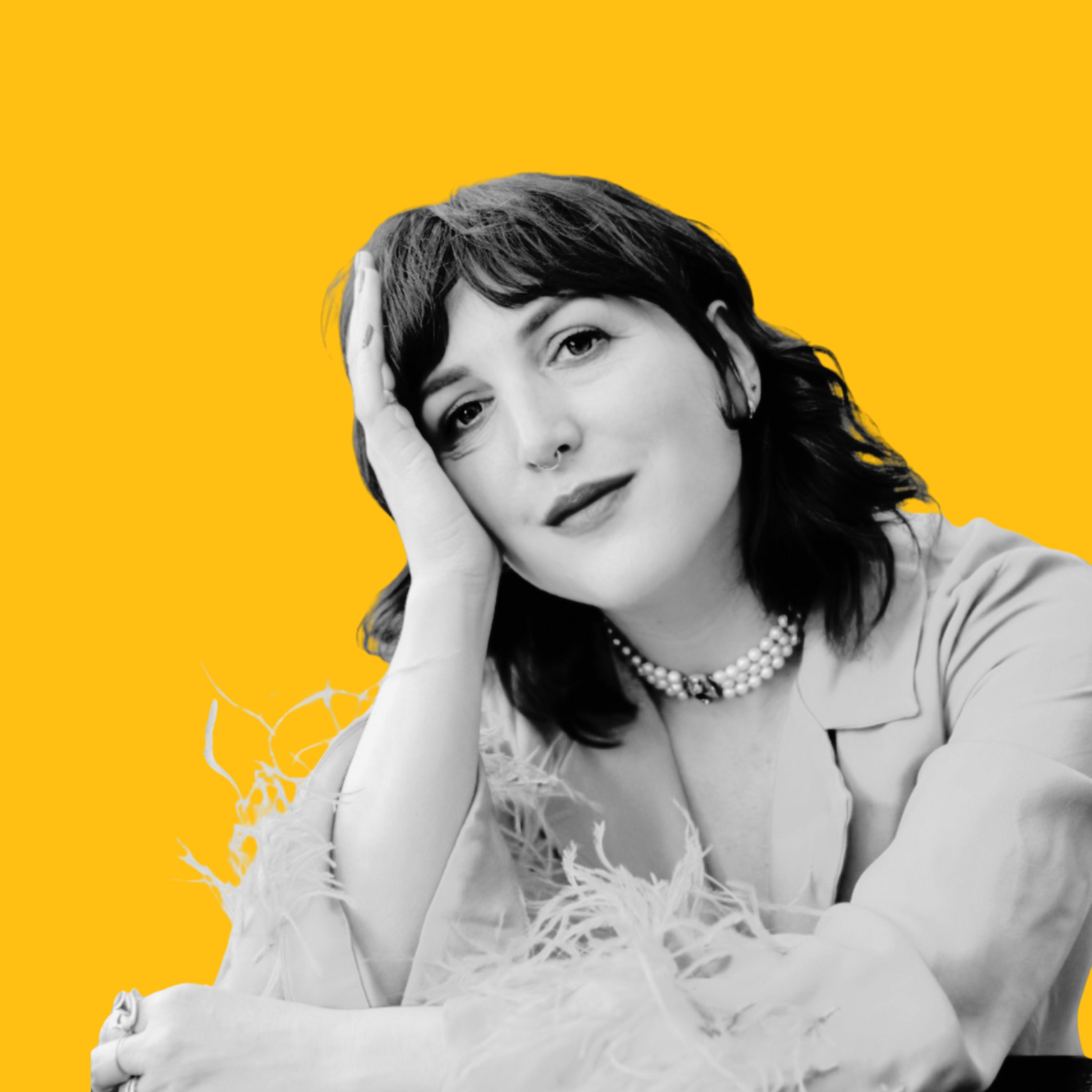
Author, The Playful Way
Piera Gelardi is a creative entrepreneur and artist passionate about bringing play into every room she enters. She co-founded the influential media brand Refinery29 and its magical pop-up 29Rooms, earning recognition as one of Ad Age’s “50 Most Creative People” and Entrepreneur’s “50 Most Daring Entrepreneurs.” Through her new company NoomaLooma and her energetic keynotes, Piera helps people unlock their creative superpowers. When she’s not playing professionally, she loves hosting noodle & doodle nights, throwing spontaneous dance parties, and making up songs with her daughter Viva.

